Owner/
Builder

Natural Building

Adobe

Cob

Rammed Earth

Poured Earth

Earthbag

Strawbale

Cordwood

Timber Frame

Bamboo

Earthship

Papercrete

Lightweight Concrete

Stone

Hybrids

Manufactured
Systems

Natural Building

"Natural building" is an umbrella term than connotes any sort of building that is accomplished with the use of natural materials primarily, as opposed to the use of man-made or industrial materials. There is, of course, a blurring of this distinction when any specific material or building technique is examined, because the influence of technology is all-pervasive in today's world. Still, it is worthwhile to focus on those ways of building that minimize the use of products that require considerable embodied energy for their manufacture or transportation. The objective is to build with simple techniques that don't further pollute the environment, consume more fossil fuel, or unnecessarily extract the resources of Mother Earth. Such techniques, by their very nature, have an aesthetic value that tends to blend in with the environment and "feel" natural.

The categories listed on the navigation bar on the left represent some of the materials and building concepts that I am familiar with. The list does not necessarily represent everything that might appropriately belong there. Please contact me if you know of some way of building that you think should be included here.


RESOURCES

SEARCH THIS SITE

MEDIA

PLANS

ARTICLES:
Building with Nature

The Beauty of Mud and Straw

Natural Building Colloquium, 2000

Natural Building Colloquium, 2003

Natural Building Colloquium, 2008

Natural Building and Building Community

Natural Building:
How to Build an Affordable Eco-Friendly Home

Natural Building Tour of Eco-Friendly Affordable Homes

EXPERT ADVICE

with Daniel Chiras


Why Build Naturally?
Education
Employment
Foundations
Flooring
Plasters & Siding
Insulation
Roofs
Structural concerns
Heat & humidity
Code and permit issues
Cost comparisons
Miscellaneous

INFORMATIVE LINKS

NATURAL BUILDING BLOGS

MEDIA


Click on image to buy from Customflix.com
 

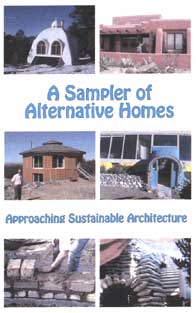
A Sampler of Alternative Homes: Approaching Sustainable Architecture . This two-hour DVD, produced by Kelly Hart, provides an overview of sustainable building concepts. You can enjoy a look at a fascinating variety of homes and the creative people who built them! Discover how passive solar design and environmentally low-impact materials can be used to create comfortable and economical homes. See the use of both traditional materials, such as adobe, and innovative materials, such as papercrete and earthbags.

This program offers a wealth of information about construction details and other considerations. It covers adobe block construction, piled adobe (similar to cob), rammed earth, both load-bearing and post and beam strawbale, earthships, earth-sheltering, cordwood, thin-shelled concrete domes, papercrete, earthbags, hybrid structures, and recycling various containers for housing. To watch a streaming video introduction to this program, click here.
$29.95

BuyDVD

For a VHS videotape of this program go to the STORE.


Click on image to buy from Amazon.com
 
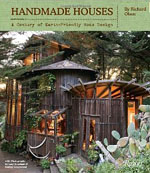
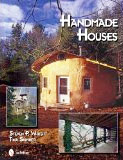
Handmade Houses: A Century of Earth-Friendly Home Design by Richard Olsen, 2012. Showcasing one hundred years of innovation and environmental sensitivity, Handmade Houses celebrates some of the world’s most idiosyncratic homes from Big Sur to Sardinia. Author Richard Olsen  unveils the components used for their construction, including driftwood, boulders, and even old wine vats. The first study of the handmade-homes phenomenon since its inception in the late 1960s, Handmade Houses revisits the subject’s roots and history, exploring how these homes and their owners paved the way for the architectural-salvage business and the reclaimed, industrial look ever-popular today. As fascinating as the structures are themselves, their owners—professionals and amateurs who personally designed and built each residence—offer their inspirations and stories behind the convention-defying homes. Design lessons are gleaned from each home—some examples of environmentally aware construction with applicable tips for use in more mainstream scenarios.


Click on image to buy from Amazon.com
 

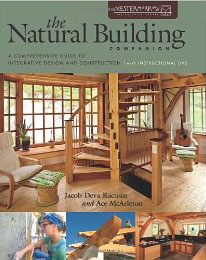
The Natural Building Companion: A Comprehensive Guide to Integrative Design and Construction, by Jacob Deva Racusin and Ace McArleton, published in 2012 by Chelsea Green Publishing is a book with a rare degree of detail on the topics covered. It is an extremely valuable resource for those interested in actually building with the materials that it covers, which are primarily wood, straw, earth and stone. The experience and focus of the authors is on appropriate techniques for the climate of the Northeastern United States. This book would make an excellent text book, and indeed the authors are associated with Yestermorrow, the design/build school in Vermont. To read the rest of this review by Kelly Hart see this page.


Click on image to buy from Amazon.com
 

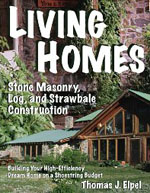
Living Homes: Stone Masonry, Log, and Strawbale Construction; Building Your High-Efficiency Dream Home on a Shoestring Budget, by Thomas J. Elpel, 2010. Originally published in 1998, this is the sixth edition. This hefty book (250 pages, 8.5" X 11") is chock full of detailed information, personal musings, photos and diagrams, and practical tips. Thomas Elpel is a do-it-yourselfer after my own heart, and what he has compiled here chronicles his adventures of building his own home in rural Montana as well as experiences with other building projects. He and his wife were forced by circumstances to find inexpensive solutions for all of the challenges of building their home, and they managed to do this without sacrificing their commitment to energy efficiency and sustainability. To read my complete review see this page.
   
 
Click on image to buy from Amazon.com
 

Houses: Modern Natural/Natural Modern by Ron Broadhurst, Barry Bergdoll, 2010. This carefully curated presentation of new and recent houses represents the vanguard of architects creating innovative structures that maintain a sensitive relationship to their natural contexts. With exceptional color photography, the book presents houses created with sustainability and carbon footprint in mind, as well as houses constructed on spectacular sites. Some houses incorporate the cutting edge of environmentally sensitive design; some radically rethink the use of "traditional" materials such as wood and stone.
   
 
Click on image to buy from Amazon.com
 

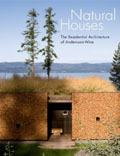
Natural Houses: The Residential Architecture of Andersson-Wise, Chris Wise, Arthur Andersson, 2010. Natural Houses presents seven of the Austin, Texas-based firm's exquisitely crafted projects. Precise and cool, with forms often derived from the American vernacular of barns and cottages, these are painstakingly crafted houses made from regionally appropriate and aesthetically timeless materials. Natural Houses presents a range of sites and residences-from a small cabin in the woods to a multibuilding camp. Sited on a cliff, the House Above Lake Austin uses terraces to descend its steeply hilly site. The building's simple materials celebrate the site and climate not by drawing attention to themselves, but by blending in. The stone foundation is similarly tied to the natural stone of the mountain. Smooth plaster walls above the stone foundation appear to have been chiseled from the rock itself. In a deceptively simple boathouse the walls fold down to become impromptu diving platforms.
   
 
Click on image to buy from Amazon.com
 

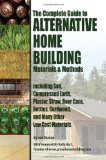
The Complete Guide to Alternative Home Building materials & Methods: Including Sod, Compressed Earth, Plaster, Straw, Beer Cans, Cordwood and Many Other Low Cost Materials by Jon Nunan, 2009. This book will show you how to identify, locate, and effectively use many alternative building materials. The advantages and benefits of alternative building materials for both consumers and builders and the key ecological design principles are written about. It discusses straw bale, cordwood, cob, adobe, rammed earth, light clay, pise, earthbag, bamboo, earth-rammed tires, cork, wool carpeting, sod, compressed earth, earth plaster, beer cans, bottles, as well as living roofs and more. The performance characteristics of these materials and construction techniques for each are explored, as well as how to integrate plumbing and electricity into these alternative buildings. You will also learn about the structural aspects, climate control, siting, foundations, and flooring options. Ultimately, you will come to understand that these materials are often cheaper, easier to build with, stronger, more durable, and more fire resistant than many more conventional materials. I wrote the Foreword to this book and this website is given credit on the cover of the book.


Click on image to buy from Amazon.com
 

Natural Building: Creating Communities Through Cooperation by Timothy Rieth, 2008. The book is an illustration of a successfully built natural building, including the necessary human element. The book takes the reader through the entire building process for the folly, and with text and photographs documents the experiences of dozens of students and instructors as they created the small, natural gem of a building during a single summer. The processes and material result of this adventure are well documented, but the authors also tried to document what is harder to transmit: the creation of a strong social bond between all of the participants - students, teachers, the owner, residents of the town and the land itself. This intangible result-the creation of a community or tribe - is perhaps one of the greatest benefits of such an event and program.

 
Click on image to buy from Amazon.com
 

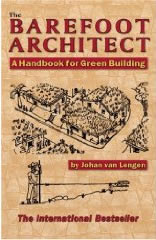
The Barefoot Architect by Johan van Lengen, 2007. A former UN worker and prominent architect, Johan van Lengen has seen firsthand the desperate need for a "greener" approach to housing in impoverished tropical climates. This comprehensive book clearly explains every aspect of this endeavor, including design (siting, orientation, climate consideration), materials (sisal, cactus, bamboo, earth), and implementation. The author emphasizes throughout the book what is inexpensive and sustainable. Included are sections discussing urban planning, small-scale energy production, cleaning and storing drinking water, and dealing with septic waste, and all information is applied to three distinct tropical regions: humid areas, temporate areas, and desert climates. Hundreds of explanatory drawings by van Lengen allow even novice builders to get started. For a complete review by Kelly Hart see this page.


Click on image to buy from Amazon.com
 
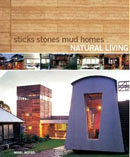
Sticks Stones Mud Homes: Natural Living by Nigel Noyes, 2007. Founded on the principles of minimal impact and sustainable practice, this resource explains how, with ingenuity, determination, and a new aesthetic sensibility, seemingly unconventional materials can be adapted to use for building a home. Designed to conserve energy, create new life from old, and employ good recycling practices that work with the environment, the featured houses are all made from rammed earth, baled straw, mudbricks, recycled timber, stone, and other inexpensive and contemporary materials. With good designs and sound building principles, these homes are not only respectful of limited environmental resources, but can also be stylish, comfortable, and economical.
   
 
Click on image to buy from Amazon.com
 

The Art of Natural Building: Design, Construction, Resources, by Joseph Kennedy, et al, 2002. I am actually among the et al in this book! I contributed two articles for the editors, one about my earthbag/papercrete house, and the other about the value of earth berming. This comprehensive introduction to the natural building field is for lay people, architects, and designers who wish to build beautiful, low-cost, and environmentally-sensible structures. From straw bale and cob, to recycled concrete and salvaged materials, this anthology of articles from leaders in the field focuses on both the practical and the esthetic concerns of ecological building designs and techniques. Profusely illustrated and packed with resources.


Click on image to buy from Amazon.com
 

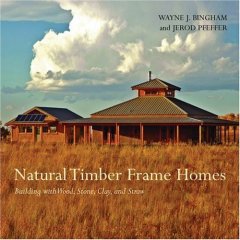
Natural Timber Frame Homes by Wayne Bingham, Jerod Pfeffer, 2007. Natural Timber Frame Homes lays the philosophical groundwork for how locally available materials result in more durable and beautiful homes. It asks us to consider the source of our wood, stone, clay, and straw and suggests that this awareness contributes to our perception of character in a finished house. Building naturally also gives us the feedback necessary to be conscientious environmental and economic stewards and allows us to play a meaningful role in the creation of our dwelling. This book puts the theory of natural building into practice by providing the tools to evaluate your area for potential building materials. Photographs and drawings pull the theory together into workable timber frame construction details with floor plans that are adaptable to your specific needs, including your climate and landscape. Beauty and character of traditional timber frame homes are a result of natural materials being crafted by the hands of the builder. By injecting ourselves into the process of home construction, we have the potential to live more connected to the natural world and influence the future of the Earth for the better.


Click on image to buy from Amazon.com
 

Home Work: Handbuilt Shelter by Lloyd Kahn, 2004. I have rarely been this enthusiastic about a book, and not just because I am in it! Ever since his first publication of Shelter in 1973 (which I also contributed to), Lloyd has been collecting imagery and stories for this eventual sequel. With Home Work, Lloyd has gone beyond the glory of his earlier work in many ways. Not only does it seem more comprehensive, but it is almost entirely in color. This is a sumptuous coffee table book that will likely not spend much time on the table, since it is so intriguing you just want to pick up and browse through it. Every page is chock full of fun, unusual, lyrical, quaint, artistic, humble, elegant, practical, colorful, whimsical, well-crafted, funky, traditional, and outlandish buildings that were lovingly built by the hands of those who reside there. All of this is presented with Lloyd's casual style of layout and commentary that is reminiscent of a scrap book. Many of the photos are actually collages of several exposures spliced together to create expansive murals. Flipping through the pages of Home Work will take you back to the early days of hippie huts and forward to the cutting edge of natural building technology. The builders themselves are portrayed as lovingly as their buildings, with many profiles of fine craftsmen and women sprinkled throughout. In fact, the book begins by featuring the work of ten artisans who represent some of the best in this tradition of owner-builders. Then a whole slew of other specific homes are displayed in such a way that the lifestyle of their occupants is embedded directly within the imagery. This book depicts far more than architecture; it shows entire ways of life. For a more complete review and some images from the book click here.


Click on image to buy from Amazon.com
 

Natural Remodeling for the Not-So-Green House: Bringing Your Home into Harmony with Nature by Carol Venolia, Kelly Lerner, 2006. To have a home that's more in touch with the earth, you don't have to start from the ground up! It's possible-and more environmentally friendly-to go green by renovating an existing home. With the help of Carol Venolia, an award-winning architect and bestselling author, and Kelly Lerner, a world-famous innovator in the field of sustainable development, even the least mechanically inclined person can make a difference in his or her dwelling.and to the planet. The two have produced a remarkable book-packed with information and photos, and the first ever in full color to cover the subject. It's lush and exquisite to look at, filled with motivational case studies and informative graphics, and completely user-friendly. 


Click on image to buy from Amazon.com
 

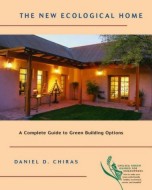
The New Ecological Home: A Complete Guide to Green Building Options, by Dan Chiras, 2004. As homeowners become more environmentally savvy and demand ecological choices, a new generation of architects and builders is emerging, intent on creating warm and inviting homes that cause only a fraction of the environmental impact of conventional building methods. The New Ecological Home provides an overview of green building techniques, materials, products and technologies that are either currently available or promise to be in the near future. There are chapters on green building materials, earth-sheltered architecture, passive solar heating and cooling, sustainable approaches to water and waste, energy efficiency, and environmental landscaping. Chiras sets the record straight on the vast potential for passive heating and cooling and provides a resource guide, recommendations, and a green-building checklist. He provides a wealth of up-to-date, practical information for homebuyers, owner-builders, and anyone interested in building for a sustainable future.


Click on image to buy from Amazon.com
 
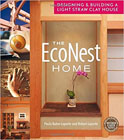
EcoNest: Creating Sustainable Sanctuaries of Clay, Straw, and Timber by Paula Baker-Laporte, Robert Laporte, 2005. A bird builds its nest using the materials at hand to create its perfect shelter. It doesn't fly to the next state for twigs or build a bigger home than it needs. Instinctively it creates an environment that is nurturing and nontoxic. Like the bird, humans desire shelter that is cozy and nurturing, that satisfies the soul, mind, and body. This is what you find when you step into an econest. Beginning with a timberframe structure and walls created with a mix of clay and straw, this book describes a unique method of green building that avoids the typical problems involved with conventional building, such as industrial waste, excessive chemical usage, and inefficient synthetic insulation. Design details such as which direction a home is oriented, what kind of lighting illuminates each room, and whether or not there is a step-down entryway are a vital part of creating each econest. Meet the homeowners of ten different econests around the country in regions as diverse as Iowa, Minnesota, New Mexico, and California who chose to build in appreciation of the harmony and beauty of nature, using nature's resources so as to consume less energy, create less waste, nurture their health, and enrich their senses.
   
 
Click on image to buy from Amazon.com
 

Designing Your Natural Home by David Pearson, 2005. One of the pioneers of incorporating the green movement into home design, David Pearson now offers a complete guide for creating an eco-home. Informative, clear, and with factual advice, tips, and beautiful color photos, Designing Your Natural Home takes readers through each step of the process, from defining the scope of the project to choosing materials and building methods to decorating the new abode. Along with practical, how-to information, photo essays present inspiring and stylish examples of natural design. The ten innovative homes featured in this book exemplify different solutions for every situation and budget, from apartments to sprawling dwellings. Readers will learn how to make the most of small spaces, find a builder, draw up plans, purchase low energy appliances, and much more. Whether they're renovating an existing space, expanding a house, or starting from scratch, readers will be inspired to create the natural home of their dreams with this indispensable guide and source for fresh ideas.


Click on image to subscribe or find out more about this.
 

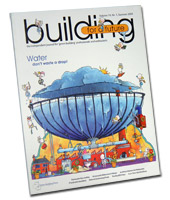
Building for a Future magazine, is published by The Green Building Press, which is dedicated to helping you create green, healthy and sustainable buildings. They provide regular and unbiased information via these publications: Building for a Future, the quarterly magazine, Green Building Bible, the definitive book, and GreenPro, a green product directory. This information is primarily focused on materials and projects in the United Kingdom, but would be of interest to a much wider audience. Most of the articles in the magazine are written by the very people that designed or built the projects described. This can be excellent inspiration for architects, builders, developers, self builders and everyone interested in eco-building, including homeowners.


Click on image to buy from Amazon.com
 

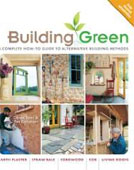
Building Green : A Coplete How-To Guide to Alternative Building Methods by Clarke Snell , Tim Callahan, 2006. This absolutely groundbreaking manual doesn't just talk about eco-friendly building techniques, but actually shows every step! More than 1,200 close-up photographs, along with in-depth descriptions, follow the real construction of an alternative house from site selection to the addition of final-touch interior details. Co-authors Clarke Snell and Timothy Callahan (a professional builder and contractor) provide thorough discussions of the fundamental concepts of construction, substitutes for conventional approaches, and planning a home that's not only comfortable and beautiful, but environmentally responsible. Then, they roll up their sleeves and get to work assembling a guest house that incorporates four different alternative building methods: straw bale, cob, cordwood, and modified stick frame. The images show every move: how the site is cleared, the basic structure put together, the cob wall sculpted, the bales and cordwood stacked, a living roof created, and more. Most important, the manual conveys real-world challenges and processes, and offers dozens of sidebars with invaluable advice. It's head and shoulders above all others in the field.


Click on image to buy from Amazon.com
 

Living Homes: Integrated Design & Construction by Thomas J Elpel, 2010.The house of your Dreams does not have to be expensive. The key is all in the planning. How much a house costs, how it looks, how comfortable it is, how energy-efficient it is - all these things occur on paper before you pick up even one tool. A little extra time in the planning process can save you tens of thousands of dollars in construction and maintenance. That is time well spent! Living Homes takes you through the planning process to design an energy and resource efficient home that won't break the bank. Then, from the footings on up to the roof, author Thomas J. Elpel guides you through the nuts and bolts of construction for slipform stone masonry, tilt-up stone walls, log home construction, building with strawbales, making your own terra tile floors, concrete countertops, windows and doors, solar water heaters, masonry heaters, framing, plumbing, greywater, septic systems, swamp filters, painting and more!


Click on image to buy from Amazon.com
 

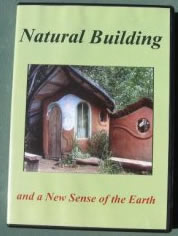
Natural Building and a New Sense of the Earth DVD produced by Inner Growth Books and Videos. Have you ever dreamed of another kind of life? Not the job that you don't want to go off to in the morning, or the house you have to keep on paying for year after year, but a life closer to the earth, a little place in the country that you build yourself, a garden and some solar panels for electricity, time to be with those you love and to do the things you most want to do. An impossible dream? Maybe not. Right now people all over are working to create an alternative to a consumer society that gives us less and less satisfaction and is more and more destructive to the earth and to us, as well. Explore the world of natural building and meet some of its pioneers who are creating beautiful and inexpensive houses out of earth and straw, houses that you can make, too. This is a way of building that can transform how you see the earth and yourself.


Click on image to buy from Amazon.com
 

Earth Walls: Natural Building and Sustainability DVD directed by Tona Williams.   Natural builders in Madison and rural Wisconsin build a cob wall (made with clay, sand, and straw) and insulate a home with straw bales. Participants celebrate the fun of natural building and talk about how to change conventional construction so that similar projects can catch on in cities. Includes demonstrations of foundations, cob mixing and wall-building, and lime plastering. Explore the functionality and artistic flair of homes called Earthships in New Mexico. Visits to completed and in-progress structures illustrate how tires, bottles, cans, and earth can create exceptional dwellings. Solar panels, passive solar heating, wind turbines, biodiesel, and rainwater collection also show life "off the grid."  Includes discussion of choosing what kind of house to build, new ideas for walls, foundation and roofing options, utilizing insulation and thermal mass, embodied energy, permaculture, approaching a design, and building codes.


Click on image to buy from Amazon.com
 

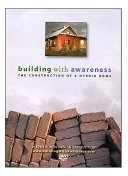
Building With Awareness: The Construction of a Hybrid Home, DVD, 2005. This beautifully photographed how-to DVD will show you how to build straw bale walls for insulation, adobe walls for interior thermal mass (which greatly increases the efficiency of a straw bale home), earth plasters for a beautiful finish, 100% electrical generation by sunlight, and passive solar heating and cooling. This video could save you thousands of dollars in design and construction costs. Beautiful aesthetics and energy-efficiency can both come from the same materials. It is how the structure is designed as a whole that makes the difference. Follow the design and construction of one house - from start to finish - and see how aesthetics, comfort, and energy efficiency can all come from the same materials and design parameters. This video is jam-packed with green design and construction techniques from professionals working in the cutting edge of home building and design. Although the video emphasizes the idea of building small, the concepts can be scaled to any size structure.

Ecology of Building Materials by Bjorn Berge, 2000


Click on image to buy from Amazon.com
 

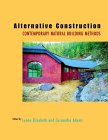
Alternative Construction: Contemporary Natural Building Methods
edited by Lynne Elizabeth and Cassandra Adams, 2000


Click on image to buy from Amazon.com
 

Alternative Housebuilding by Mike McClintock, 1989


Click on image to buy from Amazon.com
 

Building Without Borders : Sustainable Construction for the Global Village
by Joe Kennedy, 2004


Click on image to buy from Amazon.com


The New Natural House Book: Creating a Healthy, Harmonious and Ecologically Sound Home

by David Pearson, 1998


Click on image to buy from Amazon.com


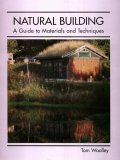
Natural Building: A Guide to Materials and Techniques

by Tom Woolley, 2006


Click on image to buy from Amazon.com


Log Construction Manual: The Ultimate Guide to Building Handcrafted Log Homes

by Robert Wood Chambers, 2006


Click on image to buy from Amazon.com


Building Inside Nature's Envelope: How New Construction and Land Preservation Can Work Together
by Andy Wasowski, Sally Wasowski, 2000


Click on image to buy from Amazon.com
 

Places of the Soul: Architecture and Environmental Design as a Healing Art
by Christopher Day, 2003


Click on image to buy from Amazon.com
 

The Gaia Natural House Book: Creating a Healthy and Ecologically Sound Home
by David Pearson, Kevin McCloud, 2000


Click on image to buy from Amazon.com


Best of MOTHER EARTH NEWS: Natural Building Methods
[Kindle Edition]


Click on image to buy from Amazon.com
 

Earth Construction: A Comprehensive Guide
by Hugo Houben and Hubert Guilland, 1993


Click on image to buy from Amazon.com
 

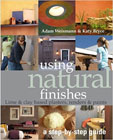
Using Natural Finishes: A Step-by-Step Guide
by Adam Weismann and Katy Bryce, 2008


Click on image to buy from Amazon.com
 

Appropriate Building Materials


Click on image to buy from Amazon.com
 
The Good House Book : A Common-Sense Guide to Alternative Homebuilding
by Clarke Snell, 2004


Click on image to buy from Amazon.com
 

The Alternative Building Sourcebook: Traditional, Natural and Sustainable Building Products and Services edited by Steve K. Chappell, Steve Chapell and James J. Marks, 1998


Click on image to buy from Amazon.com
 

PLANS

Sacred Mountains
Kelly Hart, Designer

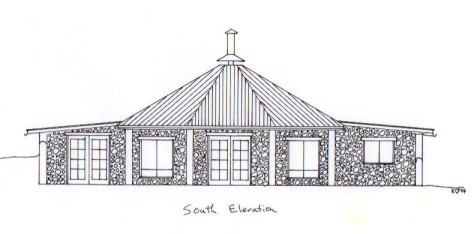
This is a 2 bedroom, 1 story, 1725 sf (to the outside) house that is designed around the traditional hogan concept of Southwestern native Americans. It would be dug into a hillside, or bermed substantially on the north side. A large south-facing living area with a vaulted cieling provides passive solar heating for much of the house. The bedrooms, bathroom, pantry and kitchen surround the traditional octagonal shape. This was originally designed for the Sacred Mountains Foundation as a demonstration home for a variety of natural building techniques, so that it employs cordwood, strawbale, adobe, rock, earthbag, and timber-frame aspects. The southern elevation shown here would be post and beam with cordwood infill. There is a unique central fire place, open 360 degrees, for back-up heat and ceremonial purposes. The large core room could accomodate large groups, or be utilized in many ways.
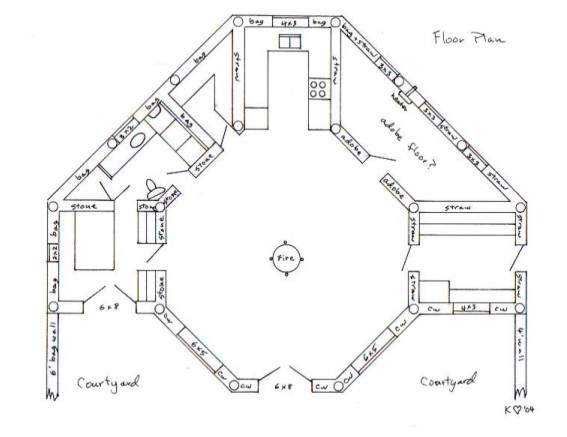
Traditionally, the native Americans enter their abodes from the east, so this where the airlock entry is situated. This large space can also serve as a closet and storage room. The large octagonal room is undifferentiated, but would serve as living, dining and ceremonial space. To the west is the master bedroom, with adjacent bathroom. To the left of the kitchen alcove is a large pantry that would be naturally cooled by its substantial earth berm. A second bedroom or studio faces the northeast. A large fenced courtyard area to the south provides privacy and wind protection.

For more information about this plan, and many others, visit our sister site www.dreamgreenhomes.com, where you will find a wide range of plans for sustainable homes, greenhouses, small buildings, garages, and food storage space for sale. Dream Green Homes is a consortium of outstanding architects and designers, who have pooled their talent and expertise for your benefit.

LINKS

GENERAL

greenhouse.gov.au this on-line manual provides an overview of why natural building is important and specifies several techniques.

grisb.org The Geiger Research Institue of Sustainable Building features workshops, a strawbale certification program, articles and publications on many aspects of sustainable building, house plans (including a free emergency shelter plan), and links to much more information.

webconx.com discussion of various approaches to natural building.

nzdl.sadl.uleth.ca Fundamental information on these building materials: stone, earth, fired clay, lime, cement, pozzolanas, natural fibers, bamboo, timber, metals, glass, plastics; plus fundamental information about foundations, floors, roofs, walls, etc.

ORGANIZATIONS

naturalbuildingnetwork.org is a non-profit membership association promoting natural building principles, materials and practitioners worldwide.

earthbuilding.com Earth Building Foundation's informative site.

EDUCATION

naturalhomes.org lists workshops conducted around the world relating to all aspects of natural building.

lowimpact.org the Low-Impact Linging Initiative in England provides information and courses related to natural building.

Seven Generations Natural Builders this group promotes natural building (especially cob and straw bale) through workshops and other assistance.

housealive.org specializes in workshops on Natural Building, Design and Appropriate Technology.

MEDIA

naturalhomemagazine.com Natural Home Magazine's pleasing site.

networkearth.org
home of The Art of Natural Building, The Last Straw Journal, The Straw Bale Solution, etc.

dirtcheapbuilder.com source for books and videos about natural building.

foxmaple.com Fox Maple School of Traditional Building's Joiners' Quarterly.

motherearthnews.com Mother Earth News has provided solid information on many topics related to sustainable living for several decades, and now many of these articles are available on-line.

Chapter One of the book Eco Pioneers: Practical Visionaries Solving Today's Environmental Problems By Steve Lerner; Pliny Fisk III: The Search for Low-Impact Building Materials and Techniques.

newbuilder.co.uk publishes Building for a Future magazine, with many issues available on-line.

distantplanet.net features two video segments of "The Natural House", one is about an interesting hybrid zero net energy house in Oregon and the other is about a company providing natural paints.

EARTHEN WALLS, PLASTERS, AND FLOORS

mudcrafters.com specializes in adobe floors and earthen plasters, with lots of pictures and descriptions.


naturalbuilder.com focuses on cob, adobe and natural plasters, with books and workshops on these topics.

lauriebaker.net an essay about the value of mud by architect Laurie Baker.

earthenhand.com answers the question "Why build with earth?"

DIRECTORIES

coopamerica.org a directory of green services and products.

PHOTO GALLERIES

potkettleblack.com an extensive collection of links to photos galleries of natural/alternative buildings

gernotminke.de this is a wonderful gallery of the innovative earth architecture of the German professor Gernot Minke.

simondale.net a lovely example of using local natural materials to build a comfortable and beautiful home.

sunraykelley.com features the artful natural building of visionary/builder Sunray Kelley.

facebook.com This Facebook page features many folks who discuss and provide examples of wonderful natural home concepts.

earthenbuilt.com shows many examples of natural building projects.

DISCUSSION

greenbuilder/discussion lists several green building discussion groups.

The Irish Eco Builders Website aims to be a technical source, discussion forum and contact base, for those interested in natural and eco-friendly buildings.

MAP OF NATURAL BUILDINGS

The interactive map below pinpoints various examples of natural buildings around the world. If you have a home you like to feature or would just like to browse through the selection of homes on display, go to naturalhomes.org

BLOGS

There are getting to be quite a few blogs out there that are devoted, at least to some extent, to natural building. Besides mine, here are some others that I have become aware of:

small-scale.net/yearofmud
glenhunter.ca
pinkhammer.blogspot.com
oscarlisabuild.blogspot.com
builditwithbales.typepad.com
africanarchitecture.blogspot.com
lichenology.blogspot.com
sustainablehousing.blogspot.com
strawbaleredux.blogspot.com
orilliastrawbale.blogspot.com
strawbalers.blogspot.com
boundaryrammedearth.blogspot.com
rammed-earth-blog.blogspot.com
redwillowproject.blogspot.com
feedburner.com/strawbale/podcast
yestermorrowschool.natural-building-in-costa-rica
joated-loghome.blogspot.com
straw.gorogue.com
radio.weblogs.com
thestrawbalehouseplansblog.blogspot.com
ecovillage.lightwork.ca/our-blog-news-photos
historicrammedearth.wordpress.com
rammed-earth-southkorea.blogspot.com
strawbalestudioinsa.blogspot.com
ilovecob.com
buildinggreentv.com
earthbagbuilding.wordpress.com
erinisbuildingstuff.blogspot.com
hemplime.blogspot.com
papercretebyjudith.com
montelloalpacacompany.blogspot.com

ct-cordwoodoct06.blogspot.com
logman-logblog.blogspot.com
backyardnature.com
mjsworkshop.org
ktmagatyestermorrowdbschool.blogspot.com
ithacaecohostel.blogspot.com
domes.blogspot.com
rammedearth.blogspot.com
earthbuilding.blogspot.com
straw.gorogue.com
runnyford.blogspot.com
stoneyard.blogspot.com
loghomescabin.com
strawbalecolorado.blogspot.com
stonehousestrawhouse.blogspot.com
oscarlisabuild.blogspot.com
cobstudio.blogspot.com
strawhousejournal.blogspot.com
sonoramarammedearth.blogspot.com
goldenstrawbale.blogspot.com
newleafbud.blogspot.com
freewebs.com/stocktonunderground
buildinggreenstructures.com
homegrownhideaways.spaces.live.com

home-n-stead.com
yccbernalillo.blogspot.com
evalarevolution.blogspot.com
small-scale.net/yearofmud
taoshivehome.blogspot.com
dancelikeanelephant.blogspot.com
therubberhouse.nl
earthinmind.net
earthship.es

Disclaimer Of Liability And Warranty
I specifically disclaim any warranty, either expressed or implied, concerning the information on these pages. Neither I nor any of the advisor/consultants associated with this site will have liability for loss, damage, or injury, resulting from the use of any information found on this, or any other page at this site. Kelly Hart, Hartworks, Inc.


Home       Site Map        STORE

For Email contact go to About Us
Established in 2001, GreenHomeBuilding.com is primarily a labor of love. Kelly, and the GreenHomeBuilding team of experts, have answered thousands of questions for readers over the years, and we continue to publish up-to-date information about increasingly important sustainable architecture. If you feel moved to assist us in this work, your kind donation would be much appreciated; this can be easily done through our PayPal account:
Custom Search

VISIT OUR OTHER WEBSITES:

  [Solar Car]      [Earthbag Building]     [Dream Green Homes]