Rammed Earth
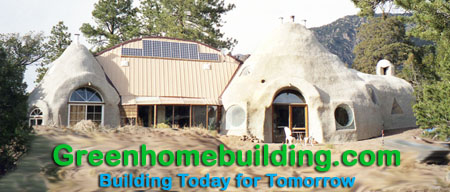
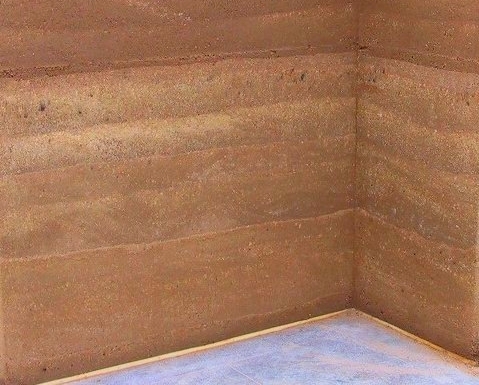
Ramming earth to create walls is at least as old as the Great Wall of China. It is really quite similar to adobe and cob techniques, in that the soil is mostly clay and sand. The difference is that the material is compressed or tamped into place, usually with forms that create very flat vertical surfaces. Modern rammed earth typically utilizes heavy mechanized equipment to move and compress the material . The walls are normally at least a foot thick to give enough bulk to be stable and provide the thermal mass for comfort. It is best to apply insulating material to the outside of the building to keep the interior temperature constant. The interior surface can be finished in a variety of ways, from natural oil to more standard surfaces. Rammed earth houses tend to have a very solid, quiet feeling inside.
ARTICLES:
Tulou
Chinese Architecture
Rammed Earth:
Developing
New Guidelines for an Old Material
EXPERT
ADVICE
with Clifton Schooley

RAMMED EARTH QUESTIONS ANSWERED
Where
rammed earth works
Uses for rammed earth
Steps in ramming earth
Structural concerns
Thermal
characteristics
Rammed earth and humidity
Codes for rammed earth
Miscellaneous
The media shown below are arranged according to when they were published, with the most recent ones at the top. If you click on one of the images you will be taken to a page at Amazon.com where you can find out more about the book. If you end up buying one of them, greenhomebuilding.com will receive a small commission that will help cover the cost of maintaining this website. Thanks for your patronage.










Plans
Santa Fe III
Sven Alstrom, Architect

This one story Santa Fe Style bungalow home is based upon 24-inch wide straw bale construction (or rammed edarth) on concrete block foundation & concrete spread footings with crawl spaces and a partial basement. Natural interior plaster and natural exterior stucco are recommended. A ten foot beamed ceiling in the living dining room overlooks an east facing courtyard patio. The house is 1,716 sq. ft. as shown (outside dimensions). The 2 foot thick exterior perimeter wall totals 158 square feet, therefore the net useable interior total is 1,558 square feet. The detached garage is an additional 728 square feet. This plan is shown with south facing entry and east facing courtyard. Overall site plan dimensions including the garage and porches shown are 66 feet deep x 82 feet wide. This plan is optimized for a hot climate.
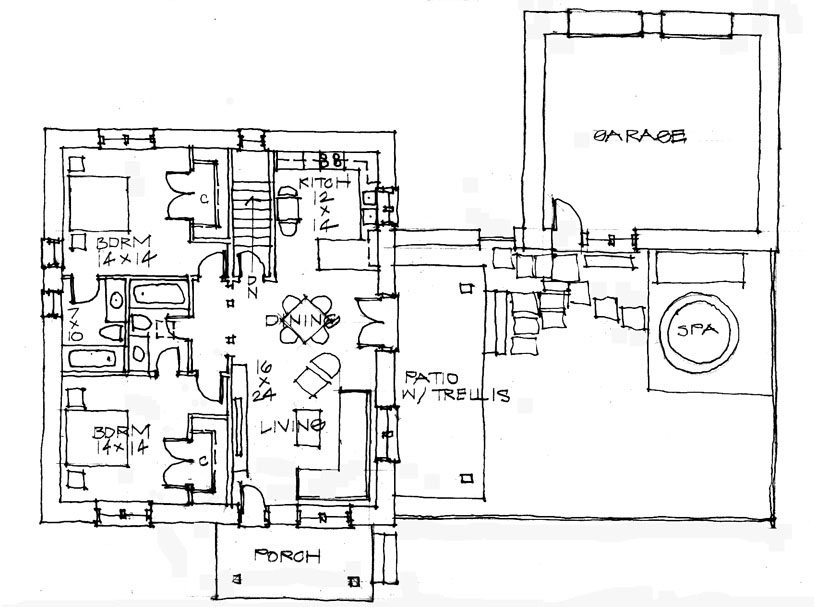
For more information about this plan, and many others, visit our sister site www.dreamgreenhomes.com, where you will find a wide range of plans for sustainable homes, greenhouses, small buildings, garages, and food storage space for sale. Dream Green Homes is a consortium of outstanding architects and designers, who have pooled their talent and expertise for your benefit.
Informative Links
rammedearthworks.com informative site on rammed earth.
eartharchitecture.org features information and sponsors workshops on all typs of earth building.
adobebuilder.com Adobe Builder Magazine offers media, classes and information about adobe and rammed earth.
rammedearthhomes.com Contractor Quentin Branch has assembled an excellent selection of slides of rammed earth.
youtube.com There are several short videos of rammed earth construction posted here.
aseg.net stabilized rammed earth works in Australia.
earth-auroville.com Auroville in India has been working with various aspects of earthen architecture and has much to share.
sirewall.com and terrafirmabuilders specialize in insulated rammed earth, and offer workshops and information about this innovative approach to building.
rammedearth.blogspot very informative blog about rammed earth.
rammedearth.info a fine picture gallery of rammed earth projects and designs by Canadian rammer, Clifton Schooley.
iitk.ac.in/nicee this PDF document describes a simple, inexpensive method of reinforcing adobe or rammed earth buildings with plastic mesh for earthquake resistance.
For Email contact go to About Us
Established in 2001, GreenHomeBuilding.com is primarily a labor of love. Kelly, and the GreenHomeBuilding team of experts, have answered thousands of questions for readers over the years, and we continue to publish up-to-date information about increasingly important sustainable architecture. If you feel moved to assist us in this work, your kind donation would be much appreciated; this can be easily done through our PayPal account:

VISIT OUR OTHER WEBSITES:
[Natural Building Blog] [Earthbag Building] [Dream Green Homes]
Disclaimer Of Liability And Warranty
I specifically disclaim any warranty, either expressed or implied, concerning the information on these pages. Neither I nor any of the advisor/consultants associated with this site will have liability for loss, damage, or injury, resulting from the use of any information found on this, or any other page at this site. Kelly Hart, Hartworks LLC.