|
|
|
|
|
Click on image to buy from Customflix.com |
|
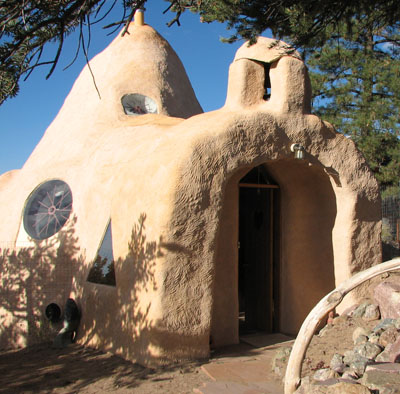
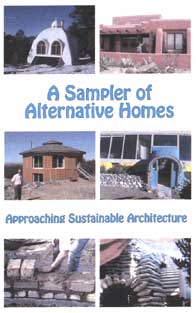
A Sampler of Alternative Homes: Approaching Sustainable Architecture . This two-hour DVD, produced by Kelly Hart, provides an overview of sustainable building concepts. You can enjoy a look at a fascinating variety of homes and the creative people who built them! Discover how passive solar design and environmentally low-impact materials can be used to create comfortable and economical homes. See the use of both traditional materials, such as adobe, and innovative materials, such as papercrete and earthbags. This program offers a wealth of information about construction details and other considerations. It covers adobe block construction, piled adobe (similar to cob), rammed earth, both load-bearing and post and beam strawbale, earthships, earth-sheltering, cordwood, thin-shelled concrete domes, papercrete, earthbags, hybrid structures, and recycling various containers for housing. To watch a streaming video introduction to this program, click here.
$29.95
For a VHS videotape of this program go to the STORE.
| |
|
|
| |
Click on image to buy from Amazon.com |
|
Fundamentals of Integrated Design for Sustainable Building by Marian Keeler and Bill Burke, 2009. A rich sourcebook covering the breadth of environmental building, Fundamentals of Integrated Design for Sustainable Building introduces the student and practitioner to the history, theory and technology of green building. Using an active learning approach, the concepts of sustainble architecture are explained and reinforced through design problems, research exercises, study questions, team projects, and discussion topics. Chapters by specialists in the green movement round out this survey of all the important issues and developments that students and professionals need to know. From history and philosophy to design technologies and practice, this sweeping resource is sure to be referenced until worn out.
|
 |
|
Click on image to buy from Amazon.com |
|
The National Green Building Standard is a collaborative effort between the International Code Council (ICC) and National Association of Home Builders (NAHB). This book provides the "green" practices that can be incorporated into a variety of areas, from new homes to high-rise multifamily buildings, and from remodels and additions to hotels and motels. This standard outlines effective, relevant green practices, including lot design, preparation and development, resource, energy, and water efficiency, indoor environmental quality, and operation, maintenance, and building owner education. By defining four threshold levels of Bronze, Silver, Gold, and Emerald, the standard gives builders the means to achieve their sustainability goals – whether they are designing a basic, entry-level green building or aiming for the highest level sustainable "green" building with energy savings of 65 percent or higher.
| |
 |
|
| |
Click on image to buy from Amazon.com |
|
Being SUSTAINABLE: Building Systems Performance by Dennis Fukai, 2008. This book uses 3D construction models to illustrate the mechanics of sustainability and how building systems work together to maximize their performance. The book covers the design, construction, and operation of a variety of sustainable technologies with a focus on their integration and interaction. This includes sustainable plumbing installations that harvest rain water to reduce water consumption, gray water systems to recycle waste water; a variety of heating, ventilating and air conditioning designs that maximize human comfort and reduce energy consumption; and alternate on and off-site electrical generators in combination with efficient lighting and intelligent building controls. The book uses 3D graphics, videos, and models to illustrate the challenge of designing and installing sustainable building systems. The narrative follows the sequence of system installations, each in support of the other, but all crowded into the same space. Important to readers is that the interactive models and videos on the book's CD are an integral part of a broader multimedia learning experience. Readers are free to reach out, walk around, and orbit these models. They are able to deconstruct, modify, and reassemble the building systems. The idea is to use the book s printed pages as a guide in order to actually enter, explore and deconstruct the system models on the CD.
 |
|
Click on image to buy from Amazon.com |
|
The Barefoot Architect by Johan van Lengen, 2007. A former UN worker and prominent architect, Johan van Lengen has seen firsthand the desperate need for a "greener" approach to housing in impoverished tropical climates. This comprehensive book clearly explains every aspect of this endeavor, including design (siting, orientation, climate consideration), materials (sisal, cactus, bamboo, earth), and implementation. The author emphasizes throughout the book what is inexpensive and sustainable. Included are sections discussing urban planning, small-scale energy production, cleaning and storing drinking water, and dealing with septic waste, and all information is applied to three distinct tropical regions: humid areas, temporate areas, and desert climates. Hundreds of explanatory drawings by van Lengen allow even novice builders to get started. |
 |
|
Click on image to buy from Amazon.com |
|
Ten Shades of Green: Architecture and the Natural World by Peter Buchanan, 2005. A compelling manifesto using ten buildings to illustrate how environmental responsibility promises to reinvigorate contemporary architecture. Contemporary buildings, like contemporary forms of urban development, are major contributors to the environmental crisis. In this book documenting a major traveling exhibition organized by the Architectural League, curator and critic Peter Buchanan uses ten buildings that combine environmental responsibility and design excellence to argue that sustainability is not just good for the planet, but offers architects new opportunities for creativity and innovation. He shows that there is no single route to sustainability and no such thing as a green aesthetic. Rather, through a range of building types, he demonstrates that increased awareness of a building's setting combined with advances in technology create unlimited opportunities for responsive design. Generously illustrated with four-color photographs and plans, the book includes work by an international roster of architects, including Norman Foster, Neutelings Riedijk Architecten, Herzog + Partner, and Renzo Piano. 164 color photos and line drawings. An architect, writer, critic, and consultant in environmental design and planning, Peter Buchanan lives in London. |
|
 |
|
Click on image to buy from Amazon.com |
|
Building the Future Today by John Clem, 2000. In this book you will find information regarding: building a healthier home, safer home; placement of the home upon the building site; alternative building materials and construction methods; effective insulation methods; the environmental aspects of building materials; the basics of passive solar heating, and much more.
 |
|
Click on image to buy from Amazon.com |
|
Green Building: Project Planning & Cost Estimating by RS Means, 2002. Green Building involves energy- and resource-saving strategies, such as low-E windows, reflective roofing, solar technologies and efficient HVAC, plumbing and electrical systems. Green building also means using healthy, recycled and renewable materials like certified lumber, low-VOC finishes and natural fibers – along with practices such as xeriscaping and daylighting. This book gives you the whole picture, with the information you need to:*Identify, compare, and specify green materials and systems. *Learn about LEED, Energy Star and other recognized rating systems. *Take advantage of financial incentives and funding resources. *Determine the cost of green products, and calculate energy savings and payback periods. The book also features a Green Building Cost Data section, with over 120 pages of cost data on sustainable materials and systems, which includes many new products and materials, their primary green attributes, and installed cost. Plus 8 Case Studies that demonstrate the challenges, costs, and rewards of notable green building projects.
|
 |
|
Click on image to buy from Amazon.com |
|
Sustainable Home USA by Jacobo Krauel, 2008.
Reduce, recycle, reuse--saving the earth begins at home * Bamboo, paper, even bottles and tires--innovative ideas for home construction * Thought-provoking ideas from all across America Sustainability is the future of architecture. Here are the newest cutting-edge ideas in sustainable residential architecture in the United States, all featured in hundreds of full-color photographs and illustrations. The emphasis is on innovative ideas, new techniques, and more efficient energy systems. Unconventional building materials such as bamboo, paper, and even bottles and tires are just a few of the examples of American ingenuity showcased here. |
|
|
Click on image to buy from Amazon.com |
|
Green Home Improvement: 65 Projects That Will Cut Utility Bills, Protect Your Health & Help the the Environment by Daniel D. Chiras, 2008. Over the past 30 years, Dan Chiras has retrofitted three homes to make them as energy-efficient and resource-efficient as humanly possible. He has worked with healthy, environmentally friendly paints, stains, and finishes. He's installed insulation and caulked and weather stripped to cut energy use. He's installed homemade interior storm windows. He's installed a solar hot water system and a solar electric system. Continuing his lifelong tradition of sharing what he's learned, he wrote this book to help mainstream America green up its act. Green Home Improvement contains 65 practical and affordable projects inside and outside your home. These projects are designed to reduce resource consumption, reduce pollution, create healthier homes, and build a greener world -- all the while saving you money.
|
 |
|
Click on image to buy from Amazon.com |
|
The New Ecological Home: A Complete Guide to Green Building Options, by Dan Chiras, 2004. As homeowners become more environmentally savvy and demand ecological choices, a new generation of architects and builders is emerging, intent on creating warm and inviting homes that cause only a fraction of the environmental impact of conventional building methods. The New Ecological Home provides an overview of green building techniques, materials, products and technologies that are either currently available or promise to be in the near future. There are chapters on green building materials, earth-sheltered architecture, passive solar heating and cooling, sustainable approaches to water and waste, energy efficiency, and environmental landscaping. Chiras sets the record straight on the vast potential for passive heating and cooling and provides a resource guide, recommendations, and a green-building checklist. He provides a wealth of up-to-date, practical information for homebuyers, owner-builders, and anyone interested in building for a sustainable future. Dan Chiras is a leading authority on green building and renewable energy options, and is the author of The Solar House and The Natural House, which Earthship inventor Michael Reynolds has called "a much needed, unbiased encyclopedia of sustainability that will put wind in the sails of our future." |
 |
|
Click on image to buy from Amazon.com |
|
Sustainable Homes : 26 Designs that Respect the Earth by James Grayson Trulove, 2004. Each of these "eco" houses is unique. Some tread lightly on the site by nestling into the land. Others are designed to be extremely well suited to the climactic zones in which they are built. Many use materials that do no harm to the environmentmaterials that are recycled, salvaged, or harvested. The houses featured in Sustainable Homes are designed by today's top architects such as Obie Bowman, Fernau and Hartman, Hanrahan and Meyers, and Lake/Flato. They reveal how much the parameters of ecological design have expanded in just a few short years. Over two dozen individual houses are featured -- from locations as diverse as a Canadian cove to the Arizona desert, from Kansas plains to the Norwegian coast, from California bluffs to South Carolina wetlands -- each described through descriptions, photographs, plans, drawings, and schematics. |
 |
|
Click on image to buy from Amazon.com |
|
Housing Ourselves: Creating Affordable, Sustainable Shelter , by Richard Burnham, 1998. Through centuries of human history, people in every part of the world have practiced the art of building their own homes--homes that turned out to be remarkably practical, sustainable, and affordable. Today, we have homes built by "professionals." And we also have homes built of synthetic materials, a coast-to-coast homogenization of style, wastefulness of natural resources, and ever skyrocketing prices--even for the most modest housing. Illuminating case studies show how housing can be constructed for one-third the cost of custom-built housing. The author shows how to: choose materials that are locally available, cost-effective, and sustainable; design housing that's suitable to an area's climate, topography, and other shelter requirements; launch the project on a shoestring and add on incrementally as finances permit; create homes that bring individuality and variety back to today's homogenized landscape.
|
 |
|
Click on image to buy from Amazon.com |
|
Natural Timber Frame Homes by Wayne Bingham, Jerod Pfeffer, 2007. Natural Timber Frame Homes lays the philosophical groundwork for how locally available materials result in more durable and beautiful homes. It asks us to consider the source of our wood, stone, clay, and straw and suggests that this awareness contributes to our perception of character in a finished house. Building naturally also gives us the feedback necessary to be conscientious environmental and economic stewards and allows us to play a meaningful role in the creation of our dwelling. This book puts the theory of natural building into practice by providing the tools to evaluate your area for potential building materials. Photographs and drawings pull the theory together into workable timber frame construction details with floor plans that are adaptable to your specific needs, including your climate and landscape. Beauty and character of traditional timber frame homes are a result of natural materials being crafted by the hands of the builder. By injecting ourselves into the process of home construction, we have the potential to live more connected to the natural world and influence the future of the Earth for the better. |
 |
|
Click on image to buy from Amazon.com |
|
Living Homes: Sustainable Architecture and Design by Nora Burba Trulsson, Suzi Moore McGregor, 2008. For those who want a beautiful home that also reflects an environmentally conscious lifestyle, the 22 residences featured in Living Homes prove that it's possible to have the best of both worlds. In this lushly photo-graphed book, the authors take readers on a visual tour of stunning earthen homes. They explore a rammed earth neighborhood, a two-story Victorian-style straw bale house, and a recycled concrete coastal retreat, among other alternative living spaces. Meet the architects and owners, read their stories, learn what inspired them, and explore their beautiful gardens and décor. Terrence Moore's striking photographs capture the exquisite interiors and exteriors and showcase the picturesque landscapes that create such magnificent backdrops. With profiles of adobe, rammed earth, straw bale, and reinvented materials in both their historical and contemporary applications, Living Homes is a visual inspiration and vital guide to sustainable architecture and alternative materials. |
 |
|
Click on image to buy from Amazon.com |
|
Ecohouse, Second Edition by Sue Roaf, 2003. Ecohouse 2 tells you how to design low energy, environmentally friendly buildings. It provides the foundations for building design in a warming world, and shows how to take the first step towards the zero-carbon emission buildings of tomorrow. Sue Roaf is famed for her approach to design and her awareness of energy efficiency. Here she reveals the concepts, structures and techniques that lie behind the realization of her ideals. By using her own house as a case-study Roaf guides the reader through the ideas for energy efficient design or 'eco design'. This second edition, a follow up to the best selling original, introduces new sections including earth sheltering and reed beds. It also explores 24 case-studies of ecohouses from around the world. It is an ideal comprehensive reference for architects, designers and their clients, as well as self builders, who wish to help make sustainable design a reality. |
 |
|
Click on image to buy from Amazon.com |
|
Mainstreaming Sustainable Architecture: Casa de Paja by Ed Paschich, Jan Zimmerman, 2001. “Sustainable Architecture” is a term that groups together a number of approaches to architecture that choose materials and techniques that can be maintained for the long-term without exhausting non-renewable resources. Mainstreaming Sustainable Architecture illustrates a systems approach to design and construction in which the various components—such as passive solar techniques, earth air conditioning, vapor-permeable ceilings, and cellulose insulation—operate synergistically to achieve environmental goals. This case study of Casa de Paja (House of Straw) demonstrates that many elements of sustainable architecture can be incorporated without sacrificing sophisticated design and without added expense. While no technical background is needed to understand the principles behind sustainable design, architects and engineers will find enough detail in the drawings and appendices to adapt these techniques to their own construction. Illustrates a systems approach to design and construction in which the various components operate synergistically to achieve environmental goals.
 |
|
Click on image to buy from Amazon.com |
|
Green Architecture by James Wines, 2000. This book gives an excellent historical and philosophical account of the shifts of human settlements and explains the necessity of a change in attitude towards our built environment and its intrinsic relationship with its natural context. Many examples and a variety of projects, attitudes, perspectives, and approaches to the environmental problems back Mr. Wines view that there is no alternative, that a green architecture must become a basic constant and not remain a mere superficial trend. We already possess the knowledge and the technology to rebuild paradise on earth. We now need a growing, global conciousness and the wisdom necessary to move forward. James Wines puts up the various - and often irreconcilable - concepts of environmentally-friendly architecture for discussion, making a case for an architecture that not only focuses on technological solutions, but also tries to reconcile man and nature in its formal idiom. |
 |
|
Click on image to buy from Amazon.com |
|
Good Green Homes: Creating Better Homes for a Healthier Planet by Jennifer Roberts, 2003. Creating a good green home isn't just about conservation, about using less or saving more-although that's certainly part of it. It's about creating better homes that are easier on the environment, less expensive over the long term, and more delightful to come home to. That's the message Jennifer Roberts wants to share in Good Green Homes, the ultimate new guide for people who want to live in comfortable, healthy, environmentally conscious homes.
With some simple steps outlined in this book, you can save money, and do your part to help save the environment. If you associate green-built housing with the unconventional or the quirky-tree houses, geodesic domes, dwellings constructed of tires or soda bottles-think again. This book lays out seven fundamental principles of green building, illustrated with more than 150 color and 20 black and white photographs of more than twenty-five homes.
|
 |
|
Click on image to buy from Amazon.com |
|
Green Development: Integrating Ecology and Real Estate by Rocky Mountain Institute, Alex Wilson, Jenifer L. Uncapher, Lisa McManigal, L. Hunter Lovins, Maureen Cureton, William D. Browning, 1998. "Green building"--the trend toward more environmentally responsible construction--has become a popular movement among architects, but it is less well understood by the developers and owners who control funding. This book is the first to demonstrate the advantages of green development, using case studies of developers and owners who built environmentally responsible projects that have delivered superior financial rewards. If you're a developer, architect, planner, contractor, lender, or city official, this book speaks your language. Every stage of the development process is examined in detail: market research, site planning, design, approvals, financing, construction, marketing, and occupancy. Also included are lists of project statistics and contacts, books and other information sources, and development strategies. Based on 80 case studies drawn from Rocky Mountain Institute's extensive worldwide research and consulting work, Green Development distills proven procedures and practical lessons that work in the real world.
|
 |
|
Click on image to buy from Amazon.com |
|
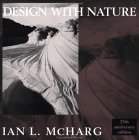
Design with Nature by Ian L. McHarg, 1995. In the twenty-five years since it first took the academic world by storm, Design With Nature has done much to redefine the fields of landscape architecture, urban and regional planning, and ecological design. It has also left a permanent mark on the ongoing discussion of mankind's place in nature and nature's place in mankind within the physical sciences and humanities. Described by one enthusiastic reviewer as a "user's manual for our world," Design With Nature offers a practical blueprint for a new, healthier relationship between the built environment and nature. In so doing, it provides nothing less than the scientific, technical, and philosophical foundations for a mature civilization that will, as Lewis Mumford ecstatically put it in his Introduction to the 1969 edition, "replace the polluted, bulldozed, machine-dominated, dehumanized, explosion-threatened world that is even now disintegrating and disappearing before our eyes." |
| |
 |
|
| |
Click on image to buy from Amazon.com |
|
Design Like You Give a Damn: Architectural Responses to Humanitarian Crises by Architecture for Humanity, 2006.
The greatest humanitarian challenge we face today is that of providing shelter. Currently one in seven people lives in a slum or refugee camp, and more than 3,000,000,000 people--nearly half the world's population--do not have access to clean water or adequate sanitation. The physical design of our homes, neighborhoods and communities shapes every aspect of our lives. Yet too often architects are desperately needed in the places where they can least be afforded. Edited by Architecture for Humanity and now in its third printing, Design Like You Give a Damn is a compendium of innovative projects from around the world that demonstrate the power of design to improve lives. The first book to bring the best of humanitarian architecture and design to the printed page, Design Like You Give a Damn offers a history of the movement toward socially conscious design, and showcases more than 80 contemporary solutions to such urgent needs as basic shelter, healthcare, education and access to clean water, energy and sanitation.
 |
|
Click on image to buy from Amazon.com |
|
Contemporary Design in Detail: Sustainable Environments by Yenna Chen, Alicia Kennedy, 2007. A visual look at the architectural details of sustainable residential spaces The Contemporary Design Details series takes a highly visual look at architectural design details that are more often dealt with in a technical textbook format. The books take readers on a tour of the best details designed by great architects around the world. The series provides a powerful presentation of the most challenging and evolving architectural and design categories. Sustainable Environments focuses on the type of architectural details in distinctive, sustainable residential spaces. It includes sections on components such as cooling or shading devices, building techniques that create minimal impact on the land, active systems, and the use of new sustainable materials as well as those that are salvaged or recyclable. The book presents recent work by architects from around the globe in color photographs and architectural drawings, and is structured according to categories of architectural detail.
| |
 |
|
| |
Click on image to buy from Amazon.com |
|
Modern Sustainable Residential Design: A Guide for Design Professionals by William J. Carpenter, 2009. "The world of residential building is poised to do great things. The guidance, information, materials and technology, while ever-evolving, are in place. Now it's the hearts and minds that must follow. Modern Sustainable Residential Design is a comprehensive, user-friendly guide that can help. So let's get started." (From the Foreword by Allison Arieff, The New York Times "By Design" columnist.) This guide offers lessons for architects, interior designers, and builders who want to conceptualize and implement sustainable design strategies in modern residential design. It outlines solutions for incorporating sustainable aspects into a home design from conceptualization to implementation. Detailed design analyses range from groundbreaking contemporary buildings such as Pugh + Scarpa's Solar Umbrella House to Ray Kappe's LivingHome, illuminating some of the most innovative sustainable strategies in the United States and abroad.
| |
 |
|
| |
Click on image to buy from Amazon.com |
|
Eco: An Essential Sourcebook for Environmentally Friendly Design and Decoration by Elizabeth Wilhide, 2006. Eco proves that sustainability in the home is both achievable and beautiful. The first part focuses on siting, construction, energy efficiency, water and waste, gardening, and landscaping. Fifteen case studies demonstrate how architects from around the world have tackled these issues and succeeded in creating sustainable yet inspirational, liveable homes. The second part, Surfaces and Finishes, provides an illustrated directory of the materials and surface finishes that are available to the eco-conscious homeowner, ranging from wood, bamboo, paper, and natural fibers to stone, linoleum, glass, metal, recycled plastic, and concrete. Finally, In Practice offers strategies for eco-living that deliver maximum benefit with minimal changes of lifestyle. These are strategies--reducing consumption, repairing rather than replacing, recycling wherever possible--that everyone can adopt, whatever sort of home you live in.
| |
|
|
| |
Click on image to buy from 100 Fires |
|
Ecological Design by by Sim Van Der Ryn; Stuart Cowan, 2007. Ecological Design is a landmark volume that helped usher in an exciting new era in green design and sustainability planning. Since its initial publication in 1996, the book has been critically important in sparking dialogue and triggering collaboration across spatial scales and design professions in pursuit of buildings, products, and landscapes with radically decreased environmental impacts. This 10th anniversary edition makes the work available to a new generation of practitioners and thinkers concerned with moving our society onto a more sustainable path. Using examples from architecture, industrial ecology, sustainable agriculture, ecological wastewater treatment, and many other fields,Ecological Designprovides a framework for integrating human design with living systems. Drawing on complex systems, ecology, and early examples of green building and design, the book challenges us to go further, creating buildings, infrastructures, and landscapes that are truly restorative rather than merely diminishing the rate at which things are getting worse.
| |
 |
|
| |
Click on image to buy from 100 Fires |
|
The New Autonomous House: Design and Planning for Sustainability by Brenda Vale and Robert Vale
2002. This book has a simple but revolutionary message: It is possible to live in an inexpensive house that is kind to the planet and liberates its owner from utility bills. The Vales, who have been at the forefront of green architecture for nearly thirty years, record the building of a house based on the principles of sustainable resources in the small town of Southwell in the Midlands. They document the philosophy, design and construction of a building that can produce power from the sun and get drinking water from the rain. This is a thought-provoking, practical solution to the environmental problems caused by the houses in which we live, a blueprint of green architecture for future generations.
| |
|
|
| |
Click on image to buy from 100 Fires |
|
The Cul-de-Sac Syndrome: Turning Around the Unsustainable American Dream by John F. Wasik, 2009.
An incisive look at the consequences of today's costly and damaging suburban lifestyle, this new book exposes the economic, cultural, environmental, and health problems underlying life in suburbia. John Wasik provides powerful insights into how the U.S. suburban lifestyle became unsustainable and what can be done to salvage it. Wasik's observations are firmly grounded in exclusive on-the-ground research, interviews with thought leaders, and the latest studies and statistics. He exposes the untold truths about home ownership: green isn't always so green, life isn't cheaper after accounting for gas, water, and taxes, and modern suburban living isn't so idyllic considering the toll it takes on our health. Wasik's trenchant analysis adds a new dimension to an important topic, with exclusive research and analysis that debunks the many myths of suburban living, while exploring innovative solutions being developed in cities and suburbs across the country.
| |
 |
|
| |
Click on image to buy from Amazon.com |
|
The Complete Guide to Alternative Home Building materials & Methods: Including Sod, Compressed Earth, Plaster, Straw, Beer Cans, Cordwood and Many Other Low Cost Materials by Jon Nunan, 2009. This book will show you how to identify, locate, and effectively use many alternative building materials. The advantages and benefits of alternative building materials for both consumers and builders and the key ecological design principles are written about. It discusses straw bale, cordwood, cob, adobe, rammed earth, light clay, pise, earthbag, bamboo, earth-rammed tires, cork, wool carpeting, sod, compressed earth, earth plaster, beer cans, bottles, as well as living roofs and more. The performance characteristics of these materials and construction techniques for each are explored, as well as how to integrate plumbing and electricity into these alternative buildings. You will also learn about the structural aspects, climate control, siting, foundations, and flooring options. Ultimately, you will come to understand that these materials are often cheaper, easier to build with, stronger, more durable, and more fire resistant than many more conventional materials. I wrote the Foreword to this book and this website is given credit on the cover of the book.
| |
|
|
| |
Click on image to buy from 100 Fires |
|
The Ecology of Building Materials by Bjorn Berge, 2009.
|
|
|
|
|
|
|
|
|
|
|
|
|
|
|
|
|
|
|
|
|
|
|
|
|
|
|
|
|
|
|
|
|
|
|
|
|
|
|
|
|
|
|
|
|
|
|
Whole House Book
by Pat Borer, Cindy Harris
2001
 |
|
Click on image to buy from Amazon.com |
|
|
Green Building Guidelines: Meeting the Demand for Low-Energy, Resource-Efficient Homes
by Sustainable Buildings Industry Council, 2004
 |
|
Click on image to buy from Amazon.com |
|
|
|
|
|
|
|
|
|
LINKS
Homes Across America profiles resource efficient and high performance home building in the U.S. You can search for homes around the country and find out about the "green" technologies and techniques used to build them. Examples include everything from "off the grid" homes to high performance production models to multi-family apartments. My Earthbag/Papercrete home is listed under Colorado. You can submit your own resource efficient home for their consideration.
naturalhomes.org lists workshops conducted around the world relating to all aspects of natural building.
buildearth.org a family of forums dedicated to natural building and ecological design, with selected original content from the print version The Last Straw Journal.
greenhouse.gov.au lots of case studies of houses in Australia that demonstrate various aspects of sustainable architecture.
dsireusa.org The Database of State Incentives for Renewable Energy (DSIRE) is a comprehensive source of information on state, local, utility, and selected federal incentives that promote renewable energy.
ecotecture.com free online journal of ecological design.
smart-homeowner.com features innovative solutions for creating efficient, healthy, eco-friendly homes and has many articles and resources available at the on-line version of their magazine.
eco-living.net site with many annotated links.
Sustainable Building Sourcebook very well organized information and links related to various aspects of sustainable architecture.
squidoo.com/greenblogs a directory of blogs covering such topics as building, food production, energy, business, life styles, peak oil, etc.
buildingscience.com has a searchable database of articles about
building physics, systems design concepts, and awareness of sustainability.
edcmag.com Environmental Design+Construction magazine for environmentally oriented construction industry.
newvillage.net semi-annual journal on building sustainable cultures.
reddawn.com very informative site about green architecture in general, including an interactive bulletin board.
grisb.org The Geiger Research Institue of Sustainable Building features workshops, a strawbale certification program, articles and publications on many aspects of sustainable building, house plans (including a free emergency shelter plan), and links to much more information.
energyconservationinfo.org has numerous links with descriptions about alternative construction and energy.
energybuilder.com Environmental Science and Technology site; information and links on sustainable design.
buildinggreen.com informative site for Environmental Building News.
greenbuilder.com extensive site of sustainable sources.
motherearthnews.com Mother Earth News has provided solid information on many topics related to sustainable living for several decades, and now many of these articles are available on-line.
aecb.net Association for Environment Conscious Building (from the UK).
oikos.com green building source for news, classifieds, library, etc.
arch.hku.hk thorough analysis of sustainability, with lots of links
squ1.com this ecologically oriented architectural software company has assembled a huge array of related information.
hopedance.org magazine for finding pathways to sustainable living and positive solutions.
mcdonough.com William McDonough's site features articles by and about him and his radical ideas for transforming design into an art of creating no waste.
nahbrc.org The NAHB Research Center facilitates liaisons between builders and manufacturers, design professionals and housing research, and government and industry the Research Center is dedicated to advancing housing technology and enhancing housing affordability for the benefit of all Americans.
goodtobegreen.com is primarily a directory of green resources, both products and services.
lowimpactliving.com A directory of green products and services available in the U. S.
eeba.org Energy & Environmental Building Association
bagelhole.org has a lot of information about various aspects of sustainable architecture.
newbuilder.co.uk publishes Building for a Future magazine, with many issues available on-line.
greenerbuildings.com provides resources and case studies related to sustainable design, materials land and water use.
greenbuildingpages.com has an expanding database related to sustainable design, products and resources.
greenmatrix.net a web-based tool for to implementing green design throughout the planning and design process.
rebuildingcommunity.org devoted to sustainable disaster relief around the world.
cowartgroup.com this page from an architectural firm includes a Checklist for Environmentally Sustainable Design and Construction From the AIA Environmental Committee.
inika.com this Indian firm combines many aspects of sustainable architecture in their designs.
environmentalarchitecture this site was created by a school girl as a class project and features many things that we all can learn from.
openarchitecturenetwork.org The purpose of this network is to allow designers and architects to work together in a whole new way, through the power of the internet to bring diverse folks together to forge new design solutions for housing mankind.
cectoxic.org This PDF guide to building green was assembled by the Citizen's Environmental Coalition in New York state.
sustainablebuild.co.uk This U.K. website features a vast collection of articles about most aspects of sustainable building.
intlistings.com This article entitled "Greenify Your Home: 100 Tips and Resources to Make Your House Environmentally Friendly" offers substantial tips for moving forward with making your home more sustainable.
sustainabilitystore.com is a directory of socially and environmentally responsible products and services.
greenbuildingelements.com is a blog-style magazine featuring articles by various professionals related to all aspects of sustainable design.
100milediet.org/100-mile-housing This article describes the 100-mile-housing concept with one example of locally-sourced materials.
greengeezer.com is a blog with this motto: "Green homes for baby boomers: Because there's still time to do it right."
wiserearth.org is a community of people and organizations that connect with others working in the field of sustainable architecture.
construction.com McGraw Hill Construction Community Forum has many threads related to sustainable architecture.
guardian.co.uk The Guardian has launched 'Green your home', a project that follows homeowners as they attempt to improve the energy efficiency of their homes, with pictures, blogs, and advice from a panel of experts.
nahbgreen.org describes the National Association of Home Builders National Green Building Program.
greenfootstep.org The Rocky Mountain Institute offers a simple online tool for evaluating new construction and what its carbon footprint will be.
greenanswers.com is a user-generated database of questions and answers covering a wide range of topics, including architecture.
thenauhaus.com blog-style updates to the book Building Green provide some excellent information about many aspects of building green.
homebuilding.co.uk The A-Z of Green Homes from the UK's Homebuilding & Renovating Magazine.
sustainablesources.com features a calendar of events related to sustainable living which can be updated by visitors online. |