|
|
| |
|
|
| |
Click on image to buy from 100 Fires |
|
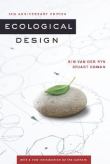
Ecological Design by
by Sim Van Der Ryn; Stuart Cowan, 2007.
Ecological Design is a landmark volume that helped usher in an exciting new era in green design and sustainability planning. Since its initial publication in 1996, the book has been critically important in sparking dialogue and triggering collaboration across spatial scales and design professions in pursuit of buildings, products, and landscapes with radically decreased environmental impacts. This 10th anniversary edition makes the work available to a new generation of practitioners and thinkers concerned with moving our society onto a more sustainable path. Using examples from architecture, industrial ecology, sustainable agriculture, ecological wastewater treatment, and many other fields, Ecological Design provides a framework for integrating human design with living systems. Drawing on complex systems, ecology, and early examples of green building and design, the book challenges us to go further, creating buildings, infrastructures, and landscapes that are truly restorative rather than merely diminishing the rate at which things are getting worse.
| |
|
|
| |
Click on image to buy from 100 Fires |
|
Climate Change Science Compendium 2009 by
the U N Environmental Programme
is a review of some 400 major scientific contributions to our understanding of Earth Systems and climate that have been released through peer-reviewed literature or from research institutions over the last three years, since the close of research for consideration by the IPCC Fourth Assessment Report. The Compendium is not a consensus document or an update of any other process. Instead, it is a presentation of some exciting scientific findings, interpretations, ideas, and conclusions that have emerged among scientists. Focusing on work that brings new insights to aspects of Earth System Science at various scales, it discusses findings from the International Polar Year and from new technologies that enhance our abilities to see the Earth's Systems in new ways. Evidence of unexpected rates of change in Arctic sea ice extent, ocean acidification, and species loss emphasizes the urgency needed to develop management strategies for addressing climate change.
| |
|
|
| |
Click on image to buy from Amazon.com |
|
The Rough Guide to Climate Change, 2nd Edition by Robert Henson, 2008.
The Rough Guide to Climate Change gives the complete picture of the single biggest issue facing the planet. Cutting a swathe through scientific research and political debate, this completely updated 2 nd edition lays out the facts and assesses the options- global and personal- for dealing with the threat of a warming world. The guide looks at the evolution of our atmosphere over the last 4.5 billion years and what computer simulations of climate change reveal about our past, present, and future. This updated edition includes new information from the 2007 report from the Intergovernmental Panel on Climate Change and an updated politics section to reflect post-Kyoto developments. Discover how rising temperatures and sea levels, plus changes to extreme weather patterns, are already affecting life around the world. The guide unravels how governments, scientists and engineers plan to tackle the problem and includes in-depth information and lifestyle tips about what you can do to help.
| |
|
|
| |
Click on image to buy from Amazon.com |
|
The Ethics of Climate Change: Right and Wrong in a Warming World by James Garvey, 2008. James Garvey argues that the ultimate rationale for action on climate change cannot be simply economic, political, scientific or social, though our decisions should be informed by such things. Instead, climate change is largely a moral problem. What we should do about it depends on what matters to us and what we think is right. This book is an introduction to the ethics of climate change. It considers a little climate science and a lot of moral philosophy, ultimately finding a way into the many possible positions associated with climate change. It is also a call for action, for doing something about the moral demands placed on both governments and individuals by the fact of climate change. This is a book about choices, responsibility, and where the moral weight falls on our warming world.
| |
|
|
| |
Click on image to buy from Amazon.com |
|
Sudden and Disruptive Climate Change: Exploring the Real Risks and How We Can Avoid Them by Michael C. MacCracken, et al, 2008.
While changes in emissions and atmospheric concentrations of greenhouse gases are generally projected to be slow and smooth, there are increasing indications that the intensity and impacts of climate change on the environment and society could, at least on a regional basis, be abrupt and bumpy. Surprising and nonlinear responses are likely to result as warming exceeds certain thresholds, inducing relatively rapid changes in, for example, the Greenland and West Antarctic ice sheets, atmospheric wind and precipitation patterns, coastal inundation, the occurrence of wildfire, and the ranges of plant and animal species. Written and edited by a transdisciplinary group of internationally respected researchers, this book explores the possibilities of such changes and their significance for our society. In addition to covering the status of the science in a number of the critical areas, it also provides indications that there is a significant potential (and need) for action to limit human-induced perturbations, which can occur more rapidly than governments are currently moving.
| |
|
|
| |
Click on image to buy from Amazon.com |
|
Encyclopedia of Global Warming and Climate Change (3 Volume Set) by S. George Philander, 2008. This series helps readers learn about the astonishingly intricate processes that make ours the only planet known to be habitable. These three volumes include more than 750 articles that explore major topics related to global warming and climate change-ranging geographically from the North Pole to the South Pole, and thematically from social effects to scientific causes. Key Features: Contains a 4-color, 16-page insert that is a comprehensive introduction to the complexities of global warming; Includes coverage of the science and history of climate change, the polarizing controversies over climate-change theories, the role of societies, the industrial and economic factors, and the sociological aspects of climate change; Emphasizes the importance of the effects, responsibilities, and ethics of climate change; Presents contributions from leading scholars and institutional experts in the geosciences; Serves as a general resource for geography, oceanography, biology, climatology, history, and many other subjects.
| |
|
|
| |
Click on image to buy from Amazon.com |
|
The Earthscan Reader on Adaptation to Climate Change by Lisa Schipper, Ian Burton, 2008.
Climate change is now upon us. While mitigation is essential to reduce the future severity of climate change, it will take time and some effects will inevitably continue for centuries. Consequently, more attention is now also being directed to adaptation as a means of reducing losses. As the importance of adaptation becomes more apparent, there is need for wider appreciation and understanding of the concept and its potential as well as the obstacles to its effective deployment. This reader, the first of its kind, pulls together and makes sense of the most significant writings on adaptation to climate change from the past two decades. An introduction maps out the field and traces the evolution of adaptation from a biological concept into a policy objective. This is the ideal collection for students, policy makers, researchers, activists and NGOs and all people who need a solid grounding in all aspects of climate change adaptation.
| |
|
|
| |
Click on image to buy from Amazon.com |
|
Climate Change and Adaptation by Neil Leary, 2009.
Climate Change and Adaptation covers current practices for managing climate risks to food security, water resources, livelihoods, human health and infrastructure, deficits between current practices and needs for effective management of climate risks, the changing nature of the risks due to human-caused climate change, strategies for adapting to climate change to lessen the risks, and the need to integrate these strategies into development planning and resource management. The book also identifies obstacles to effective adaptation and explore measures needed to create conditions that are favorable to climate change adaptation. The findings and lessons will be of use to policymakers and managers responsible for understanding and avoiding potentially adverse effects from climate change on sustainable development, food security, agriculture, water resources, forests, fisheries, grazing lands, biodiversity and public health. Citizen activists who are concerned about reducing the threats from climate change to the poor, sustainable development, biodiversity, and sensitive environmental systems and resources will learn about options for management of the threats.
| |
|
|
| |
Click on image to buy from Amazon.com |
|
Carbon Shift: How the Twin Crises of Oil Depletion and Climate Change Will Define the Future by Thomas Homer-Dixon, 2009.
The twin crises of climate change and peaking oil production are converging on us. If they are not to cook the planet and topple our civilization, we will need informed and decisive policies, clear-sighted innovation, and a lucid understanding of what is at stake. We will need to know where we stand, and which direction we should start out in. These are the questions Carbon Shift addresses. Thomas Homer-Dixon argues that the two problems are really one: a carbon problem. We depend on carbon energy to fuel our complex economies and societies, and at the same time this very carbon is fatally contaminating our atmosphere. To solve one of these problems will require solving the other at the same time. In other words, we still have a chance to tackle two monumental challenges with one innovative solution: clean, low-carbon energy. Carbon Shift brings together six of Canada's world-class experts to explore the question of where we stand now, and where we might be headed. |
| |
|
|
| |
Click on image to buy from Amazon.com |
|
Earth under Fire: How Global Warming Is Changing the World by Gary Braasch, 2007. Six years ago, award-winning photojournalist Gary Braasch began an extraordinary journey around the world to observe and document environmental changes resulting from the warming of our climate. In this stunning, eye-opening book, he brings us along to witness firsthand what he saw as he crossed both the Antarctic and Arctic Circles, trekked above 15,000 feet in the Andes, dove on damaged coral reefs, and followed scientists into the field on four continents. In more than one hundred photographs, including dramatic before-and-after comparisons, Braasch records communities, landscapes, and animals at risk because of receding glaciers, eroding coastlines, rising sea levels, and thawing permafrost. In the accompanying text he surveys the science behind climate change and introduces native people, lifelong observers, scientists, and others who are noticing striking changes right now. Alongside Braasch's compelling words and images, essays by eminent scientists discuss the impacts of climate change on the oceans, biodiversity, fresh water, mountain cultures, plants and animals, and our health. More than a warning, Earth under Fire, the most complete illustrated guide to the effects of climate change now available, offers an upbeat and intelligent account of how we can lessen the effects of our near total dependence on fossil fuel using technologies and energy sources already available.
| |
|
|
| |
Click on image to buy from Amazon.com |
|
An Inconvenient Truth: The Planetary Emergency of Global Warming and What We Can Do About It by Al Gore, 2006. Our climate crisis may at times appear to be happening slowly, but in fact it is happening very quickly-and has become a true planetary emergency. The Chinese expression for crisis consists of two characters. The first is a symbol for danger; the second is a symbol for opportunity. In order to face down the danger that is stalking us and move through it, we first have to recognize that we are facing a crisis. So why is it that our leaders seem not to hear such clarion warnings? Are they resisting the truth because they know that the moment they acknowledge it, they will face a moral imperative to act? Is it simply more convenient to ignore the warnings? Perhaps, but inconvenient truths do not go away just because they are not seen. Indeed, when they are responded to, their significance doesnt diminish; it grows.
| |
|
|
| |
Click on image to buy from Amazon.com |
|
An Inconvenient Truth (DVD) Starring: Al Gore , Billy West (II), 2006. Director Davis Guggenheim eloquently weaves the science of global warming with Al Gore's personal history and lifelong commitment to reversing the effects of global climate change in the most talked-about documentary of the year. An audience and critical favorite, An Inconvenient Truth makes the compelling case that global warming is real, man-made, and its effects will be cataclysmic if we don't act now. Gore presents a wide array of facts and information in a thoughtful and compelling way: often humorous, frequently emotional, always fascinating. In the end, An Inconvenient Truth accomplishes what all great films should: it leaves the viewer shaken, involved and inspired.
| |
|
|
| |
Click on image to buy from Amazon.com |
|
Down-to-Earth Guide To Global Warming by Laurie David and Cambria Gordon, 2007. Irreverent and entertaining, DOWN TO EARTH is filled with fact about global warming and its disastrous consequences, loads of photos and illustrations, as well as suggestions for how kids can help combat global warming in their homes, schools, and communities. Engagingly designed, DOWN TO EARTH will educate and empower, leaving readers with the knowledge they need to understand this problem and a sense of hope to inspire them into action.
| |
|
|
| |
Click on image to buy from Amazon.com |
|
Priority One: Together We Can Beat Global Warming by Allan J. Yeomans, 2007. We can do better than just slow down global warming. We can fix it. This book shows how. Increasing the organic matter in the world's soils is the only practical and cost-effective way to stop the worldwide catastrophe of global warming. By switching to sustainable energy sources that don't add carbon to the atmosphere, we can keep global warming stopped. Yet these proven solutions are poorly understood, scattered among specialties, and surrounded by confusion and conflict. Priority One shows how to combine these proven solutions so we can stabilize the world's climate, bolster lagging economies, and enhance human health. But we need to act now, before this one-time opportunity is gone.
| |
|
|
| |
Click on image to buy from Amazon.com |
|
Fight Global Warming Now: The Handbook for Taking Action in Your Community by Bill McKibben, 2007. Bestselling author Bill McKibben turns activist in the first hands-on guidebook to stopping climate change. The leading scientist at NASA warns that we have only ten years to reverse climate change; the British government's report on global warming estimates that the financial impact will be greater than the Great Depression and both world wars-combined. Bill McKibben warns that it's no longer time to debate global warming, it's time to fight it. Drawing on the experience of Step It Up, a national day of rallies held on April 14, McKibben and the Step It Up team of organizers provide the facts of what must change to save the climate and show how to build the fight in your community, church, or college. They describe how to launch online grassroots campaigns, generate persuasive political pressure, plan high-profile events that will draw media attention, and other effective actions. This essential book offers the blueprint for a mighty new movement against the most urgent challenge facing us today.
|
| |
|
|
| |
Click on image to buy from Amazon.com |
|
Affluenza: The All-Consuming Epidemic by John De Graaf, et al, 2001. The definition of affluenza, according to de Graaf, Wann, and Naylor, is something akin to "a painful, contagious, socially-transmitted condition of overload, debt, anxiety and waste resulting from the dogged pursuit of more." It's a powerful virus running rampant in our society, infecting our souls, affecting our wallets and financial well-being, and threatening to destroy not only the environment but also our families and communities. They offer historical, political, and socioeconomic reasons that affluenza has taken such strong root in our society, and in the final section, offer practical ideas for change. These use the intriguing stories of those who have already opted for simpler living and who are creatively combating the disease, from making simple habit alterations to taking more in-depth environmental considerations, and from living lightly to managing wealth responsibly.
|
| |
|
|
| |
Click on image to buy from Amazon.com |
|
Stepping Lightly by Mark Burch, 2000. Burch considers not only the deeper rewards of voluntary simplicity for individuals, but the practice of simple living as a thoughtful approach to solving modern social and environmental problems. Global consumerism is destroying human communities and the natural environment. Burch persuasively argues that the individual practice of voluntary simplicity is an essential part of the solution to the overall problem of sustaining human communities and the planet into the distant future. He asserts that one's personal commitment to voluntary simplicity forms the individual and cultural foundation which liberates time, money, and creative energy, allowing for both individual activism and collective problem solving.
|
|
|
|
|
|
|
|
|
|
|
Fixing Climate: What Past Climate Changes Reveal About the Current Threat--and How to Counter It
by Wallace S. Broecker, Robert Kunzig, 2008
| |
|
|
| |
Click on image to buy from Amazon.com |
|
|
|
|
|
|
|
|
|
|
|
|
|
|
|
|
|
|
|