![]() |
|
|
Dealing with building codes can be a major hurdle for those who want to build with natural materials, especially if there is anything experimental about the design concept or building technology. I have rassled with this issue many times in my life. I have ignored the local building authorities and either been caught or felt deceptive. I have complied with local authroities and been forced to do things that I considered either of questionable value or in opposition to my intentions. Occasionally I have been glad that the code was there to point out a safe approach to some building problem. So I approach the issue of building codes with very mixed emotions. Building codes tend to be extremely specific about what materials may be used where and in what way. Little is really left to the discretion of the builder. Sure, design elements can vary, but they all must fit within certain parameters that regulate every aspect of building, from the nature of the foundation, to the size and placement of windows, to what materials may be used to create the shell. The Uniform Building Code does provide for the discretion of the inspector to allow different interpretations of the code, if he feels that the intent of the code is met. In reality this is rarely done, because there is a disincentive: anything that doesn't come straight from "the book" could possibly come back to haunt him. His supervisor may not like it, or if there were a failure at some point, somebody might try to hold him liable. Besides, people who are attracted to be inspectors tend to fit the profile of a bureaucrat. This degree of micro-management can easily squelch innovation in building technologies…innovation which is vital to evolving what I would call sustainable architecture.
The specifications of the UBC are derived from historical building habits, which currently means primarily the use of wood framing and highly industrial materials, such as steel and concrete. Using such natural materials as straw bales, cordwood, adobe etc. if allowed at all, must fit within the accepted scope of the code. Usually this means such materials may be used as "infill", but cannot be used structurally to support any weight of the building. Building with earthbags, as I have done, is completely out of the question. We obviously need to come up with more earth-friendly ways of building than what the UBC requires. Our forests cannot sustain continued decimation, our air cannot accommodate continued industrial pollution, and people need to be able to afford adequate housing. The requirements of the UBC add up to a lot of money because many simple, effective means of construction (such as rubble trench foundations) are not allowed, and the use of used or ungraded lumber is not allowed, which means going to the store and buying lots of stuff. So what is the driving force behind instituting building codes? The
usual response to this is SAFETY and HEALTH; without the codes, people
will build unsafe houses. I think that primarily the driving force behind
the codes are certain industries that want to protect their investments,
and are afraid that without the codes their investments may not be secure.
It's FEAR. I'm talking about banks that loan on mortgages, insurance companies
that provide homeowner's insurance, real estate companies that sell and
resell houses, and manufactures of industrial building products that rely
on business as usual. They all want to be assured that the house won't
fall down or burn to the ground. The other industry that benefits from
the UBC (and the plumbing and electrical codes) are the contractors and
subcontractors who do the work. The codes have become such an arcane maze
of requirements that the average homeowner who might do the work himself
is baffled and bewildered by them. So the professionals get more work,
because they do it all the time; they know what the inspector will allow.
The thing is, we ALL want assurance that our houses are safe. That's why we go to such trouble to build safely. If you are going to live in something, you find out what works and what doesn't. Building codes are more likely to insure uniformity than safety. Much detail in the UBC is devoted to mitigating against potential fires. This is good, because wood frame houses are probably the most dangerous fire traps ever conceived. They provide all of the necessary ingredients for a great blaze: small dimensional lumber spaced in vertical and horizontal boxes, with lots of air provided on most sides. No wonder the codes try to give the fire department a few extra minutes to put out the fire! Most of the alternative building that I have seen is far safer on this score: straw bales, adobe, earthbags, rammed earth, and cob do not promote combustion. The agency that created the UBC is the International Conference of Building Officials (ICBO), a non-profit organization. Over the last few years they have gotten together with several other similar organizations and come up with a new set of building codes that they are promulgating. These new codes are called the 2000 International Codes, and are intended for use around the world. I find this concept especially disconcerting in view of the fact that vernacular building has been under pressure from "modern" methods for some time and we could lose much valuable knowledge if new codes replace old ways. Also the issues around sustainability are a global concern. I have a proposal that could satisfy everybody's concerns. Why not create a certification process for building according to codes that is voluntary? This could be administered either by the city, county, or by a private entity. Those builders who want their buildings to be certified (whether to satisfy the needs of banks, insurers, realtors or their own concerns) could avail themselves of this service, for a fee to cover the cost of administration and inspection. Home buyers who wanted this certification could only consider homes that have it, and would perhaps be willing to pay a little more for it. Those people who see no need for the certification would not be coerced into it, and would take responsibility for making their own homes safe. This would allow flexibility for the experimentation that is essential in creating earth-friendly ways of building. New building technologies could eventually find their way into the codes so that everybody could benefit from them. It doesn't have to be "all or nothing," where we either have no codes, or everybody must comply with them. A cooperative approach seems like the best solution to me. We have reached a critical point in the United States, where there are very few places left without mandatory building codes. We need to express our concerns to those making the decisions through letters, phone calls or attending any meetings that are scheduled around this issue. Our future is at stake. |
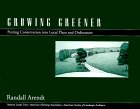
Growing Greener: Putting Conservation into Local Plans & Ordinances by Randall Arendt, 1999. This is an illustrated workbook that presents a new look at designing subdivisions while preseveing green space networks. The author offers a three-pronged strategy for shaping growth around a community's special natural and cultural features, demonstrating ways of establishing or identifying the municipal comprehensive plan, seeing oprdinance, and subdivision ordinance to include a strong conservation focus. It includes eleven case studies of actual conservation development in nine states and two exercises suitable for group participation.
2006 International Energy Conservation Code (Softcover Version), 2006.
This book is designed to provide up-to-date energy conservation provisions for
residential and commercial buildings. It addresses building envelope
requirements for thermal performance and air leakage, as well as the
installation of energy efficient mechanical, lighting, and power systems.
The model code regulations found in this book help result in the optimal
utilization of fossil fuel and nondepletable resources in all communities.
Prescriptive- and performance-based approaches to energy efficient design
are emphasized. The 2003 edition is fully compatible with all the International
Codes published by the International Code Council (ICC).
|
||||||||||||||||||||||||||||||||||||
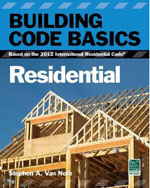
2006 International Residential Code (softcover version) brings uniformity to construction of one- and two-family dwellings and townhouses up to three stories high. A comprehensive code for homebuilding, this book brings together all building, plumbing, mechanical, and electrical provisions for one- and two-family residences. It establishes minimum regulations using prescriptive provisions, and is founded on broad-based principles that make possible the use of new materials and building designs. This edition is fully compatible with all the International Codes published by the International Code Council (ICC).
2006 International Residential Code: Code & Commentary Volume 1 by International Code Council, 2006. The 2006 IRC: Code and Commentary Volume 1 is just the resource you need to understand and apply the requirements contained in Chapters 1 through 11 of the 2006 International Residential Code®. This book will guide you through the complete text of the code, following each section of text with a straightforward commentary detailing suggestions for applying the code effectively and the potential consequences of not adhering to its regulations. With comprehensive yet concise coverage, this is a must-have tool for code officials, engineers, architects, inspectors, plans examiners, contractors, and anyone interested in advancing their knowledge and use of the 2006 IRC®.
2006 International Residential Code: Code & Commentary, Volume 2 by International Code Council, 2006. Learn to effectively design, construct, and regulate buildings while staying in compliance with the industry standards set in the 2006 International Residential Code®. The 2006 IRC Code and Commentary, Volume 2 is the second installment of the Code and Commentary Series for the 2006 IRC® and covers chapters 12 through 43 of the code. The book presents the code's complete text, tables, and figures, in addition to supplementary commentaries for the covered regulations. Straightforward and easy-to-understand, the commentaries offer readers a deeper insight into the code and how to apply it, offering reliable methods for putting it to use in the field, as well as consequences of not adhering to it.
Home Builders' Jobsite Codes: A Pocket Guide to the 2006 International Residential Code by National Association Of Home Builders, 2007. A pocket Guide to the 2006 International Residential Code.
Code Check: A Field Guide to Building a Safe House by Redwood Kardon, et al, 2007. This latest edition emphasizes life-safety principles underlying building codes and reflects major changes in the International Residential Code. The spiral-bound Code Check series, with durable laminated pages, is designed to be used on-site for quick reference, is endorsed by the International Conference of Building Officials (ICBO) and is completely updated for year 2006 code requirements.
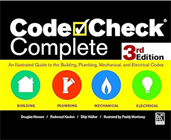
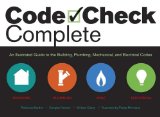
Code Check Complete: An Illustrated Guide to Building, Plumbing, Mechanical, and Electrical Codes by Redwood Kardon , Michael Casey, Douglas Hansen, 2007.
Taunton's Code Check series is widely recognized as the most reliable and up-to-date code reference available. Now, the thousands of builders, remodelers, and inspectors who have relied on their Code Checks for accuracy and thoroughness will delight in this handsome new edition that combines all the codes into a single, lay-flat volume. This comprehensive manual spotlights the safety issues behind all the codes. Up-to-date and featuring more than 400 illustrations, Code Check Complete is cross-referenced to the International Residential Code, Uniform Plumbing Code, Uniform Mechanical Code, and the National Electrical Code. It is the only resource any builder or inspector needs to be completely up to code.
|
||||||||||||||||||||||||||||||||||||
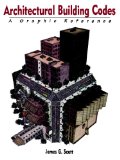
Illustrated 2006 Building Codes Handbook by Terry Patterson, 2006. This is a unique visual guide for understanding and applying the complex 2006 International Building Code. Turn to the Illustrated 2006 Building Code Handbook for expert interpretation of the 2006 International Building Code as well as the design and detailed drawings for applying it. Formatted to save time and money, this reference turns difficult paragraphs into simple lists and converts equations into easy-access tables. The Illustrated 2006 Building Code Handbook is also an ideal companion for those studying for the design portion of the architectural licensing examination. Features: Numerous illustrations and examples that clarify complicated Code; practical case studies for solving both nonstandard and routine problems; real-world design requirements that bring recent grads up to speed on current practice.
Building Codes Illustrated: A Guide to Understanding the 2006 International Building Code by Francis D. K. Ching , Steven R., FAIA,PE Winkel, 2006. This unique marriage of bestselling author Francis D.K. Ching's illustrative talent and Steven Winkel's code expertise provides an accessible, time-saving companion guide to the latest code. The visual presentation of information extracts the core portions of the building code that are most relevant for professionals and hones building codes down to the essentials. Organized to correspond with related subject matter in the IBC, Building Codes Illustrated enables architects, engineers, and other design professionals to quickly find clarifying information on the nonstructural provision of the IBC. You'll gain a clear and complete understanding of those sections at a glance through enlightening computer-rendered illustrations and succinct yet thorough interpretations.
|
||||||||||||||||||||||||||||||||||||
National Electrical Code 2008 Handbook by NFPA, 2008. Get the expert support needed to comply efficiently, avoid violations, and keep electrical installations on track with the National Electrical Code® in this exclusive NEC® 2008 Handbook from the National Fire Protection Association (NFPA). Only the handbook offers the full NEC® 2008 text alongside expert commentary from code specialists, offering insight into code rationale, explanations of new and revised rules, and practical, hands-on advice on how to apply the code. A valuable resource for anyone involved in electrical design, installation, inspection, and safety, this book will give users the knowledge needed to feel confident that their work will be safe, efficient, and code-compliant.
|
||||||||||||||||||||||||||||||||||||
Wiring A House (For Pros by Pros) by Rex Cauldwell, 2008. Electricity is one of the least understood yet most important aspects of do-it-yourself building and renovation. Used safely, it allows us to enjoy a life of convenience, but when its basic rules are violated it can destroy one's home. A master electrician, building inspector, and licensed general contractor, Cauldwell shows how to properly use electricity in this revision of his 1996 text. Starting with electricity's basics, he then explains tools of all types, shows how and where electricity enters the house, and explains grounding (which is vital for safety). Proceeding through the house, Cauldwell demonstrates how to wire both new construction and renovations and to install receptacles, switches, fixtures, and wired-in appliances. Important safety information is provided, including ground-fault circuit interrupters, lightning, and surge protection. Finally, Cauldwell gives instructions for wiring "Above Code," his system of wiring that exceeds the minimum standards required by the electrical code and results in a safer, higher-quality installation. This title does an outstanding job of explaining an area of perennial confusion for do-it-yourselfers. Recommended for every collection.
Code Check Electrical Fourth Edition: A Field Guide to Wirinng a Safe House by Michael Casey , Redwood Kardon , Douglas Hansen, 2006. Code Check Electrical, 4th edition , outlines the principles behind the various accepted electrical codes and provides information on the code requirements for all types of residential electrical systems. It is cross-referenced to the most recent National Electrical Code.
National Electrical Code Handbook by Brian J. McPartland , Joseph F. McPartland, 2005. The National Electrical Code® is an internationally accepted safety code for electrical and power wiring. It specifies the minimum provisions necessary for protecting people and property from hazards arising from the use of electricity and electrical equipment. Anyone involved in any phase of the electrical industry must be aware of how to use and apply the Code on the job. It undergoes a rigorous review and revision process every 3 years by the National Fire Protection Association (NFPA). This book is a trusted resource for understanding and applying the Code®.
Code Check Plumbing Third Edition: An Illustrated Guide to the Plumbing Codes by Michael Casey , Redwood Kardon , Douglas Hansen, 2006. Providing necessary details on how to avoid common plumbing code violations, this indispensable and easy-to-use flip guide emphasizes the safety principles that underlie both the new International Plumbing Code and the standard International Code and Building Organization system. Completely updated to reflect current requirements, the handy guide is a valuable resource for all professional builders, inspectors, and homeowners.
2006 International Plumbing Codes Handbook by R. Dodge Woodson, 2006. With plumbing codes now maintained by one governing agency -- rather than three -- plumbers now have a more efficient set of working rules. In McGraw-Hill's 2006 International Plumbing Codes Handbook, these professionals get comprehensive coverage of this new system, all within the pages of a single, information-packed volume. Written with authority by a veteran master plumber and master gasfitter, this indispensable resource digests and interprets the 2006 International Plumbing Code using real-world examples and clear, layperson's language. With a wealth of informative illustrations, the 2006 International Plumbing Codes Handbook is designed for the apprentice, the journeyman, and the master plumber alike -- all so they can use these new codes to the fullest, and keep their work profitable. |
|
dcat.net The Development Center for Appropriate Technology fosters sustainable building practices by getting them into building codes! dcat.net lists Strawbale Codes specifically for Texas, California, Colorado, and Arizona. ecobuildnetwork.org
provides information on natural building and alternatives to building
codes. California Sustainable Healthy Home Waiver a PDF of the initial campaign framework for a Ballot Initiative in California. woodconsumption.org this page has a detailed discussion of issues related to codes, with interviews of several leading thinkers. taunton.com/finehomebuilding an article by David Eisenburg: Our Myopic Building Codes |
|
Disclaimer
Of Liability And Warranty
For Email contact go to About UsWe
are interested in exchanging links with other
|
|
Disclaimer
Of Liability And Warranty
For Email contact go to About UsWe
are interested in exchanging links with other
|