|
Vernacular Architecture There are many wonderful building styles from all over
the world that can inform us with their shapes, materials, arrangements,
decorations, concepts for heating and cooling, etc. Vernacular architecture
has been loosing ground over the last couple of centuries, as modern
methods prevail. This is unfortunate since many of the old ways employ
natural materials and simple concepts that are energy efficient. Also
the buildings themselves are often beautiful. Perhaps you will find
some ideas from among these pages to help with your own designs.
|
RESOURCES EXPERT
ADVICE |
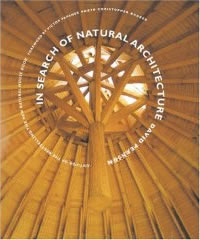
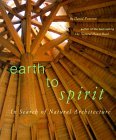
In Search Of Natural Architecture by David Pearson, 2005. A remarkable illustrated study by eco-architect David Pearson illuminating the rediscovery of ancient wisdom that, in turn, has inspired a spiritual reawakening in architecture. Drawing on his background as an architect specializing in housing, environmental issues, and holistic design, Pearson compiles a collection of "environmentally clean" and "spiritually healthy" buildings from around the world and across the centuries. He divides his discussion of these buildings, which are illustrated with 146 color photographs and eighteen drawings, into six thematic chapters. The first explains how ancient architectural forms like yurts and teepees reflect archetypes of human spirituality, while the second explores the rejuvenating qualities of today's healing architecture. The third chapter focuses on ecologically aware building principles, the fourth on the lessons of traditional folk architecture, and the fifth on the culturally vibrant architecture of developing countries. The final chapter describes how all these architectural influences have led to a new awakening, embodied by architects' organic designs for contemporary structures from farmhouses to department stores. Together the six chapters comprise a provocative architectural journey, a must-read for anyone interested in environmentally sound buildings that are in harmony with the landscape and the human spirit.
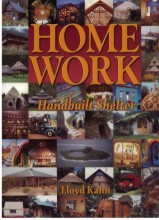
Home Work: Handbuilt Shelter by Lloyd Kahn, 2004. I have rarely been this enthusiastic about a book, and not just because I am in it! Ever since his first publication of Shelter in 1973 (which I also contributed to), Lloyd has been collecting imagery and stories for this eventual sequel. With Home Work, Lloyd has gone beyond the glory of his earlier work in many ways. Not only does it seem more comprehensive, but it is almost entirely in color. This is a sumptuous coffee table book that will likely not spend much time on the table, since it is so intriguing you just want to pick up and browse through it. Every page is chock full of fun, unusual, lyrical, quaint, artistic, humble, elegant, practical, colorful, whimsical, well-crafted, funky, traditional, and outlandish buildings that were lovingly built by the hands of those who reside there. All of this is presented with Lloyd's casual style of layout and commentary that is reminiscent of a scrap book. Many of the photos are actually collages of several exposures spliced together to create expansive murals. Flipping through the pages of Home Work will take you back to the early days of hippie huts and forward to the cutting edge of natural building technology. The builders themselves are portrayed as lovingly as their buildings, with many profiles of fine craftsmen and women sprinkled throughout. In fact, the book begins by featuring the work of ten artisans who represent some of the best in this tradition of owner-builders. Then a whole slew of other specific homes are displayed in such a way that the lifestyle of their occupants is embedded directly within the imagery. This book depicts far more than architecture; it shows entire ways of life. For a more complete review and some images from the book click here.
Vernacular Architecture in the 21st Century: Theory, Education and Practice by L. Asquith, 2006.
The issues surrounding the function and meaning of vernacular architecture in the 21st century are complex and extensive. Taking a distinctively rigorous theoretical approach, this book considers these issues from a number of perspectives, broadening current debate to a wider multidisciplinary audience. These collected essays from the leading experts in the field focus on theory, education and practice in this essential sector of architecture, and help to formulate solutions to the environmental, disaster management and housing challenges facing the global community today. |
|||||||||||||||||||||||||||
6,000 Years of Housing: Third Revised Edition by Norbert Schoenauer, 2000. The fascinating evolution of house forms from the Stone Age to the present. Part architecture, part history, and part anthropology, this encyclopedic book looks at the rich history of housing: pre-urban dwellings of nomadic, semi-nomadic, and sedentary agricultural societies, urban houses of ancient civilizations, classical Greece and Rome; traditional North African and Asian homes; and the domestic architecture of the Western world.
|
|||||||||||||||||||||||||||
Shelter by Bob Easton and Lloyd Kahn, 2000. Shelter is many things - a visually dynamic, oversized compendium of organic architecture past and present; a how-to book that includes over 1,250 illustrations; and a Whole Earth Catalog-type sourcebook for living in harmony with the earth by using every conceivable material. First published in 1973, Shelter remains a source of inspiration and invention. Including the nuts-and-bolts aspects of building, the book covers such topics as dwellings from Iron Age huts to Bedouin tents to Togo's tin-and-thatch houses; nomadic shelters from tipis to "housecars"; and domes, dome cities, sod igloos, and even treehouses. The authors recount personal stories about alternative dwellings that illustrate sensible solutions to problems associated with using materials found in the environment - with fascinating, often surprising results. I actually contributed to the "housecar" section of the original edition! |
|||||||||||||||||||||||||||
|
|||||||||||||||||||||||||||
|
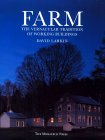
Farm : The Vernacular Tradition of Working Buildings by David Larkin, 1998. Every building and structure on a farm tells a story. Traveling through time and seasons, countries and regions, this book documents various cultural traditions, styles, and influences reflected in the overall layout of the farm complex (in relation to the landscape) and in the individual structures and building materials. Over 200 color photos. |
|||||||||||||||||||||||||||
|
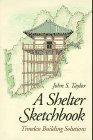
A Shelter Sketchbook : Timeless Building Solutions by John S. Taylor, 1997. John Taylor presents a stunning array of traditional building techniques and housing solutions from around the world and from history. Most are motivated by available materials, economic necessity, and local climate and terrain. In this time of growing interest in earth-friendly building techniques, Taylor shows us that we need to relearn many practical aspects of constructing shelter and must blend the technologies of the present with the traditions of the past, with those of other cultures, and even with those of our own grandparents. Taylor, an architectural designer, has filled this delightful book with remarkable drawings and sketches of building techniques gleaned from his travels; it is a feast for the eyes as well as the brain.
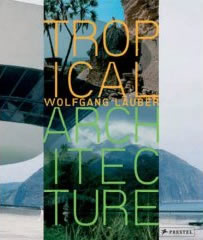
Tropical Architecture: Sustainable and Humane Building in Africa, Latin America and South-East Asia by Wolfgang Lauber , Peter Cheret , Klaus Ferstl , Eckhart Ribbeck, 2005. This forward-thinking survey considers the challenges of making buildings that withstand the vagaries of climate, economy, and limited resources. Although the tropics cover nearly forty percent of the world's surface, from rain forests to dry desert regions, the architecture of this climactically extreme geographic area has largely gone unnoticed. With exploding populations and numerous ecological and economic concerns, the regions are looking increasingly toward sustainable solutions. In this unique study Wolfgang Lauber explores the ways traditional, pre-colonial structures were better adapted to the area's topography and climate than more modern structures built by European settlers. Numerous photographs, illustrations, and plans examine the continuum of tropical architecture—from the mud hut to the colonial mansion, from bamboo sheds to high-rises, from spontaneous building to urban planning. Studies of the works of such contemporary architects as Rem Koolhaas, Oscar Niemeyer, and Renzo Piano show how modern theories can be adapted to the vernacular cultures in Africa, the Americas, and Asia to create buildings that are both humane and ecologically sound.
Tropical Houses by Haike Falkenberg, 2003. Lavishly illustrated with over 400 color photographs of houses in tropical regions that span the globe, this introduction to various residential styles and modes of construction highlights the work of both prominent and emerging architects. In Central and South America, the Caribbean, Africa, Asia, and Australia and New Zealand, indigenous materials are used to create distinctive housing designs that succeed in merging with the landscape. Interior spaces are designed and decorated to evoke nature as well. This elegant book provides proof that in the tropics, indoor and outdoor living combines to awaken the senses and bring residents closer to the natural world.
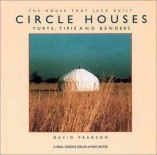
Circle Houses: Yurts, Tipis and Benders by David Pearson, 2001. Pearson offers instructions for building yurts, tipis, and benders...all dwellings that consist of a collapsible, lightweight frame covered with cloth. Examples range from simple, temporary designs to much sturdier structures appropriate for year-round use. The examples are from all over the world, but brief instructions allow anyone to build a rather exotic structure inexpensively. |
|||||||||||||||||||||||||||
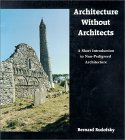
Architecture Without Architects: A Short Introduction to Non-Pedigreed Architecture by Bernard Rudofsky, 1987. Flipping through this book at random reveals photos of gigantic Syrian water wheels, Dogon granaries, Spanish arcades, desert fortresses in Morocco, Italian hill towns, and hollowed-out baobab trees used as homes. The book is far more than a mere collection of curiosities, though: it is a challenge to our narrow conceptions of what makes a building or a city "legitimate." The book goes on to challenge us on even more fundamental levels: it radically expands our exposure to alternate forms of living/urbanism/social networks. A slim but important book; a celebration of human diversity, and a call for increased attention towards both our own lifestyles and the ones we endanger. |
|||||||||||||||||||||||||||
|
New Organic Architecture: The Breaking Wave by David Pearson, 2001.This is a manifesto for building in a way that is both aesthetically pleasing and kinder to the environment. It illuminates key themes of organic architects, their sources of inspiration, the roots and concepts behind the style, and the environmental challenges to be met. The organic approach to architecture has an illustrious history, from Celtic design, Art Nouveau, Arts and Crafts, to the work of Antoni Gaud and Frank Lloyd Wright. Today there is a response to a new age of information and ecology; architects are seeking to change the relationship between buildings and the natural environment. In the first part of his book, David Pearson provides a history and assessment of organic architecture. The second part comprises statements from thirty architects from around the world whose work is based on natural or curvilinear forms rather than the straight-line geometrics of modernism. Each statement is accompanied by full-color illustrations of one or several of the architects' built projects. |
|||||||||||||||||||||||||||
|
Evolutionary
Architecture : Nature as a Basis for Design by Eugene Tsui,
1999.
Looking to nature as the source of some of the strongest and most efficient structural forms known to mankind, Eugene Tsui's evolutionary architecture offers stunningly original alternatives to the uninspired cut-and-butt, post-and-beam constructions that dominate our architectural landscape today. This extraordinary book uncovers the guiding principles behind Tsui's evolutionary approach to explore the many design lessons that can be learned from nature and share the impressive results of their application to architectural projects. Examining nature's forms, materials, and structures from an architectural and scientific perspective, Tsui provides an exciting glimpse of the world through his eyes, a fantastic world in which termite towers, bird's nests, fish bubble homes, and common snail shells are just some of nature's creations that harbor a hidden universe of design possibilities and problem-solving ideas. With compelling flare and conviction, Tsui shows how his evolutionary architecture comes to life in projects that range from a residential remodel featuring hinged dragonfly roof ventilation wings to a two-mile city based on a termite's nest with spiderweb-like, crisscrossing steel cables. More than 300 photographs of natural structures and Tsui's most intriguing projects bear witness to the sheer power and scope of his conceptual and design invention. Combining strikingly imaginative designs with practical lessons from a truly visionary architect, Evolutionary Architecture is a fresh and captivating idea resource for anyone interested in environmentally-influenced design and break-out-of-thebox architectural thinking. |
|||||||||||||||||||||||||||
|
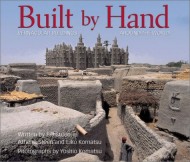
Built by Hand: Vernacular Architecture Around the World by Athena Steen, Bill Steen & Eiko Komats. Built by Hand is the most extensive documentation ever published of traditional ("vernacular") buildings throughout the world. With examples from nearly every continent, the book documents the diverse methods people have used to create shelter from locally available natural materials, and shows the impressively handmade finished products through this truly stunning compilation of photographs. Unlike modern buildings that rely on industrially produced materials and highly specialized tools and techiniques, the shelters featured here represent a rapidly disappearing genre of handcrafted and beautifully composed structures. They are the work of simple people who, as builders and homesteaders, have integrated artistic beauty and practical form into their shelter needs. |
|||||||||||||||||||||||||||
|
Houses
(First Discovery Book)
|
|||||||||||||||||||||||||||
|
Encyclopedia
of Vernacular Architecture of the World
|
Earth
to Spirit: In Search of Natural Architecture
|
Shaping Communities (Perspectives in Vernacular Architecture, 6) by Carter L. Hudgins, et al, 1997
|
People,
Power, Places (Perspectives in Vernacular Architecture, No 8)
|
||||||||||||||||||||||||
|
Exploring
Everyday Landscapes (Perspectives in Vernacular Architecture, No 7)
|
Gender,
Class, and Shelter (Perspectives in Vernacular Architecture, 5)
|
Beyond
Kinship : Social and Material Reproduction in House Societies
|
|||||||||||||||||||||||||
Built to Meet Needs: Cultural Issues in Vernacular Architecture
|
Tropical Sustainable Architecture: Social and Environmental Dimensions
|
Illustrated Handbook of Vernacular Architecture
|
|
||||||||||||||||||||||||
Building Environments: Perspectives in Vernacular Architecture
|
|
||||||||||||||||||||||||||
|
caed.asu.edu links to a huge databank of architectural images. archipedia.net features images and descriptions of veracular building in Bolivia, Peru, Canada, Indonesia and Africa. |
|
Disclaimer
Of Liability And Warranty
For Email contact go to About UsWe
are interested in exchanging links with other
|