Owner/
Builder

STORE


Click on image to buy from Customflix.com
 

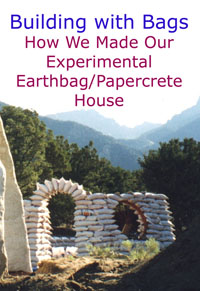
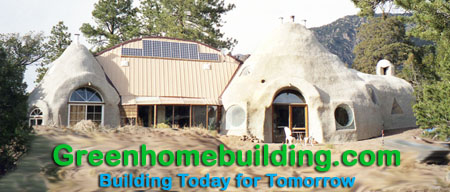
Building with Bags: How We Made Our Experimental Earthbag/Papercrete House 1 1/2 hr. DVD produced by Kelly Hart.We wanted to build an environmentally sensitive and aesthetically pleasing home at a moderate price. We chose to create earthbag domes covered with papercrete (recycled paper combined with cement and sand). This honest DVD documents details of the construction, insights gained, and the ups and downs (literally!) of the building process. Several other earthbag homes are also shown. For more information about the house see Photogallery & Description of Our House or Construction Details of Our House . To view a streaming video intoduction to this DVD click here.

BuyDVD


Click on image to buy from Customflix.com
 

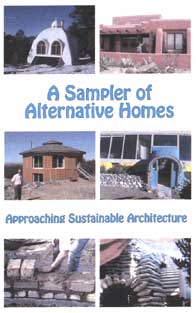
A Sampler of Alternative Homes: Approaching Sustainable Architecture . This two-hour DVD, produced by Kelly Hart, provides an overview of sustainable building concepts. You can enjoy a look at a fascinating variety of homes and the creative people who built them! Discover how passive solar design and environmentally low-impact materials can be used to create comfortable and economical homes. See the use of both traditional materials, such as adobe, and innovative materials, such as papercrete and earthbags.

This program offers a wealth of information about construction details and other considerations. It covers adobe block construction, piled adobe (similar to cob), rammed earth, both load-bearing and post and beam strawbale, earthships, earth-sheltering, cordwood, thin-shelled concrete domes, papercrete, earthbags, hybrid structures, and recycling various containers for housing. To watch a streaming video introduction to this program, click here.

$29.95

BuyDVD


A Sampler of Alternative Homes:
Approaching Sustainable Architecture

VHS videotape, 1 hour 55 minutes

$29.95
There are hundreds of books and other media available, mostly through links to Amazon.com, on the pages of this website. While many people enjoy shopping from this source, there are those who would prefer to buy from smaller companies that do not represent "Corporate America." In deference to these folks, and in the interests of providing the greatest number of options for finding information, I have established a relationship with 100fires.com bookstore. They have a wonderful selection of books and media on topics related to Green Home Building, and you can go there directly from this link:

Which Hobbit Lives Here? Reflections on Society and Sustainability is a distinctly unusual ebook. Writer Kelly Hart reveals his very personal story of growing up as a Hobbit in Mormon country and how this shaped his perspective on the culture of Men. This is a book of art and poetry, reverence and compassion, invention and imagination, retrospection and prophesy, combined with solid information on how to build a sustainable house and future. Nearly every page is artfully illustrated with images that amplify the essence of the text, and embellished with quotes from J.R.R. Tolkien's The Hobbit and Lord of the Rings that tie directly to these topics.

Kelly talks about his involvement with music, painting and drawing, photography, film, animation, video production, writing and website development. These arts have been central to his being, his self-discovery and expression. He also writes about his personal relationship to love, nature, spirituality, science and technology.

Using his own "Hobbit hole" as an example, Kelly writes about sustainable architecture with reference to compact design, passive solar heating, advantages of earth-sheltering, forest conservation, use of local and natural materials, recycling, energy and water conservation, growing and storing food, and building for the long term. There is much specific guidance offered in these pages for those who would like to incorporate sustainable principles into their homes or house plans.

Kelly tells about why he designed and built the "Sunmobile," a two-person, four-wheeled solar vehicle that runs completely on solar or human power. The Sunmobile has gone hundreds of pollution-free miles; it is designed for utility, with lots of cargo space. This could be the basis for the next evolutionary stage in solar travel: the "SunVee," which stands for Solar Utility Neighborhood Vehicle.

In a series of essays, Hobbit Hart reflects on the nature of the culture of Men (especially Western culture) with incisive observation, criticism, and suggestions for improvement. The emphasis of this culture on competition, consumerism, capitalism, violence, patriotism, and militarism is evaluated for how it is dysfunctional. The way these traits combine with the popular media and the internalized stories that guide subconscious choice is shown to create an unhealthy political reality. He points out that if the direction of this culture is not fundamentally altered, the prognosis for a sustainable future is not good.

The final chapters examine the origins of Men and Hobbits, and speculate on our future. The messages left behind by previous cultures through edifice and story are examined for what they might teach us. The ultimate hope for a benign continuation of both mankind and hobbitkind lies within each of us. We have the opportunity and the responsibility to find those places within us that will allow for positive change to occur. Kelly believes that our destiny is to co-create this new world with the guidance of our Creator.

To see sample pages from this ebook, click on the various links above.

Which Hobbit Lives Here?
Reflections on Society and Sustainability
147 page ebook as a download

$11.00

Click here,
and you will be transported to Clickbank, which handles our downloadable products.

                              
To see a page about ordering from us, click here. And here's a printable order form for mail orders.


Straw BaleTraining and Certification Programs
offered by The Geiger Research Institute of Sustainable Building

Dr. Owen Geiger is Founder and Director of the Geiger Research Institute of Sustainable Building (www.grisb.org). He has a Ph.D. in Social and Economic Development, and is the former Director of Builders Without Borders and current member of the BWB Steering Committee. He is an author, engineer and licensed contractor specializing in strawbale construction and other types of sustainable building. He co-authored the Builders Without Borders Straw-Bale Construction Guides and contributed to Building Without Borders: Sustainable Construction for the Global Village. Dr. Geiger has consulted on numerous international housing projects, worked closely with Habitat for Humanity for seven years and mentored housing officials with the United Nations Institute of Training and Research. He is also a correspondent for The Last Straw Journal.

Straw Bale Training

Building with bales is growing by leaps and bounds because of its broad appeal to owner-builders and its extraordinary energy-efficiency. In just a few weeks you will learn the basic principles needed to build your own strawbale house. With this course you get a combination of theoretical book knowledge and applied hands-on learning – which is a great way to learn. In addition, an Advisor at the Geiger Research Institute will provide individual guidance and critical analysis throughout the training process via email.

You will be using the best resource materials throughout the course. More Straw Bale Building, by Chris Magwood, Peter Mack and Tina Therrien, is perhaps the best book ever written on straw-bale construction. The Last Straw Journal CD-Rom puts 40 issues at your finger tips, enabling you to search through all the best ideas. And, selected Internet links to the best online resources are an integral part of the course. Online training offers tremendous flexibility. You can start the course at any time and proceed at your own pace. There is no need to travel to some distant school or workshop. And again, when you need help your Advisor will be available to answer your questions.

Course outline: Foreword, Purpose of this Course, How to Use This Study Guide, Straw Bale and Natural Building Home Tour, Advantages of Straw-Bale Construction, Basic Design Considerations, Straw Bale Building Types, Ideal Building Bales, Protecting the Bales, Site Selection and Preparation, Building Layout and Foundations, Mechanical Systems, Stacking the Bale Walls, Making Custom-Sized Bales, Making Angled Bales, Attaching Things on Straw Bale Walls, Pinning the Walls, Filling the Gaps, Installing Doors and Windows, Interior Walls, Building the Roof, Ceiling Insulation, Plastering, Floor Basics, Built-in Furniture, Art and Decoration, Straw Bale Shelter Project, Regulatory Issues, List of Materials, List of Tools, Annotated Straw Bale Bibliography, Answers to Quizzes

Course fee: $250

The Global Straw Bale Construction Certification Program provides the highest quality strawbale training available anywhere in the world. This unique program combines hands-on experiences with research and assignments using the leading books, videos, journals, and selected Internet and other electronic resources.

The Global Straw-Bale Construction Certification Program is a distance learning program for those within reach of the Internet and with an adequate knowledge of English. Students can begin the program at any time and work at their own pace through independent guided study. Advisors at the Geiger Research Institute provide guidance and critical analysis throughout the training process.

The Global certification program takes approximately one year to complete, although students with construction or architecture backgrounds may be able to complete the training more rapidly. The program consists of 14 modules that cover each major step of construction, as well as other relevant topics that form the essential knowledge for practitioners in the field. Students can select one of two tracks:

Track 1. International Straw Bale Housing: This option prepares builders for work on low-tech, low-cost strawbale projects. The emphasis is on providing affordable housing in developing regions.

Track 2. Building Code-approved Straw Bale Housing: This option is designed for professional builders and architects seeking a more technical option. All lessons revolve around meeting current US and international building codes.

Lessons incorporate hands-on learning, extensive reading assignments, videos, short answer assignments, short reports and other assignments. In addition, students in either track must complete two main projects:

Project #1: Straw Bale Emergency Shelter
Straw-bale construction basics are learned by building a simple straw bale emergency shelter.

Project #2: Capstone Project
This is the main project of the program that demonstrates mastery of essential skills. Students design and build a functional straw bale structure of approximately 150 – 300 sq. ft. interior space, such as a guesthouse, studio, office, homeless shelter or other similar structure. The Capstone Project consists of three phases, where a portion of the necessary project documents (drawings, cost estimates, etc.) are developed in each phase. By the end of the third phase, the structure will be completed.

Pricing information for the Global Straw-Bale Construction Certification Program:

Track 1: International Straw Bale Housing:
$1,600 (four payments of $400, one payment per quarter)
$1,200 (reduced rate for advance payment paid in full)

Track 2: Building Code-approved Straw Bale Housing:
$2,500 (four payments of $625, one payment per quarter)
$2,000 (reduced rate for advance payment paid in full)

For more information about all of these training and certification courses visit grisb.org
Geiger Research Institute of Sustainable Building
Crestone, Colorado 81131 Web: www.grisb.org Email: strawhousesATyahoo.com

Geiger Straw Bale Training Program

$250

Track 1: International Straw Bale Housing Certification
$1,600 (four payments of $400, one payment per quarter)

$400
per
quarter

Track 1: International Straw Bale Housing Certification
$1,200 (reduced rate for advance payment paid in full)

$1,200

Track 2: Building Code-approved Straw Bale Housing Certification
$2,500 (four payments of $625, one payment per quarter)

$625
per
quarter

Track 2: Building Code-approved Straw Bale Housing Certification
$2,000 (reduced rate for advance payment paid in full)

$2,000


Disclaimer Of Liability And Warranty
I specifically disclaim any warranty, either expressed or implied, concerning the information on these pages. Neither I nor any of the advisor/consultants associated with this site will have liability for loss, damage, or injury, resulting from the use of any information found on this, or any other page at this site. Kelly Hart, Hartworks, Inc.


Home       Site Map        STORE

For Email contact go to About Us
We are interested in exchanging links with other
informative sites on closely related topics
Google
 
Web www.greenhomebuilding.com
VISIT OUR OTHER WEBSITES:

  [Solar Car]      [Which Hobbit Lives Here?]     [Dream Green Homes]