|
BOOKS |
|

African Painted Houses : Basotho Dwellings of Southern Africa by Gary N. Van Wyk, 1998. This book is full of wonderful photographs of African Painted houses. The text is complete in explaining the significance of the illustrations from a historical and present day view. This is a fascinating rich culture. The use of patterns and color, and their meaning come together in an easy to understand format.
| |
|
|
| |
Click on image to buy from Amazon.com |
|
|
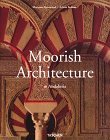
Moorish Architecture
by Marianne Barrucand, Achim Bednorz, 2002
| |
|
|
| |
Click on image to buy from Amazon.com |
|
The contrast between the desolate ruined castles on the heights of the sun-baked mountain landscape, and the palaces in the cities, with their cool patios, babbling fountains and scented blossoms testifying to a lifestyle of elegant sophistication - this contrast has stimulated the imagination of the northern European ever since the days of the Romantic movement.
|
Alhambra by Michael Jacobs, 2000. The Alhambra inspires and enchants like no other site. With its fascination history; its romantic locale overlooking Granada, against the backdrop of the Sierra Nevada mountains; its intricately decorated rooms; its numerous courtyards and fountains; the palace city of the Alhambra is endlessly alluring and has captivated the imagination of visitors since it was conceived in the thirteenth century. Today the Alhambra is a fascinating amalgam of style, both Moorish and European, with labyrinthine hallways, numerous fountains, pools, and courtyards, stunning details, and breathtaking views. In Alhambra, author Michael Jacobs details the history of this spectacular monument. Evocative photographs by Francisco Fernandez lead readers on a virtual journey through the various palaces, government and military buildings, mosques, baths, courtyards, and beautiful gardens that make up this mythical place.
|
| |
|
|
| |
Click on image to buy from Amazon.com |
|
|
| |
|
|
| |
Click on image to buy from Amazon.com |
|
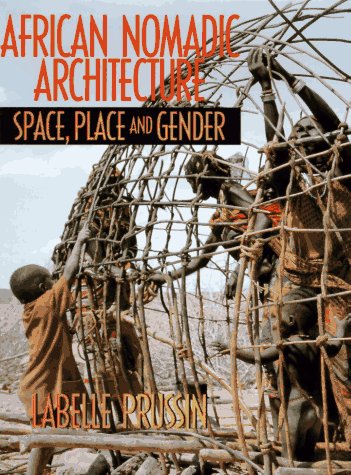
African Nomadic Architecture : Space, Place, and Gender by Labelle Prussin, et al, 1997. Handsomely illustrated with many color photographs, this book offers a massive amount of data on the technologies, styles and designs, as well as the symbolic and ritual meanings, of women's tent and related architecture in various African cultures.
| |
|
|
| |
Click on image to buy from Amazon.com |
|
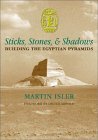
Sticks, Stones, & Shadows: Building the Egyptian Pyramids by Martin Isler, Dieter Arnold, 2001. Presents an entirely original approach to the subject of pyramid building. This book reveals the connection between devices that served both a practical need for survival and a spiritual belief in gods and goddesses. Few have closely examined Egyptian technologies and techniques from the origins of pyramid development to the step-by-step details of how the ground was leveled, how the site was oriented, and how the stone was raised and placed to meet at a distant point in the sky. Martin Isler is a sculptor and President of InfoGraphis, a New York City trial graphics firm. He has studied the Egyptian pyramids for nearly thirty years. |
| |
|
|
| |
Click on image to buy from Amazon.com |
|
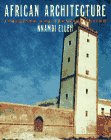
African Architecture: Evolution and Transformation by Nnamdi Elleh, 1996. From Egypt to Ethiopia, Botswana to Burundi, and Zimbabwe to Cameroon, this landmark book presents the first complete and definitive study of African architecture from antiquity to the present. Featuring hundreds of museum-quality photographs and drawings from archival and modern sources, the book offers an ordinary account of the evolution, transformation, and development of architecture across the African continent. Elleh defines the indigenous, Islamic, and Western roots of African architecture, and goes on to examine how these roots influence the architecture of each region in Africa. The final chapter takes a revealing look at modern architecture, urbanism, and urbanization throughout Africa. At once a work of convincing scholarship and a beautifully illustrated tour of African architecture past and present, this is a pioneering book that brings a heretofore rarely examined body of work dramatically to life.
|
| |
|
|
| |
Click on image to buy from Amazon.com |
|
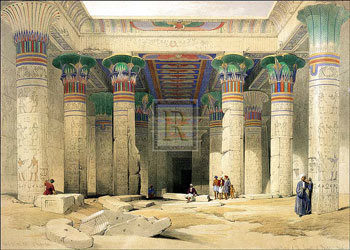
The Art And Architecture of Islamic Cairo by Richard Yeomans, 2006.
Cairo is full of masterpieces of medieval art and architecture reflecting the status of Egypt as the centre of several significant Muslim empires. The purpose of this book is to redress the cultural balance and examine the art and architectural treasures of Cairo from the Arab to the Ottoman conquests (642-1517). Set within an historical narrative, the stylistic development of the visual arts is explained within changing religious, social and political contexts. Examples of the decorative arts - ceramics, glass, woodwork, metalwork, textiles and manuscripts - are examined in the Museum of Islamic Art, Cairo, and other major collections in Europe and the USA. Architecture and the decorative arts are dealt with separately with detailed descriptions, illustrating how the story of Islamic art and architecture is one of continuing adaptation and change.
| |
|
|
| |
Click on image to buy from Amazon.com |
|
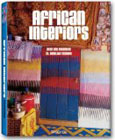
African Interiors by Angelika Taschen, 2008.
We've searched far and wide, through Africa's deserts and jungles, cities and wildlife reserves, islands and mountains, to uncover the continent s most inspirational dwellings; our goal was to find the kind of interiors that defy description, and we think the results will definitely leave you speechless. Nestled within these pages you'll find lush modern homes mingling with mud huts, funky artists studios, elegant lodges, minimalist houses, ornate traditional homes, townships and much more all lovingly built and decorated with sensitivity, creativity, craftsmanship, individuality, and sensuality. Inside Africa captures the beauty and diversity of African living.
|

Churches of Ethiopia: The Monastery of Narga Sellase by Stanislas Chejnacki, et al, 2000. One of the most important cultural heritages of Christian Ethiopia lies on the shores of Lake Tana. The publication on the monastery of Narga Sellase and the entire pictorial cycle it contains shows it to be one of the crowning points of Ethiopian tradition and culture, its art absorbing the fundamental, century-old contributions of the West as well as of the East. The book documents the evolution of the history and culture of Christian Ethiopia outlining the various typologies of Ethiopian churches (ranging from the basilica to the characteristic round Abissinian one) and reproducing for the first time the great pictorial cycle that covers the entire surface of the maqdas, the Holy of Holies of the Ethiopian church. |
| |
|
|
| |
Click on image to buy from Amazon.com |
|
|
|
|
|
|
|
| |
|
|
| |
Click on image to buy from Amazon.com |
|
|
|
|
|
| |
|
|
South Africa (Architecture Guides) by Jonathan Moberly, 1999
| |
|
|
| |
Click on image to buy from Amazon.com |
|
|
|