Owner/
Builder


Vernacular Architecture


N. America


SOUTH AMERICA

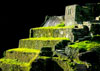
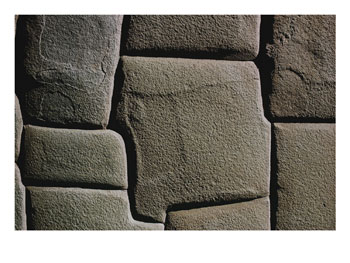
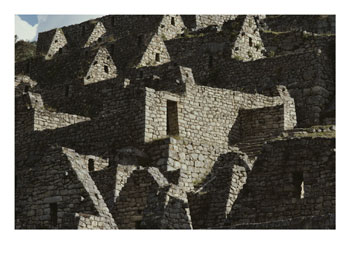
Some of my favorite architecture is in South America: the lost world of the Inca and the Aztec cultures. Their mastery of building with stone is equaled only by the prehistoric building around the Mediterranean. One wonders how they managed to cut and fit those stones so accurately that you cannot even slip a piece of paper between them. It is one of the great mysteries of the world!
 

BOOKS
   
 
Click on image to buy from Amazon.com
 

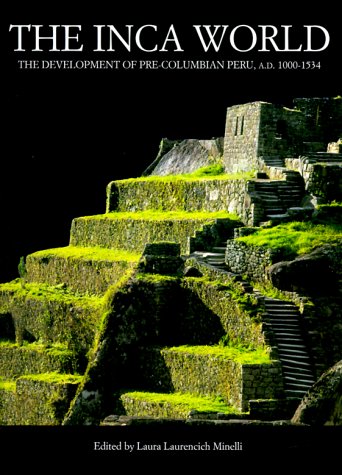
The Inca World : The Development of Pre-Columbian Peru, A.D. 1000-1534 by Laura Laurencich Minelli, 2000.


Click on image to buy from Amazon.com
 

The Machu Picchu Guidebook: A Self-Guided Tour by Ruth M. Wright, et al, 2001. Built in the mid-fifteenth century by Incan royalty and "rediscovered" by Hiram Bingham in 1911, Machu Picchu is the stuff of legends. The authors offer an almost step-by-step tour, constantly guiding the traveler to understand key elements of the function and construction of these remarkably well-designed, well-built, and well-preserved ruins. A full-color foldout map along with some 150 illustrations, many of them in full color as well, will make this the indispensable guide.


Click on image to buy from Amazon.com


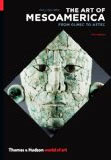
The Art of Mesoamerica: From Olmec to Aztec
by Mary Ellen Miller, 2001. The pyramids and palaces, jades and brightly colored paintings emerge from these pages as vividly as when they first astonished Cortés's men in 1519. There was a surprising unity in Mesoamerican culture from Mexico to Honduras and from 1500 BC to the Spanish Conquest. Among many features shared were a 260-day ritual calendar and a preoccupation with gods representing natural forces. In this third edition, Mary Miller opens up new windows on the ancient past with fresh readings of works of art, all the while offering careful archaeological interpretations. Recent hieroglyphic decipherments provide insights into ancient art, spelling out long-distance connections between the Maya and their neighbors. Updated throughout, with special attention to evidence for dating, the new Art of Mesoamerica is the ideal companion for students and travelers.


Click on image to buy from Amazon.com
 
Fazendas : The Great Houses and Plantations of Brazil by Fernando Tasso Fragoso Pires, 1995. This well-designed picture book succeeds on two important levels: engaging the reader through the beauty of its pages and imparting knowledge about its subject. It is about Brazil's sugar and coffee plantations and the cattle ranches in the South. Pires provides a solid introductory essay that traces the development of these plantations and ranches. Although he discusses colonization by the Portuguese, the impact of various other European countries' adventures on the country, and the importation of slaves, his emphasis is on life in the casa-grande, or "great house." The fazendas themselves are well preserved, with new furnishings thoughtfully added, and the land is well kept. The past wealth of a few and the labor of many are evoked through these graceful pictures.
   
 
Click on image to buy from Amazon.com


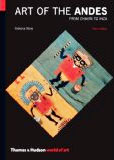
Art of the Andes : From Chavin to Inca
by Rebecca Stone-Miller, 1996. This is an excellent overview of native Andean art from the earliest period through Chavin, Paracas, Nasca, Moche, Tiwanaku, Wari, to Incan. It covers architecture, textiles, pottery and metallic arts and looks at the main themes of religious and secular art in these various mediums. The text is accompanied by many photographs, drawings and plans.


Click on image to buy from Amazon.com
 

Arquitectura del Vacio by Melvin Villarroel, 1996. The author was born in 1931 in La Paz, Bolivia. The Architecture of the Vacio is the first book of that presents 27 projects of Melvin Villarroel and explains the basic concepts found in his architecture: The integration of void or negative space and architecture, the organization of the void as a continuum, the theory of intermediate spaces and the necessity to return to the origins. Since a construction profoundly influences those who live and work within its confines, Villarroel firmly believes that architecture should reflect not only a social, cultural and historical awareness, but that it should present astonishing beauty and simplicity relating to the natural elements of the earth, the sun, vegetation and - elements dynamically engaged with the void space.


The Inca Trail: Cuzco & Machu Picchu
by Richard Danbury, 1999


Click on image to buy from Amazon.com


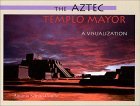
The Aztec Templo Mayor: A Visualization
by Antonio Serrato-Combe, 2001


Click on image to buy from Amazon.com


Casa De Hacienda: Architecture in the Colombian Countryside
by German Tellez, Benjamin Villegas Jimenez, Antonio Castaneda, 1998


Click on image to buy from Amazon.com


Tamoanchan, Tlalocan: Places of Mist (Mesoamerican Worlds)
by Alfredo Lopez Austin, 1997


Click on image to buy from Amazon.com


The Illustrated Encyclopedia of The Incas
by David M. Jones, 2005


Click on image to buy from Amazon.com


The Aztecs
by Michael Ernest Smith, 2002


Click on image to buy from Amazon.com


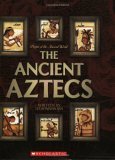
The Ancient Aztecs
by Liz Sonneborn, 2005


Click on image to buy from Amazon.com


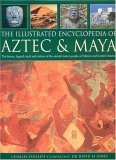
The Illustrated Encyclopedia of Aztec and Maya
by Charles Phillips, 2005


Click on image to buy from Amazon.com


Disclaimer Of Liability And Warranty
I specifically disclaim any warranty, either expressed or implied, concerning the information on these pages. Neither I nor any of the advisor/consultants associated with this site will have liability for loss, damage, or injury, resulting from the use of any information found on this, or any other page at this site. Kelly Hart, Hartworks, Inc.


Home       Site Map        STORE

For Email contact go to About Us
Established in 2001, GreenHomeBuilding.com is primarily a labor of love. Kelly, and the GreenHomeBuilding team of experts, have answered thousands of questions for readers over the years, and we continue to publish up-to-date information about increasingly important sustainable architecture. If you feel moved to assist us in this work, your kind donation would be much appreciated; this can be easily done through our PayPal account:
Google
 
Web www.greenhomebuilding.com
VISIT OUR OTHER WEBSITES:

  [Solar Car]      [Earthbag Building]     [Dream Green Homes]