|
BOOKS |
| |
|
|
| |
Click on image to buy from Amazon.com |
|
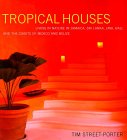
Tropical Houses: Living in Nature in Jamaica, Sri Lanka, Java, Bali, and the Coasts of Mexico and Belize by Tim Street-Porter, 2000. The ambient warmth of the tropics causes architectural distinctions between indoors and out to evaporate, along with the walls that divide them. Houses expand into the landscape, while the sights, sounds, and scents of nature waft through living spaces. Indeed, one of the pleasures of living in the tropics is an awakening of the senses that brings us closer to nature.
| |
|
|
| |
Click on image to buy from Amazon.com |
|
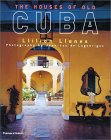
The Houses of Old Cuba by Llilian Llanes, 2000. This book documents the country's hybrid architectural character. Though concentrated on houses, the text covers the wider economic, cultural, and social history of Cuba, providing a context for the history of domestic building over the centuries. The photographs similarly capture the larger setting and include images of life in today's Havana and smaller cities strung the length of the island.
| |
|
|
| |
Click on image to buy from Amazon.com |
|
Tropical Houses by Haike Falkenberg, 2003. Lavishly illustrated with over 400 color photographs of houses in tropical regions that span the globe, this introduction to various residential styles and modes of construction highlights the work of both prominent and emerging architects. In Central and South America, the Caribbean, Africa, Asia, and Australia and New Zealand, indigenous materials are used to create distinctive housing designs that succeed in merging with the landscape. Interior spaces are designed and decorated to evoke nature as well. This elegant book provides proof that in the tropics, indoor and outdoor living combines to awaken the senses and bring residents closer to the natural world.
|
| |
|
|
| |
Click on image to buy from Amazon.com |
|
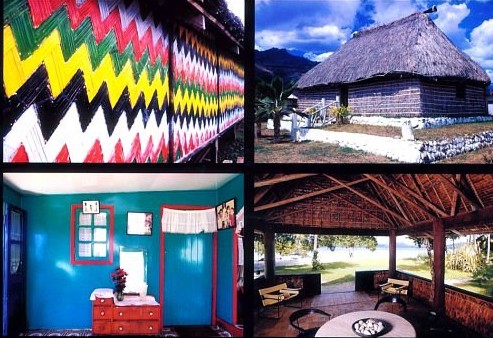
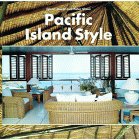
Pacific Island Style by Glenn Jowitt, Peter Shaw, 2000. Contemporary Pacific style is a vibrant blend that mixes cultures from the many islands of the South Pacific with colonial influences. This colorful new book explores both the traditional architecture and crafts of the region and contemporary design concepts. Covering Samoa, Niue, Tahiti, New Caledonia, Tonga, the Cook Islands, Fiji, and the Solomon Islands, Pacific Island Style looks at design and color inside private houses and out on the streets, the use of local materials and techniques, traditional houses, painting and stenciling techniques, colonial and modern houses. The traditional trademarks of Pacific Island style--attractive and natural materials, environment-enhancing design, indoor-outdoor living--are being found more and more all over the world. |
| |
|
|
| |
Click on image to buy from Amazon.com |
|
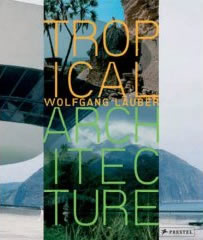
Tropical Architecture: Sustainable and Humane Building in Africa, Latin America and South-East Asia by Wolfgang Lauber , Peter Cheret , Klaus Ferstl , Eckhart Ribbeck, 2005. This forward-thinking survey considers the challenges of making buildings that withstand the vagaries of climate, economy, and limited resources. Although the tropics cover nearly forty percent of the world's surface, from rain forests to dry desert regions, the architecture of this climactically extreme geographic area has largely gone unnoticed. With exploding populations and numerous ecological and economic concerns, the regions are looking increasingly toward sustainable solutions. In this unique study Wolfgang Lauber explores the ways traditional, pre-colonial structures were better adapted to the area's topography and climate than more modern structures built by European settlers. Numerous photographs, illustrations, and plans examine the continuum of tropical architecture-from the mud hut to the colonial mansion, from bamboo sheds to high-rises, from spontaneous building to urban planning. Studies of the works of such contemporary architects as Rem Koolhaas, Oscar Niemeyer, and Renzo Piano show how modern theories can be adapted to the vernacular cultures in Africa, the Americas, and Asia to create buildings that are both humane and ecologically sound.
| |
|
|
| |
Click on image to buy from Amazon.com |
|
Tropical Living: Contemporary Dream Houses in the Philippines by Elizabeth Reyes, Andrew Chester Ong, 2001.Start with a warm tropical climate. Add an abundance of exotic natural building material. And then let the cross currents of Asian design and aesthetics create a rich architectural alchemy of its own. The result? The exquisite homes in the Philippines, a perfect balance of form and functionality. Tropical Living explores this dynamic experiment with breathtaking photography and a fascinating text. Tropical Living examines diverse residential design styles in both the city and in the countryside, in mountains and at the sea. From a classic old-world penthouse in the Malate area to an Asian-fusion villa on Batangas Bay, over thirty private homes are showcased and captured in color photographs taken by noted photographer, Andrew Chester Ong. Featuring an introduction by anthropology professor, Fernando Nakpil Zialcita, this book is a feast for lovers of Southeast Asia and anyone interested in design concepts from this fascinating and under-represented corner of the world.
| |
|
|
| |
Click on image to buy from Amazon.com |
|
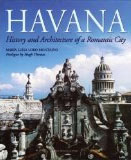
Havana: History and Architecture of a Romantic City by Maria Luisa Lobo Montalvo, et al, 2000. Cuba is both an essential part of the history of the Western hemisphere since 1492 and an island with a past and traditions entirely its own. Havana, its legendary capital, bears the traces of every stage of its history. In this volume, author María Luisa Lobo Montalvo presents the architecture and history of Havana part of which has been declared a UNESCO World Heritage Site in an accessible and engaging text and specially commissioned color photographs. Discussion of each phase of the citys development are accompanied by detailed case studies of the periods most significant buildings, which include the architectural history and heritage of each structure as well as comprehensive new and archival documentation, including photographs, prints, paintings, and historical artifacts. Throughout her presentation of the buildings, Lobo discusses the unique expression of design and decorative elements, customs and traditions that characterize the architecture of Havana.
|
|
 
| |
|
|
| |
Click on image to buy from Amazon.com |
|
Borobudur by Jean Louis Nou, Louis Frederic, 1996. When archeologists stumbled on the overgrown monument of Borobudur in the Javanese jungle in the late 19th century, they uncovered an ancient marvel that has astounded archeologists ever since. A cosmos in stone, a visual scripture of Buddhism with 1,460 exquisite carved reliefs, a pilgrimage site and an enormous mandala, Borobudur was the supreme achievement of a Buddhist kingdom that flourished briefly and then died on Java in the 9th and 10th centuries. This exquisite coffee table volume is perhaps the most lavish of the several oversize photographic books on the greatest Buddhist monument in the world. |
|
|
|
|
|
| |
|
|
|
|