Manufactured Systems
There are quite a few systems of building that are based on special manufactured products. These systems could be considered "alternative" since they do not represent typical, mainstream building techniques. While greenhomebuilding.com is mostly interested in promoting ways of building that utilize natural materials that require little industrial processing and transportation, it is recognized that not everybody wants a house that is made of dirt, straw, field stones, curved tree parts, etc.
It is a fact that many of the manufactured systems, once the house has been created, provide an excellent, durable, energy-efficient domicile. Even though the house may be constructed of considerable steel, cement, synthetic insulation, or other materials that are high in "embodied energy," over the lifetime of the house the energy saved in comparison to more conventional construction may be considerable. For this reason, I have included this page devoted to a variety of these manufactured systems. I am not promoting any particular one, nor do I receive any money from any of these manufacturers for including them here. I believe in being fully informed about all possible ways of building.
SEARCH
THIS SITE
MANUFACTURED SYSTEMS COVERED:
Autoclaved Aerated Concrete (AAC)
Compressed Block Machines
Conics
Domespace
Earth Blocks
Inca Blocks
Insulated Concrete Forming Systems (ICF)
Magnesium Oxide Cement
Magnesium Oxide Panels
Shotcrete Systems
Structural Insulated Panels (SIPs)
ThermoPlan / Ziegel Blocks
Quantcrete
Ferrocement
Geodesics
Light-guage Steel
Liteblock Aerated Concrete
Wood-fibre Boards
Yurts
ARTICLES:
Magnesium Based Cement
Pultruded Glass Reinforced Polyester

Informative Links, Media and Products
The media shown below are arranged according to when they were published, with the most recent ones at the top. If you click on one of the images you will be taken to a page at Amazon.com where you can find out more about the media or product. If you end up buying one of them, greenhomebuilding.com will receive a small commission that will help cover the cost of maintaining this website. Thanks for your patronage.
Autoclaved Aerated Concrete (AAC)
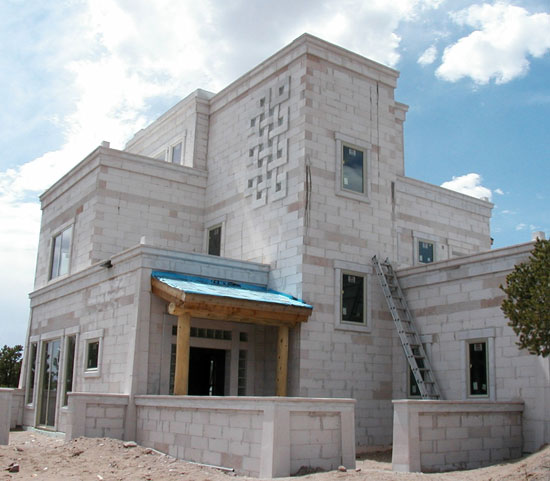
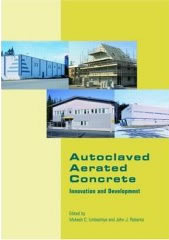
 This material was first brought to my attention by a local builder who has become a distributor for it and is building with it locally. It is really pretty fascinating stuff, with some great characteristics. In a way it is like man-made pumice, in that it is masonry, but is still rather lightweight. It is highly insulating and completely fireproof. I once held a one-inch thick piece of it it in my hand while a blow torch heated the opposite side, and I could barely feel it get warm! It can be cut with any carbide-tipped tool into very precise shapes, then the blocks can be "glued" together with ordinary masonry tile products. Precut blocks are available that have channels in them for standard rebar bond beam applications. This material has been used for buildings in Europe for a couple of decades, but is just now being tried in the United States. It is fairly expensive, but I would expect it to be extremely durable and create well-insulated and attractive structures. Interior and exterior finishes can be spayed on to provide a uniform, durable and colored surface. It has occurred to me that this stuff could be precut into "kit houses" that were architecturally intricate and beautiful, and would just need to be assembled by numbers.
sider-oxydro.com makes AAC.
taunton.com article about building with AAC
aerblock.com the local distributor who showed me the stuff.
zyapex.com a Chinese manufacturer of AACproducts.
The Wonders of AerBlock is an article written by Kelly Hart about AAC and how Michael Baron discovered and promotes its use.
Portland Cement Alternatives
What is Green Cement? 6 Types of Green Cement
ceramiccement.com phosphate-bonded C3Ceramic concrete products improve & protect limestone-bonded Portland concrete.
Compressed Block Machines
hydraform.com uses soil cement Compressed Earth Block technology to produce interlocking dry stacked Soil Cement Blocks.
Domespace
Domespace is what this French company calls their unique, rotating domes that can turn to face the sun as it traverses the sky. These domes have been built in many countries. Although they can be very energy efficient, I wouldn't exactly call them "ecological", since they are made almost entirely of wood and are based on a fairly high-tech concept.
Earthblocks
woodbrik an article about a product made from recycled wood fiber and fly ash.
Inca Blocks
www.incablock.com describes a unique hollow concrete block system that is interlocking and requires no mortar, so it is very fast to assemble.
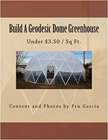
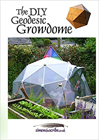
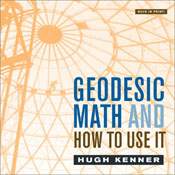
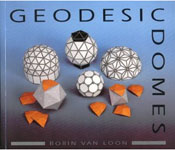
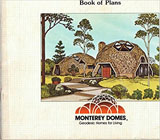
Geodesics
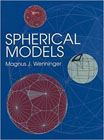
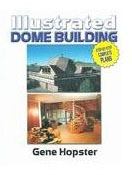
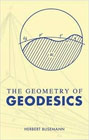
Magnesium Oxide Cement
gigacrete.com describes a cementious panelized product that utilizes various waste materials to manufactrure. More information about Grancrete is available here: www.rexresearch.com.
Here is a very informative article about Magnesium Oxide which is used as a cement in these products, comparing it to Portland cement and pointing out its many benefits.
Ceramicrete is formed by mixing magnesium oxide powder and soluble phosphate powder (common, low-cost materials) with water. The process is very similar to that for making concrete, using commercially available equipment that mixes the powder components into the binder. The wet material (binder, aggregates, and water mixture) can then be pumped, gunned, or sprayed, also with commercially available equipment. The resulting material is nonporous, with compressive strength higher than that of concrete.
Magnesium Based Cement is an article about all of this. This page links to further discussion, with photos and discription of how to use this stuff.
HIGH STRENGTH PHOSPHATE CEMENT USING INDUSTRIAL BYPRODUCT ASHES, a PDF written by Arun S. Wagh, Seung-Young Jeong, Dileep Singh, Energy Technology Division, Argonne National Laboratory. The only change I would suggest is to add fine sand equal to the total amount of powder before you add water. (Arun S. Wagh)
Magnesium Oxide Panels
An all-natural magnesium oxide cold ceramic cement based building panel that can replace drywall, OSB and plywood. See www.geoswan.com for more information.
Here is a very informative article about Magnesium Oxide which is used as a cement in this product, comparing it to Portland cement and pointing out its many benefits.
ThermoPlan / Ziegel Blocks
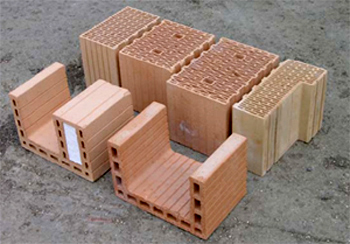 Thermoplan or Zeigel Blocks are fired clay blocks which use about 1/3 less energy to make compared to concrete blocks, and about 2/3 less CO2. They are fast, simple and ideal for a self builder to use. About 50% of German homes are made this way and the technology is spreading to other areas of Europe.
Thermoplan systems use Ziegel blocks with a thin bed of mortar, to provide a breathing wall construction system. When combined with woodfibre board they can form a thermally and acoustically high performance shell. The Ziegel blocks come as part of a full load-bearing external and internal wall masonry system, and combine high thermal performance with robustness, speed of build and a breathing wall design.
Because of all the trapped air and the thickness of the walls, these blocks provide reasonable insulation, while at the same time do provide some degree of interior thermal mass for maintaining constant interior temperatures. This is an unusual combination of these two factors in a single wall system.
Quantcrete
construction.nanoarc.org Nano technology applied to the use of cement, concrete and earthen materials.
Wood-fibre Boards
Wood-fibre boards are rigid insulation boards made from wood chippings and are available in Europe. They are manufactured from the by-products of sawmills. Softwood chippings are pulped and mixed with water and mechanically pressed into boards, typically 20mm thick. Typically a binder of natural tree resin is used. Various boards are available for different applications: insulating sarking board for roof constructions; below-screed flooring board for both thermal and acoustic insulation; internal and external insulating lining boards.
- Thermal conductivity: Excellent thermal performance in winter and summer. Typical thermal conductivity of 0.04 W/m.K (check with manufacturer's technical specification for the specific product).
- Hygroscopic - absorbs and releases moisture and so helps to regulate the indoor climate and protection of structural timbers.
- Good acoustic performance resulting from very high density (160kg per m 3 ). Very high specific heat capacity can reduce the cooling load for a building.
- Dimensionally stable with high compressive strength.
- Fire rating: DIN 4102, Part 1 Building Materials Class B2. No toxic fumes emitted if burnt.
- Free from toxins and allergens. No chemical additives. No VOC emissions.
- Manufactured from timber by-products using energy from renewable resources. CO 2 neutral.
- No toxins or toxic emissions during manufacture.
- No known health risks for installers.
- Durable, low maintenance.
- Reusable, recyclable and 100% compostable.
See www.greenspec.co.uk for more information.
Liteblock Aerated Concrete
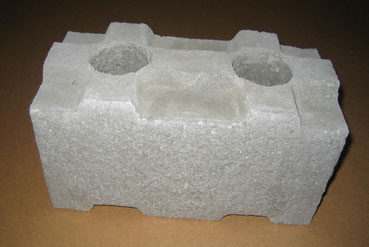 LiteblokT is an aerated, precision molded concrete block. Unlike autoclaved aerated concrete, it is not autoclaved. Rather, a non-toxic foaming agent is introduced to create a closed structure of discrete air pockets. The blocks are laid without mortar and are interlocking and lightweight allowing for significant savings in construction time and cost. Applications include residential and commercial construction, fences and retaining walls.
They give a "thermal conductance" value of 0.759 BTU-in/hr-ft 2-° F, which translates to about R-1.4/in., so the 5" thick block would be about R-7, but this can be misleading, since the overall performance of the wall system may measure much better than this. Using the IECC mass adjusted tables you get an R-18 equivalent in Houston, Texas, where the manufacturing plant is. You can learn more about this product by visiting crescoconcrete.com.
youtube.com is a video about Air Crete Dome Homes.
For Email contact go to About Us
Established in 2001, GreenHomeBuilding.com is primarily a labor of love. Kelly, and the GreenHomeBuilding team of experts, have answered thousands of questions for readers over the years, and we continue to publish up-to-date information about increasingly important sustainable architecture. If you feel moved to assist us in this work, your kind donation would be much appreciated; this can be easily done through our PayPal account:

VISIT OUR OTHER WEBSITES:
[Natural Building Blog] [Earthbag Building] [Dream Green Homes]
Disclaimer Of Liability And Warranty
I specifically disclaim any warranty, either expressed or implied, concerning the information on these pages. Neither I nor any of the advisor/consultants associated with this site will have liability for loss, damage, or injury, resulting from the use of any information found on this, or any other page at this site. Kelly Hart, Hartworks LLC.