Structural Insulated Panels (SIPs)
 |
||
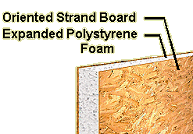
Image courtesy of Sipsco |
There many kinds of structural insulated panel systems, mostly using oriented strand board (OSB) onto which the finished surfaces can be attached. The insulating core is typically EPS or polyurethane foam, but SIP's manufactured with MEPS is preffereable because the process does not emit ozone-depleting gas. The advantages of these systems are that they are air tight, well insulating (dependng on the type and thickness of the insulation) and easy to install. Also the panels can be used as insulated roof components. It is estimated that a SIP building might use 30% less wood than a conventionally framed one.
 |
||
Image courtesy of Ecopan Corporation |
One disadvantage of these wood-clad panels is that they don't provide any thermal mass as part of their composition. While SIPs with EPS cores will burn, it has been demonstrated that they remain structurally sound for a lenthy period during a fire and do not emit fumes any more hazardous than those of wood products. Another possible concern is with insects or rodents nesting in the insulation since this can be an ideal habitat for them. One last concern is that a well-constructed SIP structure is practically hermetically sealed, which means that the walls are not breathable; for this reason they require some sort of mechanical ventilation system for healthful habitation.

If you click on one of the images you will be taken to a page at Amazon.com where you can find out more about the book. If you end up buying one of them, greenhomebuilding.com will receive a small commission that will help cover the cost of maintaining this website. Thanks for your patronage.

Plans
Modern Santa Fe
Dennis Nelson, Architect
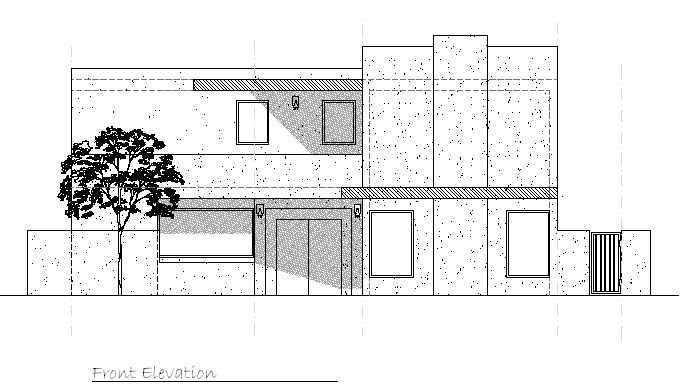
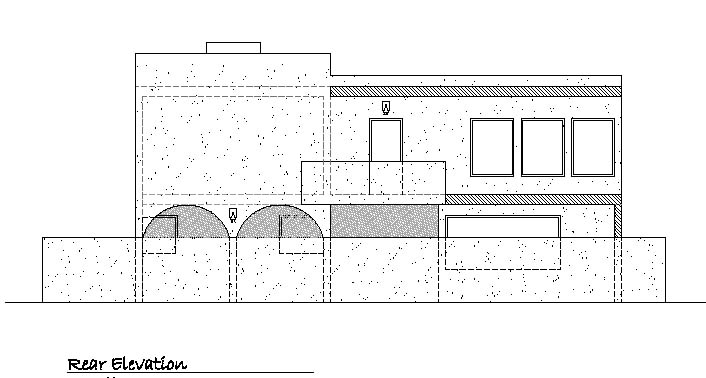
This approximately 2430 square foot modern santa fe style home home could function as passive solar heated in two different orientations (front or rear elevations could face south). It has two bedrooms and 2 1/2 baths, and features a lofted living room as well as a family room. It is designed to be built with structural insulated panels (SIP's).
For more information about this plan, and many others, visit our sister site www.dreamgreenhomes.com, where you will find a wide range of plans for sustainable homes, greenhouses, small buildings, garages, and food storage space for sale. Dream Green Homes is a consortium of outstanding architects and designers, who have pooled their talent and expertise for your benefit.
Informative Links
Here are some links for more information about SIP's in general:
finehomebuilding.com Fine Home Building article about SIP's.
greenbuilder.com/sourcebook This page discusses the environmental advantages of SIP's that use MEPS
as apposed toEPS for the insulation.
Below are listed links to manufacturers of SIP's:
agriboard OSB/wheat or rice straw
plastifab.com OSB/EPS
winterpanel.com OSB/EPS
foamlaminates.com OSB/EPS
sipstech.com OSB/EPS
murus.com OSB/EPS
or PUR
southernsips.com OSB/EPS and steel/EPS
kokoonhomes.com makes light-gauge steel/OSB/soy foam custom panels
fischersips.com OSB/EPS custom fabricated SIPs.
elfiwallsystem.com offers steel/EPS panels.
permatherm.net EPS with galvanized or stainless steel
singcore.com makes very lightweight panels for doors, etc. with a honey comb pattern.
raycore.com with high density, closed cell polyurethane foam insulation
For Email contact go to About Us
Established in 2001, GreenHomeBuilding.com is primarily a labor of love. Kelly, and the GreenHomeBuilding team of experts, have answered thousands of questions for readers over the years, and we continue to publish up-to-date information about increasingly important sustainable architecture. If you feel moved to assist us in this work, your kind donation would be much appreciated; this can be easily done through our PayPal account:

VISIT OUR OTHER WEBSITES:
[Natural Building Blog] [Earthbag Building] [Dream Green Homes]
Disclaimer Of Liability And Warranty
I specifically disclaim any warranty, either expressed or implied, concerning the information on these pages. Neither I nor any of the advisor/consultants associated with this site will have liability for loss, damage, or injury, resulting from the use of any information found on this, or any other page at this site. Kelly Hart, Hartworks LLC.