Passive vs. Active Solar Heating
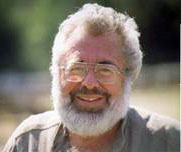 Ken Haggard, formerly an architecture professor at California Polytechnic, is an architect and principal in the San Luis Sustainability Group. Since the late sixties, Ken has designed more than 200 solar buildings, from homes to large commercial and institutional buildings—as well as the first permitted straw bale building in California. An active member of the American and International Solar Energy Societies, he received the Passive Pioneer Award from ASES in 1999 and was made a fellow of ASES in 2000. His office and home—in Santa Margarita, California—are passive solar, off grid, and straw bale. With David Bainbridge, Ken wrote Passive Solar Architecture: Heating, Cooling, Ventilation, Daylighting and More Using Natural Flows, published by Chelsea Green in 2011.
Questions and Answers
Q: What is solar architecture and what are those solutions that solar architecture can solve?
A:(Daniel Chiras) Solar architecture, generally refers to the design of buildings that heat themselves passively -- that is, without mechanical heating systems and outside energy or with reduced reliance on such systems and fuels.
Solar buildings are heated by the low-angled winter sun, which penetrates south-facing windows. Inside, the sunlight energy is converted to heat, which warms the interior of the building during the day. At night, solar heat stored in the walls and floors continues to heat the building.
Keys to successful passive solar design are proper orientation of the house, concentration of windows on the south side, superior insulation, air tight design, overhangs to shade the building in the summer, and thermal mass to store heat gained during the day for nighttime use.
Solar architecture helps combat rising fuel prices, creates comfort at little additional cost, address air pollution issues such as global warming caused by carbon dioxide emissions, and helps reduce our consumption of declining and finite fossil fuels.
Interestingly, everything we do to heat a building in the winter passively, also helps keep it cooler in the summer.
Q: Can you walk us through the basics of a passive solar design home? What are the elements that make up an effective passive solar home?
A: (Kelly) Good passive solar design will provide just enough sunlight into the rooms to be absorbed by the surrounding thermal mass (usually masonry materials), so that the heat will be given back into the room when the sun goes down. The thermal mass is a kind of "heat battery" that stores the warmth, absorbing it to keep the room from getting too hot during the day. Equally important to thermal mass is insulation (such as straw bales, crushed volcanic rock, or thermal shades) that will keep that heat inside. Thermal mass materials need to be insulated from the outside, or else they will just bleed that warmth right back out. A rock house might have tons of mass, but be uncomfortably cold because of this energy bleed. So a good solar design will utilize materials of the right type in the right places, blending thermal dynamics with utilitarian design.
Q: We are planning on building a log home pretty soon 2000 sq ft with 2fl + basement. and I am wanting to heat & cool it with solar energy could you tell me the best place to get supplies and also if there is a contractor here in Indiana who does solar hook ups?
A: (Daniel Chiras) Congratulations on your project! Heating and cooling with solar is best done passively -- rather than by active systems. Passive solar heating and cooling involves some simple, inexpensive steps such as orienting the house to the south, concentrating the windows on the house, providing proper overhang to prevent the high-angled winter sun from penetrating the windows during the summer, thermal mass to store heat, and insulation to retain heat in the structure. There are, of course, many other things you need to do to heat and cool a home passively.
You can read about them in some short articles I wrote for The Last Straw. We did an entire issue on passive solar heating and cooling. It's issue No. 36, winter 2001. You can obtain a copy by contacting the folks at the journal at www.strawhomes.com. You might also want to pick up a copy of my book, The Solar House. It contains detailed coverage of these important topics, and is written for a general, non-technical audience. I'd really recommend this over a solar hot water system that provides space heat, especially in your climate.
I don't know any passive solar designers in Indiana, but I'd suggest you call around to builders and architects and start asking who they'd suggest. Be persistent, it's very likely you will find someone with a few phone calls. If there are any large cities nearby, you can start your search there. Be sure, however, that the person is really well qualified. One way to do this would be to visit his or her homes.
Q: With Passive Solar Heating & Greenhouses, there are many older designs but I am seeking state of the art designs. If they are available please contact me.
A: (Kelly) Many of the older passive solar heating and greenhouse designs have not really been improved upon. The basic design concepts have not changed over the 25 years that I have been watching the technology. It is still a matter of allowing the sunlight into the space during the season needed, and storing that heat in thermal mass materials for the colder part of the daily cycle. There have been innovations in insulated shading devices perhaps, but even here, the basics have not changed.
Q: We live in a conventional, brick, ranch home with gas, hot water heating - we have great southern exposure - would it be possible to "retrofit" some sort of solar system and incorporate it into existing hot water heat system to heat home?
A: (Daniel Chiras) If you have a good solar exposure -- south-facing roof and walls -- you can retrofit for both passive or active solar. An active solar system could easily be tied into your existing heating system. I'd really have to see the house to be sure...but it sounds as if you might be able to enlist solar in retrofitting your home. By the way, I'm currently working on a new book called The Home Energy Survival Guide, which is all about this subject -- retrofitting homes for renewable energy.
The first advice I'd give, though, is to do a complete energy analysis of your home. Bring in someone to run a blower door test to test for air leakage and to assess insulation and other aspects of your home's energy performance. By sealing cracks in the building envelope, adding insulation to the ceiling and perhaps walls you can dramatically cut your fuel bills. Also, it is far cheaper to save energy than to install solar energy options. Every dollar you invest in energy efficiency will reduce the RE system cost by about 3 to 5 dollars.
Q: How would Kachadorian's solar slab work if I split it in half (E-W)with the north half about 3 feet higher than the south half? I'd put a half-wall along the split (vertical thermal mass) and figure out some way to allow flow between the "ducts" of the two slabs so I could still get flow S to N. I would have circulation not only from the warm (S) to the cold (N) part of the slab, but warm air RISING into the elevated, colder north half of the slab. Think it would work?
A: (Daniel Chiras) I've got no experience with this system (Kachadorian's) but think your idea would be theoretically possible. Bear in mind, however, that the warm air flows through the slab from the north side to the south side so you won't be able to promote circulation "from the warm South to the cold North part of the slab, as you noted in your e-mail.
You'd also probably have to provide an assist with a fan. Don't rely on natural convection. That seems to be the case with many of his successful applications of this idea. Bends in the "ducts" in the system would reduce air flow even more, making a good circulating fan vital.
I talked with a gentleman in New York State (Bruce Brownell) who has installed hundreds of these slabs; however, he uses metal ducts in poured concrete rather than relying on the cavities in the cinder blocks like Kachadorian. I think this might be a wiser way to go.
Q: Regarding Kachadorian's solar slab concept, are there any issues with regard to bacteria build up in the blocks or pipes placed in the slab? If so, any recommended methods of eliminating them?
A: (Daniel Chiras) Yes, moisture is a concern. I talk about this a little in my book The Solar House. Kachadorian talks about it in the newest edition of his book. He says he's never had a problem with mold build up but could imagine that it might be a problem in moist climates. I recommend, if you are going to use this technique, that you embed plastic pipe in the floor to transport hot air beneath the slab rather than concrete block. It's a cheaper strategy and would not present the myriad of irregular surfaces on which mold could grow. You could also clean the pipe by pulling a rag through it...
C: Someone had suggested plastic pipe, but I was concerned that the lower thermal conductivity might make the system less efficient. However, the air flow is quite slow so I'll take it that using plastic is not much of an issue.
Q: We have your book "The Solar House" which I feel is the best resource on the subject. We are planning to build a new home near Minneapolis, MN. The house will be oriented southeast facing a pond (true south is not an option) therefore potential solar heat gain will be limited. Do you feel a radiant floor heating system could be justified since we could circulate water continuously during the day and theoretically increase the effectiveness of the thermal mass of the 4" concrete floor?
A: (Daniel Chiras) I'm not sure I understand your question fully. If you are interested in installing a solar hot water system and using that system to provide hot water for a radiant floor heating system that's imminently doable in most locations so long as the panels are in the sun from 9 to 3 PM each day. You may also want to consider a design that allows a good view of the pond (part of the house is oriented in that direction) while also capturing solar heat through south-facing windows (part of the house is oriented to the south). Sometimes an L-shaped building will allow a person to capture a view and capture solar heat...Just a thought.
C: The proposed solar energy gain in the house will be in the form of passive light entering the house through approximately 70 sq.ft. of glazing from the SE facing windows. We plan to have a concrete or tile floor with embedded radiant heat coils. Thanks but an L shaped house is not possible in our situation. My question is this: If the fluid in the radiant coils in the floor is circulated continuously, thus drawing heat away from the area actually receiving direct sunlight from the SE windows, would this effectively increase the thermal mass of the floor alone and increase the efficiency of the system?
A: (Daniel Chiras) Thanks for the clarification. I see what you are saying. I'd have to see the floor design and study the orientation of the house to answer this question fully and accurately. In general, however, your idea seems sound. Fluid in radiant coils in the floor would draw heat away from the mass and distribute it elsewhere, effectively increasing thermal mass and moving heat to locations where it is needed. However, the efficacy of this design depends on the angle. That is, if the wall containing the solar glazing is pointed too much to the east, you're just not going to get that much solar gain. You would probably be better off mounting some solar hot air panels on the roof of the house or on the ground nearby (and orienting them properly) or mounting some solar hot water panels and using that heat to charge the floor mass in your house (through an in-floor heating system). Again, though, I hate to give this kind of advice without studying the site plan and a floor plan of the house.
C: Here is a solar hot air system concept:. A 2 inch space is created between a sub roof and the metal roof using 2x2's running both horizontal and vertical. The horizontals are made to allow hot air flow toward the peak by drilling holes in the 2x2's in increasingly larger diameters in the horizontals closest to the peak to encourage a stronger flow. The peak has connecting duct that uses a photovoltaic connected to a fan that forces the hot air down into the thermal mass buried in the foundation. To encourage heating of the mass exit ducting recirculates the cooled air on the opposite side of the mass back into the roof.
I have heard that there is a great example of this system here in the valley that I am trying to locate and visit. The owner has stated that the mass reaches temps of 150F in the late summer and works well into the early spring.
Another avenue that has been mentioned is to build a integral trombe wall foundation that vents up into the modular/manufactured home. I can visualize vertical piping embedded in to middle of the trombe wall mass that connects to duct work and a fan.
Q: Could you, please, tell me more about active solar heating systems suitable for Ireland.
A: (Kelly) The main difference between active and passive solar heating systems is that active ones employ some more complex moving parts, such as fans, that help move air or fluid from one place to another. I like the passive ones because they are generally simpler and less prone to mechanical failure. Active systems can be used in situations where the house does not have adequate solar exposure (to the south) for passive systems to work. In these cases solar panels that either heat fluids or air are placed where they do get lots of sunshine, and then this is transported into the house to heat tubes in the floor, bins of stones (or other thermal mass materials), or radiators. A simpler active system might just use a fan between two rooms to help move hot air from one room to the other.
Q: We are looking building a completely "off-grid" home. We are looking at earth sheltering due to the simple fact of it's insulating properties and we would be building it in West-central Minnesota which is quite hilly. But I have questions regarding using solar for passive heating and cooling. I've found two methods that I think would really work for us. One is Passive Annual Heating Storage (PAHS). The other is Annualized Geo-Solar (AGS). Both seem very similar. So what is the big difference? And would they truly work in such an environment as Minnesota's below zero winters? And in and earth sheltered house using the hybrid heating method as described above, is the whole house insulated on the outside of the concrete?
A: (Daniel Chiras) Passive Annual Heat Storage and Annualized Geo-Solar are two very similar techniques. Both rely on a layer of subterranean insulation (an insulation apron) that extends quite a distance from the foundation. As you probably know by know, this insulation extends all the way around the house and serves to trap and retain heat. This reduces the temperature difference between the foundation and the ground and thus reduces heat loss. In the winter heat is transferred into the house, helping to maintain comfortable interior temperatures.
In PAHS, the first system, however, heat under the insulation builds up naturally from the ground and to a lesser extent from the house. In the second, heat is pumped into the storage area beneath the insulation by using a solar hot air or solar hot water system that operates all year round, especially in the summer. Unfortunately, there's very little information on either system and very little data to back up claims of their effectiveness. I've looked for it and so far haven't found much at all other than some anecdotal information. If you decided to attempt either one, as I've been contemplating, you'd be a pioneer. Hopefully, you could collect some real data on the performance of the system by burying temperature sensors in the walls and around the house and monitoring heat flow and household performance.
I personally would try the Annualized Geo-Solar technique using a solar hot air panel with a solar electric module to pump air through pipes around the house (beneath the insulation).
Q: I also find the Seabird Island Project very interesting using more of an active approach to solar space and water heating. Would that also be an option for us? I realize some back up for water heating would be needed. Could you combine the ideas of using the "active" solar heating from the Seabird project and the storage systems of the other two by piping the hot air to under the ground to be used later?
A (Kelly): About the applicability of the Seabird Project approach, I would say that it would likely be effective in Minnesota. One aspect of the Seabird project includes geo-coupled air tubes, so I would think that the two systems could be combined in some way.
There are different schools of thought about whether it is best to insulate the interior mass from the ground or not in general (with conventional passive solar heating). I am inclined toward using the insulation (on the outside) since I think it gives you more control over temperatures during all seasons. But I don't have direct experience with PAHS or AGS systems, so it might be better to follow the advice of the designers of these systems.
Q: We are building a passive solar in the mountains of West Virginia at latitude 39 degree North on a south-facing slope. We have loads of thermal mass and will be super insulated. Will wood stoves as backup heat be sufficient? We hate to have to put other expensive systems in when we love wood. But do we need a backup for times when we are away?
A: (Daniel Chiras) I can't really say if wood will be sufficient without specific details of your home construction -- its airtightness, levels of insulation, solar glazing, level of insulation, earth sheltering, climate, etc. How cold does it get in the winter? How sunny is it?
If you are building a truly superinsulated earth-sheltered home with ceiling insulation of R50 or better and wall insulation of R30 and you have a good solar resource and plenty of mass you probably would not need a backup heat source except to satisfy local building code. If that's the case, I'd install a couple of thermostatically controlled electric baseboard heaters to pass inspection. You may never need them, but you'll have to determine that as you live in the home.
You should be able to get by with wood as your sole source of heat but I don't want to make any guarantees based on the tiny amount of information I have at hand. You should have someone perform an Energy-10 analysis or a Builder Guide for Window's energy analysis to get a better handle on the thermal performance of your home.
You do want to guard against too much thermal mass. My experience has been that too much mass actually works against you. Be sure to insulate between the ground and the foundation and any earth-sheltered portions of your home...and insulate well...to reduce heat loss through these structures.
I know I haven't given you a very definitive answer, but I hope I've helped in some small way.
C: I ran across this on Huffpost, thought you might be interested: www.nytimes.com
R: (Kelly) It is nice to see that passive solar architecture has caught on to that degree in Germany. But the article is a bit misleading in that it suggests that the concept was invented in Germany in the early 80's. I remember reading about passive solar concepts in the 60's and 70's, and one the best books ever written on the topic was published in 1979 by Edward Mazria in the US; he is still going strong, having just issued the solar energy, carbon neutral challenge by 2030: newenergynews.blogspot.com
The suggestion seems to be that without a heat exchanger, passive solar doesn't work, which isn't really true. While it is true that air-tight homes are unhealthy without such an air exchange unit, perfectly well-functioning passive solar homes that are not completely air tight have been built for many years...The 10% efficiency that is lost through the heat exchange unit could also be lost through some infiltration of fresh air, and both systems would perform well.
Q: From my reading about passive solar houses, it appears that there is a trade-off to be made between HTM, insulation and ventilation. Materials that are good insulators are not good ventilators. Adobe has good HTM but doesn´t insulate well etc. What are the main factors to consider when deciding the order of importance of these 3 things, or is it possible to have good-quality internal air as well HTM & insulation?
A: (Daniel Chiras) Thermal mass, insulation, and ventilation are all equally important. I encourage individuals to incorporate a lot of thermal mass (an appropriate amount) strategically placed within a well-insulated building envelope. Create an airtight structure, but provide for adequate air exchange via an energy recovery ventilator.
Q: I'm in the process of designing a passive solar 30' diameter wooden panel yurt. It will be slab on grade 8' wall height to the main floor, main floor wall height will be 12' to make space for a usable loft. I'll be attaching a greenhouse to the south side lower level. I'm trying to decide which solar heat storage technique to use. The idea of loosing space with a large masonry thermal mass, makes me give more consideration to a rock bin under the slab with a solar powered, thermostat controlled fan in the peak of the greenhouse to move the hot air to the rock bin. I'm finding limited detailed information on rock bin designs. My question is, based on the 706 sq/ft of my yurt slab, what will be the best way for me to calculate the size, location and construction of my rock bin?
A: (Daniel Chiras)I know nothing of rock bin storage, or more specifically, how to size it. My understanding from others is that rock bins often don't work very well. It is difficult to get the heat back out in a controlled fashion. People have been terribly disappointed by the performance of rock bins.
Q: We are looking into a cob/strawbale home and have been told that passive solar heating is not as efficient with this design as it would be with a timber frame house due to the large overhands required for cob building. Can you tell me if there is some truth to that and if there are techniques, if any, that would be significantly different depending on building material.
A: (Kelly) It is true that both cob and strawbale buildings are best designed with large overhanging eaves; but this is also true with most passive solar designs. The function of the eaves is not only to protect the walls, but to shade the hot summer sun from entering the building...so the two functions go hand-in-hand.
Q: We are looking into a cob/strawbale home and have been told that passive solar heating is not as efficient with this design as it would be with a timber frame house due to the large overhands required for cob building. Can you tell me if there is some truth to that and if there are techniques, if any, that would be significantly different depending on building material.
A: (Kelly) It is true that both cob and strawbale buildings are best designed with large overhanging eaves; but this is also true with most passive solar designs. The function of the eaves is not only to protect the walls, but to shade the hot summer sun from entering the building...so the two functions go hand-in-hand.
Q: If you were to build a non-bermed house in Alabama, what type area, lot, etc, would you look for, and would you still use the same facing directions?
A: (Kelly) For any building, you need to find a well-drained area to build, so water intrusion will not become an issue. If you have any part of the year when you need some additional heating, passive solar can provide this, and the northern hemisphere that means facing within about 15 degrees of south for the solar gain glazing. In areas like Alabama that have minimal heating requirements, then the amount of glazing can be reduced, and some easy shading options, such as thermal curtains, installed.
Q: I'm investing in property in NW Arkansas and was hoping that you could offer some advise on a building site. Unfortunately the property doesn't not have a south facing hill. There is a hill that faces north, east, and west with a creek on both sides flowing north. We were considering building with straw and cob for better insulation on the northern front of house...and rubble trench as a foundation for better drainage. I understand that south facing is the most ideal, but I just don't have that option. Do you have any recommendations?
A: (Kelly) For passive solar heat in the Northern Hemisphere, some southern exposure to the winter sun definitely ideal. If this is not possible, then probably taking advantage of your eastern morning sun would be your next best choice, since then at least the house would be able to use that heat in the morning to warm you after a cold night. Western exposure would also heat the house some, but the main problem with this is that it might provide too much heat during the summer, because it is difficult to shade it. As far as your materials choices, I think that straw would be the better choice for the envelope of the house, since it provides much better insulation from both the heat and the cold. Use the cob in selected places inside this envelope, to act as thermal mass and help stabilize interior temperatures.
Q: What would be the most cost effective way to build a passive home in the City of St. Louis, MO? The lot faces North, so the back of the home is South. The longest part of the home faces East and West. I have read that 2" of concrete 4" of insulation form 6" of concrete is the best way to build the walls. Is this true? And should I build one wall different than the others for max heat gain?
A: (Daniel Chiras) Boy, there are many great ways to build a passive solar home. Structural insulated panels work really well for exterior walls and so do Insulated concrete forms. Just be sure that there's some interior thermal mass to soak up the sun's energy. Plastered straw bale is an excellent material.
Q: Is it possible in central Texas to build a hybrid straw bale/cob house that does not require any heating or cooling unit/facility (leaning solely on thermal mass, insulation, and green roof elements (and without going underground)? If so, what would the efficient size of the house need to be, and is there anything particular that you think I should know to make that work, over and above the merits of passive solar design principles, that I'm fairly familiar with?
A: (Daniel Chiras) Yes, it is possible to create a self-sufficient home in Texas, although humidity control may become an issue part of the year. You may need to install a dehumidifier. There's no magical number as to the size of the building, but you need to do everything right. As you noted, you need to adhere to all the passive solar heating and cooling principles. Superinsulation, airtight design are a must! When using cob to build walls, you may need to install some additional insulation in the walls, as cob is high-mass and relatively low R-value. Hire an experienced architect who understands passive solar heating and cooling very well and has actually designed these homes, and a hire very good builder who is similarly qualified, if you are no doing it yourself.
Q: I have a question regarding the solarium approach to passive solar heating. Zero Energy Design (ZED) describes a passive solar home where air heated in an attached solarium naturally circulates up through the the attic or via natural ducts created between north/south oriented ceiling joists....then down the double back wall...then through the crawl space and back to the solarium. My question concerns condensation of moisture in the air as it cools on it's journey from the solarium through the ceiling joist cavities, back wall and crawl space. How would you keep mold and mildew from growing in the cooler areas of the air's journey? It would seem like this would eventually contaminate the air and sicken the residents of such a home.
A: (Daniel Chiras) You ask a very valid question, one that I've never seen anyone address. Moisture condensation could become an issue, particularly in humid climates. My guess is that the outer wall of the airflow chamber would have to be very well insulated so moisture would not reach its dew point at any time during its course through the double envelope. My take on this is that double envelope homes aren't a good idea. They require a lot more building material and a lot more labor to assemble than a standard passive solar home and they don't perform any better...at least that's what one passive solar home expert from the National Renewable Energy Lab told me.
Q: My wife and I designed and built our direct gain, earth sheltered passive solar home over 25 years ago, and have been comfortably living in it since. http://www.builditsolar.com/Projects/SolarHomes/Doug/DougsSolarHome.htm I have been a member of the largest online solar heat group- http://groups.yahoo.com/group/SolarHeat/ for many years. I have posted about my home and how well it works. Lately, there have been a few detractors claiming that direct gain is worthless, and using pages of math formulas to try to convince others of that. I am not up on the math, nor do I have the sort of monitoring equipment they want to prove my system works well. I feel they are misleading the over 2,000 members of this group. I have your book- "The Solar House" and in it and on greenhomebuilding.com, the claim is made that your direct gain home is mostly heated by the sun. I would really appreciate it if you could provide some numbers to back up that claim, so I could show these doubters that our homes do work well. Your home is more convincing that mine, as I am in a milder climate than you, and I do not have your credentials.
A: (Daniel Chiras) Interesting dilemma...Here's my experience. I built a super insulated, earth-sheltered direct gain passive solar home and have lived in it for 14 years. It stays warm in the winter, and cool in the summer, naturally. We have no air conditioning and the only backup heat we need is a wood stove. We burn one cord of pine a year. That's it for backup heat. And, we're at 8000 feet above sea level. If that doesn't demonstrate the efficacy of direct gain passive solar, I don't know what would...
Comment: I recently built a geo-solar annualized high mass heat sink under a house-- http://dbbrad.blogspot.com/search/label/Heat%20Storage I've already written a few articles on it but it's well documented, both mathematically and visually. Soon, the data collection system (18 probes running on LabJack readers) will be running taking measurements. Kind of the holy grail of solar if you can store solar heat on an annualized basis and have it be usable and cost effective. We'll see!
Response: (Kelly) I think that PAHS (passive annual heat storage) is a fascinating topic that deserves much more attention than it tends to get. This is what the Earthships attempt to do, and there are a few other examples, but they are far and few between. Ultimately I think that this is really the way that passive solar should go because so many places don't have a winter climate that is conducive to daily or weekly heat gain sufficient for comfort, whereas if they can store heat from the summer and use it in the winter, then were talking something really practical.
Q: I recently built an 1800 sf passive solar saltbox in western New York state. It features R-33 on the walls, R-60 in the ceiling, and an 800 sf concrete slab on the first floor 6" thick including the slate tile, with R-26 between that and the basement. The sole heat source ( besides the sun, which heats the house quickly and comfortably ) is a masonry heater. We are cranking it pretty hard during the cold and cloudy weather we have been having in order to keep the temps between 64-68 F, and burning a full cord per month. Doing the math ( 24 MBtu ), that seems like more btu's than our efficient design should need. I suspect that the slab, with surface temps of 57-64 F, is sucking up much of the heat, as there is no evidence of heat loss through the building envelope. My questions: Does this sound like a reasonable explanation? How long should I expect it to take to heat up this slab? Will hooking up a radiant floor heating system to the PEX tubing already in the slab be worth it to speed things up?
A: (Daniel Chiras) It seems to me that your hypothesis is likely accurate. I'm sure that the radiant system will make all the difference rather quickly. I recently reviewed an excellent book about masonry heaters that has specific information about sizing and heat output that might give some comparative data.