Miscellaneous Questions about Passive Solar
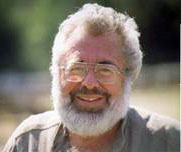 Ken Haggard, formerly an architecture professor at California Polytechnic, is an architect and principal in the San Luis Sustainability Group. Since the late sixties, Ken has designed more than 200 solar buildings, from homes to large commercial and institutional buildings—as well as the first permitted straw bale building in California. An active member of the American and International Solar Energy Societies, he received the Passive Pioneer Award from ASES in 1999 and was made a fellow of ASES in 2000. His office and home—in Santa Margarita, California—are passive solar, off grid, and straw bale. With David Bainbridge, Ken wrote Passive Solar Architecture: Heating, Cooling, Ventilation, Daylighting and More Using Natural Flows, published by Chelsea Green in 2011.
Questions and Answers
Q: Why is cooling, heating, and lighting important for building a green, energy-efficient home?
A: (Daniel Chiras) Heating, cooling, and lighting are important to all buildings. What we strive for in green building is to heat, cool, light, and ventilate a home naturally -- that is, in ways that reduce fossil fuel energy and mechanical systems. The benefits of this are many to the homeowner and society as a whole, including reduced pollution, reduced greenhouse gas emissions, etc.
Q: I'm investigating a geothermal home for my new residence. What are the pros and cons of such a design as described by www.enertia.com?
A: (Kelly) I'll give you an off-the-top-of-my-head answer to your question. Not having lived in one of these houses, or even stepped inside one, what I have to say is not experiential. Envelope houses have been around for several decades. They tend to be quite energy efficient because of that buffering of the outside ambient climate. They also have not become very popular because they are rather expensive to build; it is like building two houses nested together. But I would not only consider the cost financially, but also the cost to our environment in committing so much wood to building your house, given the state of our forests these days. Additionally, the Enertia folks talk about the thermal properties of solid wood, but tests have shown that wood is not nearly as effective a thermal mass as more dense masonry materials, such as stone, earth, brick, etc. I would bet that a well-designed passive solar house, with walls designed with mass on the inside, insulation on the outside, and bermed into the ground somewhat, would perform at least as well as one of these envelope houses.
C: I've been studying a myriad of information. The solution is combining the technologies that meet one's goals. The interesting part of the discovery process like most things is separating the credible technology from sales orientated information. And for myself who is a novice in this area, I'm very skeptical of some of the claims being made. I like the fact that you have presented many alternatives to construction techniques on your site. Another site I found is very educational like yours is posted by Elizabeth Seiberling, PhD (www.phys.ufl.edu). She works with the surface physics of semiconductor materials. Her home and methodologies for residential self-sufficiency are detailed on her site.
Q: We're in process of designing and building our own home and have read about the solar slab concept in several books, including your The Solar House Passive Heating and Cooling, and would like to incorporate that with other passive solar concepts. How can we obtain detailed building information, contact designers, and/or those who have used this concept?
A: (Daniel Chiras) The originator of the design you talk about, James Kachadorian, is pretty inaccessible, which is unfortunate. However, there is a builder in New York state who has built nearly 400 homes (if I recall correctly) using this technique, although he runs the heat through ducts in the slab rather than concrete blocks. His name is Bruce Brownell and he has a company called Adirondack Alternate Energy in Edinburg, NY. His phone number 518-863-4338.
Q: I was considering a thermal heating system that is suppose to be a little expensive to purchase but saves much on the costs of electric...
A: (Daniel Chiras) The heating system you describe sounds like a ground source heat pump. If this correct, it is a great product that is very efficient and one of the ways we can heat our homes given the upcoming shortages in natural gas.
Q: I am an architect pursuing my masters in environmental design in the U.K. I am doing a project that has a mismatch concept. I have a building activity that opposes its sustainability in the climate, where I have chosen a site. I am doing an ice sculpting museum and gallery in athens, greece. I have to find natural ways of keeping this activity going. I do not want to use any air conditioning methods. I want to environmentally design this project. I need advice.
A: (Kelly) I can't imagine how you will accomplish this...it sounds impossible to me. Maybe this could be done in Norway or Greenland, but not around the Mediterranean!
Q: I'm doing a major project on Solar Energy, and I was wondering if you could give me some tips on building a miniature sized model of a Solar Energy Home. Nothing too fancy, just some ideas that I can work from.
A: (Daniel Chiras) One of my clients built a solar model of his home using a cereal box. He cut out the walls, cut out windows, taped them together, installed a roof, then took it to the National Renewable Energy Lab which has a solar simulator. He used it to see how much light entered various rooms during different times of the day. This is a simple, economical way to make a model. Why don't you give it a try?
A: (Johnny Weiss) When building architectural models, many designers and architects like to work with a simple material called "foamcore". While a great variety of thicknesses, colors, and textures are available at professional drafting supply stores, you may be able to find adequate supplies at frame shops and office supply stores. In terms of basic passive solar heating design for all Northern climates, start by orienting the home's long axis East-West...so that a long elevation is facing True South. Try to organize the floor plan so that daytime living areas are on the South side....and storage, garage, and bedrooms mostly on the North side. Largest windows on the South (10%-15% of the 'affected' floor area)....fewer windows on the colder shady North side. Passive solar heating/cooling systems work best when designers and builders pay close attention to reducing air leakage, super-insulation, and optimizing thermal mass details.
Q: I have been advised that the Houston area does not have enough sunny days in the winter to make designing a home for passive solar worthwhile in this area. I would think that incorporating passive solar into the design could only improve the homes heating and cooling performance. Please comment.
A: (Daniel Chiras) Your instincts are absolutely correct. By all means, design for passive solar heating and you will benefit greatly. Do you know that passive solar designers are able to satisfy about half of their heating demands through passive solar in really cloudy areas like Buffalo, NY and Seattle, WA? Go for it! You won't be sorry.
Q: I am working in NW China, designing a solar model house, using sustainable technology. I'd like to use a trombe wall. What kind of paint is good to use on the brick wall? We don't have access to special paints, here. Are oil-based paints ok for the high temps and for heat conduction?
A: (Daniel Chiras) I would avoid black paints entirely. Over time, an ordinary black paint will atomize. That is, it will vaporize. The pigment molecules will deposit on the inside surface of the glass, cutting off all solar gain. It's better to leave the wall as is. That is, use a dark colored brick but do not paint it unless you have access to the very expensive paints developed for solar panels and trombe walls.
Q: In your book "The Solar House Passive Heating and Cooling" you mention Jame Kachadorian's book "The Passive Solar House", which I also have. In your book you bring up the possible issue of mold & mildew in the blocks under the slab. I have also wondered about this. You mention the possible use of pipes replacing the hollow core blocks. That do you think of using either PVC pipe or aluminum electrical conduit to replace the block and how much pipe? I was thinking of one or the other (probability PVC) embedded in sand with the slab pored over it.
A:(Daniel Chiras) James Kachadorian swears that mold is not a problem with his system (blocks) -- or so I hear through the grape vine. Bruce Brownell at Adirondack Alternate Energy installs pipe (I'm not sure whether it is aluminum or PVC) and swears by it. I don't have any practical experience in this area, so I'd call Bruce and maybe hire him to consult on the project. He's done quite a few this way.
Q: I’m a college student in the architecture program at Bluegrass Community and Technical College in Lexington, Kentucky. I’m currently working in a group on a project concerning Solar Architecture. My question to you is: How are building departments reacting to solar technology? Also from your experience could you tell me what devices could be invented that would better serve and/or help solar architecture? Are there already new technologies invented that are currently causing a "rebirth" in solar architecture and therefore sparking a "chain-reaction" nationwide to where almost every agency, company, or firm trying to jump in the construction of solar homes?
A: (Daniel Chiras) As far as I can tell, building departments have no problem whatsoever with solar technologies -- for example, solar electric systems, solar hot water systems, or passive solar. These technologies are so well established that they present no problems whatsoever.
As you would expect, solar electric and solar hot water systems need to be installed by competent installers. They have to meet code requirements but that's generally not a problem unless they've been installed by homeowners who don't know what they're doing.
The second part of your questions is really quite involved. Are you talking about passive solar design? Or all solar technologies. Assuming you are talking about passive solar design, my response is that one of the most significant new technologies is not really a technology, but rather software that allows designers to assess a building's performance in the pre-design and design phase. Software like Builder Guide for Windows and Energy-10 have been a real boon to those of us who design and build passive solar homes. It allows us to predict how design ideas will work and to change designs to achieve goals.
Along this line, another technology that would prove helpful is one that allows the introduction of thermal mass into a conventional home without incurring high costs. There's a company in Germany, I believe, that has introduced a phase-change material in sheetrock or drywall that increases the heat storage capacity of drywall, which could help designers incorporate sufficient thermal mass in a home without having to install otherwise expensive mass options.
You may find my books, The Homeowner's Guide to Renewable Energy, just released, and The Solar House, helpful in your pursuit of solar design ideas.
Q: What would be the most impact-making changes that one could make in a typical circa mid-80's home, given about $10-20,000? I'd like to make some wise, long-term choices, but would like some guidance in some main areas to focus on.
A:(Daniel Chiras) The big-impact items are, quite interestingly, always the cheapest ones. Start with a professional energy audit. An energy auditor will conduct a blower door test and duct blast test to determine the leakiness of the building envelope and ducts (in a forced air heating system). An energy audit will cost about $300.
Seal all those leaks. The energy auditor will give you a list of changes that you can make, in additional to weatherstripping and caulking. Since each home is different, I can't say what your next changes will be. My guess is that he or she might suggest adding more insulation. Most homes are woefully under insulated. If you haven't installed a water heater blanket on your gas or electric water heater, do so. It will cost you $18 and will pay for itself. While you are at it, be sure to turn the temperature down to 120 degrees Fahrenheit. Next, insulate all of the hot water pipe in your home that you can access. If you haven't installed a water-efficient showerhead, do so. This device will cost between 5 and 15 dollar and will save a family of four up to $250 per year. Even at half that savings, it is a phenomenal savings.
These are all pretty inexpensive things, as you can see, but will have a huge impact. I'd install 3 or 4 compact fluorescent lights in the most commonly used fixtures in your home. Each light bulb will save you $30 to $60 over its lifetime. From here, I'd consider replacing old appliances. If you have an old refrigerator, recycle it and get one of the super energy efficient models. Look for the Energy Star logo on refrigerators. You can log on to EPA's Energy Star web site and find a list of efficient appliances... If your furnace is old and inefficient, it might be worth replacing with a super efficient model. Again, EPA's web site can help you select a model that meets your needs.
If you want to learn more about energy retrofitting, you might want to check out my book, The Homeowner's Guide to Renewable Energy. Once you have made all of the energy efficiency improvements, you might want to think about installing a solar electric or solar hot water system. Please remember, before you even think about installing a system, exhaust all of the efficiency options first. They are the cheapest and most cost effective measures you can take. I have an article on energy retrofitting coming out this summer in Mother Earth News' special housing edition, which might be of interest to you.
Q: I have just read your new book "The New Ecological Home" and Mr. Kachadorian's book "Passive Solar HOuse" as well as others. Very exciting and relevant reading as we are going to be building a new home in Albuquerque beginning this August and are now in the design phase. I have a few questions about Kachadorian's solar slab. Is the whole foundation (ie including the garage)on the solar slab?
A:(Daniel Chiras) The entire slab except the garage floor is a solar slab.
Also, we have a large pantry on the north side of the home that we want to keep cool. Can we design a solar slab that doesn't heat a section of the foundation?
I can't see why not.
Third, can we put a radiant heat system on top of the solar slab as the backup heat. I am not fond of forced air.
Certainly, although if you build a super efficient passive solar home, a radiant floor heating system in your climate is probably a waste of money. Why install a $16,000 to $20,000 heating system for a $100 - $200 worth of heating a year?
Fourth, is it possible to double the radiant heat system as a radiant cool system too; that is, run cool water through it rather than hot in the summer?
I think so, but I don't know anything about these systems. I've heard of them and heard that they work well.
Q: I am writing on lack of sunlight and its impact on the health of building occupants. The point I am making regarding Indian Cliff Dewllings is that they knew how to design with the sun in mind. Can you help?
A:(Daniel Chiras) It is an interesting question about how light, or lack of it might affect people over time. It is clear to me that the native people at Mesa Verde knew about utilizing the sun to help heat their homes in the winter, but since they had no glass to help hold that heat in their homes, they had to compromise on the size and number of windows. I suspect that they relied more on the thermal "flywheel" effect of the sun heating the stone walls that face south in those cliff dwellings to pass on the heat collected during the day for use at night. They also may well have closed those few windows they did have with skins at night to help keep it warmer inside. And, of course, the fact that they built into a cliff face buffered them considerable from the ambient air temperatures.
Q: We have a 400 year old stone house in the Cotswolds, England. We are trying to insulate the windows to conserve energy. We aren't allowed to put in storm windows because the local heritage control agents won't give us permission (our house is a listed building of architectural/historical importance). I'm using blinds and heavy curtains. In the bedroom we have terrible condensation on the (leaded) windows which the insulation of course makes worse. We can't have wood burners in the bedrooms-too dangerous (Carbon Monoxide risk). Any ideas for sustainable dehumidification?
A:(Daniel Chiras) One thing you might consider is trying to control/reduce moisture levels. Run bathroom ceiling fans while bathing or showering. Take shorter showers. Cover pots and pans when cooking. Run exhaust fans when cooking, if you have a fan over your stove. You can reduce the number of indoor plants. There aren't any sustainable (energy-efficient) ways to dehumidify a home that I know of. Dehumidifiers use a lot of energy. You could try installing a ventilation system using a heat recovery ventilator, which will reduce indoor moisture levels. You might also consider interior storm windows. Look on the internet...There are a number of companies that manufacture interior storm windows. Your local government won't even know you've installed them!
Do you have a basement? Is there are a lot moisture in the basement? If so, you should look at ways of reducing moisture levels. If the house does not have gutters and downspouts, that would be a good idea. Downspout extenders that divert water at least 10 feet from the foundation would also be helpful.
Q: Have you ever heard or know anything about a Hallowell cold climate heat pump?
A:(Daniel Chiras) I was at an Energy Star Conference in Denver and, interestingly enough, there was a gentleman from Hallowell there showing off his air-source heat pump. I had quite a lengthy discussion with him and asked a lot of questions. I like the technology, but he admitted that it is not any better than an efficient gas furnace, at least with respect to the cost of heating a home. With gas prices on the rise, the air-source heat pump might be a good idea, however. Mitsubishi also makes a cold climate air-source heat pump that you might want to compare to the Hallowell model. Before you invest in this technology, it's a very good idea to make your home as energy-efficient as possible, if you haven't done so already. This is where the greatest long-term savings occur. If you haven't already hired someone to perform an energy audit, now's the time. It will cost $300 or so. With the suggestions from the auditor you can make changes that could cut your fuel bill by 30 to 50%, depending on the condition of your home.
Q: I am thinking of building with the monolith wall made by ICF Green building systems. The panel is made of recycled polystyrene and cement with additives. I understand it has no toxins, a very high insulation value and is fireproof. It is stronger than wood frame and less expensive to build with. Do you consider this type of construction, a sustainable building material? I understand, this system works well with solar heating!
A:(Daniel Chiras) ICFs are a green product, to be sure, but they're not the greenest building material on the block, so to speak. I like them, because typical ICFs use 30% less concrete than a standard poured concrete wall. They also reduce labor costs and result in a decent R-value. Of all the ICFs on the market, though, I'm particularly of Tech Blocks, made by Tech Block International. These blocks are 11 inches wide and used 60% less concrete than a standard ICF. They also are made from recycled polystyrene and the blocks have an R-value of 47.5. I'm so fond of them that I'm using them in a project in Greensburg, Kansas, where I'm building two net positive energy homes. You might want to check this product out at www.techblock.com .
Q: I have a thought about solar gain potential for old and possibly new home construction. I live in Michigan near Lake Michigan and, unfortunately, our area has the least sunny days in the nation because of the clouds generated by the lake. Anyway, I have recorded temperatures in our insulated attic (ranch home) vs. outside temperatures on a sunny winter day. There appears to be a significant difference and heat gain potential if one were to capture this heat and circulate it inside the house.
In sunny areas particularly, a thermostat controlled damper and duct work could be installed in attics and even connected to the central heating blower system to heat the whole house. Although this concept is only effective on sunny days and not at night, the relatively low cost for such a system should be very cost effective. Have you any thoughts on this solar heat concept? I would experiment further with prototypes on my house if I lived in a sunny area.
A:(Daniel Chiras) Your idea sounds good. I've thought about this and other people have suggested it, but to date I don't know anyone who has tried it. It should work.
Q: I have heard that some architect/builders are building furnaceless houses using solar skylights through which solar energy penetrates concrete floors and is stored there radiating heat. I saw a news clip about some architect in Canada who is doing this, but don't have the info on him. Please advise if all this is true and if so, who is building such furnaceless houses.
A:(Daniel Chiras) I have not heard of the use of solar skylights to heat concrete floors. Are you sure they weren't using solar hot water panels and then dumping the heat in the floor. This is a much more common way to heat homes.
Q: I heard somewhere a person can build a self sufficient house, and have enough solar, and wind energy produced that you can run the entire house and still have energy left over to sell the excess electricity back to the power companies. Is this true?
A:(Daniel Chiras) This is true, provided you have a good solar/wind resource, passively heat and cool the home, build a super-efficient home, and equip the house with all energy-efficient appliances, electronics, lights, etc. Solar and wind can produce a surplus of electricity...but there is one catch. If you cook with electricity, it may be difficult to create a totally self-sufficient home. If you've got tons of sunlight and/or wind and install a large enough solar/wind system, you could meet all of your needs and have a surplus. What a lot of people do, because cooking with electricity really consumes a lot of electricity, is install natural gas or propane to run a stove/oven...
Q: I would like to install a geoexchange heating/cooling system for the wooden house I hope to have built this year. We currently have a stand alone PV energy system. I am getting conflicting advice from installers here in Greece. I understand that, although geothermal systems are expensive to install the payback period is 3-5years. However a PV installer here tells me that the heat exchange unit uses a huge amount of power and therefore it is not an economic proposition to have a geoexchange system with a stand alone PV system. Can you please advise.
A:(Daniel Chiras) Your PV installer is right. The pumps in geothermal systems require a huge amount of electricity and would strain or overwhelm all but very large stand-alone systems.
Q: I have finally found an Architect who has designed a Zero Energy Efficient home: ASAPhouse.com I am very concerned about the Geothermal process. I read that in cold climates that an air to water heat pump instead of an air to air heat pump would be best to prevent icing. This way you could include radiant heat.
A:(Daniel Chiras) For years, ground-source heat pumps (geothermal) was the only option in cold climates. Air-source heat pumps were used principally in warmer climates like the southeastern United States. That said, there are a couple of companies that now produce cold-climate air-source heat pumps. Mitsubishi is one of them. They operate at much colder temperatures and work pretty well. That said, ground-source heat pumps are still more efficient than air-source heat pumps. The advantage of a cold-termperature air-source heat pump is that they're much cheaper to install...So there you have it.
Q:
We are a family of three that after many years has been able to buy a piece of land to build our house. The land is situated in the coastal zone of Lima, in Pachacamac (Peru). The climate here is very humid (over 90 percent sometimes) and the temperatures range from 12 C in the winter to 26-28 C in the summer. We want a passive solar house facing the north and use the most sustainable way of construction. My husband is concerned about the river being 250 meters away from the house (in summer there could be some flooding). Can we build it above ground level (in a very natural way)?
We are making our own house plans based on our research.
A:(Daniel Chiras) Flooding is always an issue one must think about very carefully. I can't comment on the likelihood of flooding, but if you think this might be a problem, you should consult with a local builder or local officials who can advise you on the best way to build in your area to avoid losing your home. Without seeing the site and the river, I can't say much else. If you build outside of the flood zone, that is, well above the potential high water mark for 100-year floods, you should be okay. That may mean you'll need to raise your home up on a high foundation or build up the dirt on the site so you won't be flooded.
What do you think about concrete blocks for building?
They're not exactly the greenest material and I generally don't recommend using them. I'd be more inclined to build with insulating concrete forms or ICFs.
We do not get rain, but some very persistent drizzles during fall and winter... what could be the best option?
ICFs would be a great idea, as I just noted. Structural insulated panels would be great, too. You can build with natural materials such as strawbales, too, so long as you can keep them dry -- that is, prevent them from flooding, but that pertains to all the materials I've mentioned. You may want to read my book, The New Ecological Home. This book covers all aspects of green building and could be a great resource for you.
Q: Have you designed ways to change a traditional home to a greener home? We have a brick, ranch style home in SC. It faces north/west. We also have a conventional fireplace with a glass screen and several windows covered with blinds. Any suggestions?
A:(Daniel Chiras) To green your home, you might want to obtain a copy of my brand new book, Green Home Improvement. This book contains 65 projects you can do to do just that -- green your home. I think you'll find it very useful.
Q: I have for sometime now been researching Umbrella homes as designed by the University of Montana. I cannot however find any information concerning how well the earth tubes they incorporate will work here in the Southeast (Specifically East Tennessee). Can you please advise how this cooling and heating system will be effected by the relatively high humidity of this area?
A: (Daniel Chiras) Earth cooling tubes seem to work well, but there's not that much information about them. Using them in a hot humid climate would very likely create some problems: moisture accumulation in the tubes carrying outside air into the homes. I should suspect that earth cooling tubes will not provide much relief from the humidity...although, as I said, there's not much information on them. I can't really advise you one way or the other. We're thinking about experimenting with them in Missouri, at our education center...
Q: I am wondering if it is practical to heat/cool only certain areas of a home during extreme temperatures by draping curtains to isolate a room or two in an otherwise open layout. This would likely be for an off-the-grid home in the deep south. The idea would be to make the most of passive solar heat and an inside breeze during more mild weather. The entire home would be kept comfortable under such conditions. When weather became too hot or cold the curtains would drape and isolate a small area (living room and/or bedroom) to climate control by other means - perhaps a small geothermal unit running off solar panels. I realize I could have a similar effect using walls and doors but I like the idea of keeping an open layout for aesthetics and to better heat and cool in the milder climates. Have you ever heard of insulating curtains or something of the like being used for this purpose (not on a window)? Do you have any input?
A: (Kelly) I see no reason why your theory wouldn't work in practice. I have heard of large old drafty homes being partitioned in various ways during cold weather to isolate areas for heating...and this would be a similar strategy. If the moveable curtains were insulating, the system would be more efficient.
Q: I am wondering what advice you might have on inexpensive and/or low-energy usage heat-exchange ventilation. I live in a cool (winters are often below freezing but rarely below 10-20F), wet climate; I would want a system that's somewhere between affordable and dirt cheap, but I could live with something that only retains a third or so of the heat of exchanged air. I can rely on the grid for power (for now), but obviously I don't want to sink all the energy I'd save not having to re-heat the (small, insulated, high-thermal-mass-surrounded) interior into exchange fans.
A: (Robert Riversong) I appreciate your interest in keeping mechanical systems simple and inexpensive to operate (and maintain). It also sounds as if you live in a not-very-cold climate and in a relatively energy-efficient home. Even here in north central Vermont (HDD = 8500), I put my money and effort into building a far more efficient thermal envelope (R-40+/R-60+) and then don't worry about heat recovery ventilation. The small amount of fresh air exchange necessary to maintain a healthy indoor environment (on the order of 30 cfm or less) is brought in through passive makeup air inlets (Aldes Airlett 100) driven by the negative pressure from an efficient bath exhaust fan (Panasonic) that doubles as a whole-house ventilator by the use of a Grasslin 24-hour programmable timer.
Q: Why is the wood burning stove so often in the corner of a room against an outside wall? Would you not want the heat source to be more centrally located?
A: (Kelly) That is an interesting observation. I think it is largely a matter of convenience with any particular floor plan. If the designer put the placement of a stove as a priority, there would be more centrally located stoves. One factor is that with a well designed passive solar house, a wood stove might be considered as backup and not so important.
Q: I'm doing a gut renovation of a single story slab-on-grade house in the mojave desert in southern California. The reno includes replacing all the old single pane windows and "furring" in the 2x4 studs to make room for 6" of insulation. I'm trying to improve the passive solar performance of the house at the same time, and have a little conundrum I wondered if you would weigh in on. The house faces about 25 degrees off true south, to the east. I have the option to enclose an existing porch, about 6' x 12', which would add a sunspace/plant room on the south-east/south-west corner of the house, either fully enclosed in the building envelope, or separate but with a door or window I can open to gain the heat. Sounds like a win, right? Except it also makes the house 6' "deeper" on it's north-south axis. I think I've heard the rule of thumb that a house shouldn't be more than 20 feet deep and a room shouldn't be more than 12 (for optimal passive solar and daylighting). This house is already 30' deep on the north-south axis. Also, the porch has a slab floor, so it would not be a low mass sunspace. We use a swamp cooler about 5 months of the year, and heating about 3 months, so obviously roof insulation and shading are a top priority. If I don't enclose the porch, another option is to subtract from the existing porch roof in some way so as to allow more winter sun in the kitchen windows. What do you think? The house is about 915 sq. feet as is. The sunroom would add about 70 sq ft.
A: From the looks of your heating and cooling data you seem to be in a cooling dominated climate with some heating requirements. Thus I don't think adding a sunspace would be very helpful to the performance of the rest of the house since sunspaces are notorious overheaters. Of course if you are doing it to grow plants that's different.
You would get far better results by what you are already doing, upping the insulation. In that regard I would be tempted to fur the 2x studs with larger furring to get greater insulation than possible in a 6 inch space (If you furred with 2x4s you would get about 8 inch rather than the 6inch space and should be able to get a R 21 insulated wall using high density insulation. The amount of work is about the same and the results greater. You don't mention the roof insulation which is the most important. I would go for at least an r 30 insulated roof with a radiant barrier that's vented above the insulation. (This requires about 12 inch of space.) You are correct that 12 feet back is about the limit of effective penetration of daylight.
In summary I'd insulate the devil out of the building especially the roof before doing anything else. Double glazing the windows are an important part of this effort. Watch out for the type of gazing you use. Low e glass is the best for insulting values however there are two types of low e glass, heat rejecting low e ( called soft coat) and heat receiving low e glass (called hard coat). Generally you want the heat rejecting glass on all orientations except the south where for heating capability you want the heat receiving glass.
Solar heat gain coefficients heat receiving= >.65. heat rejecting <.35. Don't let glass people tell you that heat receiving doesn't exist. If you can't get heat receiving use double glazed clear for the south windows.
Improving night ventilation capability should give you most of the cooling you need if you can get air through most of the rooms and some interior thermal mass. If your floor is an exposed slab that can provide about 1/2 the mass you need (no carpets) you can add more with interior stucco on interior walls (cement stucco not gypsum). You can't over mass for your climate. However it'll take some doing to get good air flow at night through this tight a plan. Is your roof flat? Maybe you could develop a large clear story in the center which would bring in and exhaust night air and perhaps get some south carefully controlled solar gain in the winter as well.
Why do you specify cement plaster over gypsum for thermal mass? How do you estimate the floor providing about half the mass we need? I've found it tricky to track down that kind of info.
Gypsum plaster has only 1/2 the heat capacity of cement plaster. The mass from an exposed floor slab is tricky but generally for Calif. climates I've found the rule of thumb of 1/2 true through 30 years of experience.